Hurricane highlights need for better data collection on women
WHILE Jamaica has made progress towards gender equality, UN Women says Hurricane Melissa has underscored the need for more accessible, timely data on women and girls — before and after disasters — to deliver targeted support.
Isiuwa Iyahen, deputy representative and head of office ad interim for the UN Women Multi-Country Office for the Caribbean, told the Jamaica Observer that teams are already on the ground in Westmoreland conducting training and clinical sessions in the wake of Hurricane Melissa, but are awaiting critical data needed to guide their recovery efforts.
A key component of the response is the provision of cash transfers to women and girls — particularly those caring for children aged zero to five — who have been identified as the most vulnerable. However, Iyahen noted that without the information on those affected within the group, the organisation cannot accurately assess demand.
She was, however, hopeful that the necessary data will be available soon, but stressed the importance of including women and their needs in recovery.
“In the case of UN Women, we are waiting on information to determine with precision the beneficiaries of the cash [transfers] in the affected parishes, [because] that way we will be able to understand how far our resources can stretch…This is why we are also partnering with UNICEF on this, because we know we’re basically topping up what UNICEF and the Government of Jamaica is going to provide, so once we get that information, which I’m confident we will get soon from the Government, then we’ll be in a better position to say, ‘Okay, we are giving X number of women X dollars in collaboration with UNICEF and other partners so that they can recover and rebuild and be able to have the resources necessary to meet their needs,’ ” she explained.
She added that UN Women is working with multiple partners and does not want to duplicate efforts.
“As UN Women, we are coordinating the protection cluster, which deals with gender-based violence and also child protection issues. We are working with the United Nations Population Fund (UNFPA) on the gender-based violence side of things, and we are working with UNICEF on child protection, and they’re leading the child protection subgroup.
“We are also involved in the cash working group because we don’t want to duplicate the efforts of the World Food Programme (WFP) and other partners, non-governmental agencies, and the Red Cross, which are also providing cash transfers,” Iyahen told the Sunday Observer.
She stated that the groups meet weekly to discuss matters relating to recovery, but the information is still needed for more precision.
In the meantime, she stressed that disaggregating information by sex and age prior to disasters is vital to ensuring an effective and equitable recovery response.
“I would use the opportunity to make a call to ensure that women and girls’ rights are protected during this crisis. It’s an opportunity to learn from this experience, because the hurricanes are not gonna go away. Unfortunately, the prediction is that they’ll become less frequent, but more intense, so that means resilience is important. Prior to the disaster, we need to have the data and the information. We need to make sure that first responders are prepared.
“We need to make sure that services are in place, that vulnerabilities are addressed prior to the disaster so that when there is impact, the impact of that disaster is not utter devastation, and that there will be an even more severe and effective response. That’s not to say the response has not been effective here, but it’s just an opportunity for continued attention to the needs of the most vulnerable, including women and girls, so that the rebuilding can be towards a more resilient Jamaica,” said Iyahen.
The deputy representative stated that in her 20 years working in development, she has seen significant improvement as it relates to steps to address the needs of women in the Caribbean, particularly in Jamaica.
“Jamaica stands out when compared to many other Caribbean countries in terms of access to information and data on the population. I think what happens is because the scale of this disaster is so huge, that perhaps there is a need to ensure that in the next disaster we have more disaggregated data that is more readily available,” she told the Sunday Observer.
“The data is there. It’s just a matter of ensuring that it’s provided quickly and that the people who are safeguarding that data have the time to do that, because often the data requests go to ministries that are doing other things. It’s the same ministry that is also helping to address housing or doing other things.
“It’s an opportunity, I think, in Jamaica and elsewhere, to make sure that we have accessible data disaggregated by sex,” she stressed.
As they await additional data, she disclosed that the team is working to sensitise members of the Jamaica Defence Force on how to identify sexual exploitation, gender-based violence, and other forms of exploitation that might arise due to women lacking the necessary resources. She added that UN Women are also on the front line delivering clinical services to women as well as relief packages containing food, water, tarpaulins, blankets, baby formula, and women’s hygiene products.
“Right now it seems like there’s utter devastation, and there is utter devastation, but it’s an opportunity to address inequalities that are long-standing, even before the disaster, and to ensure that we support the recovery efforts in a way that we put Jamaica back on [a] path to resilience and that everybody — women, men, boys, and girls — are able to live in communities and in a country that they feel safe in and that they feel secure in,” she stressed.
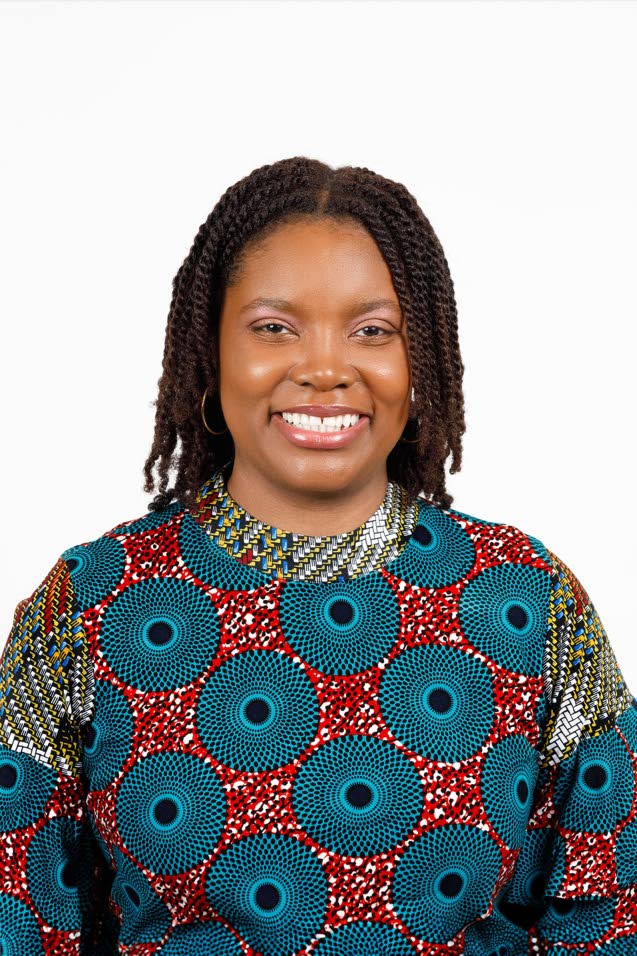
IYAHEN…it’s an opportunity, I think, in Jamaica and elsewhere, to make sure that we have accessible data disaggregated by sex