Bowed but not broken
Slow, positive recovery for small farmers in northern Clarendon
BOGHOLE, Clarendon — Farmers here in northern Clarendon and the adjoining St Ann have returned to tilling the soil and rearing livestock a month after their livelihood was uprooted by Hurricane Melissa on October 28.
Although it is a challenging task, the farmers are being resilient even though some are not certain how they will fully recover from losses.
Philisia Downer, a poultry farmer in Boghole, has already started to rebuild her chicken coop.
“I lost all the chickens that were inside. The storm came and took off the roof, then I lost some of the zinc, because people came and took them away,” claimed Downer as she pointed to looters who too advantage of her plight.
“From [about] 10:00 in the night I heard them outside and saw flashlights — that same Tuesday night after Melissa. In the morning I came out and was trying to take up some of the zinc, and this is all that is left,” said Downer as she pointed to a small amount of zinc on Monday.
The mother of three, whose eldest child is enrolled at Northern Caribbean University (NCU) in a teacher education programme, said she is pushing to return to her poultry farming.
“I am trying to rebuild; it is very hard, because I have a son at NCU. I have a daughter at Clarendon College, and I have a daughter at Edwin Allen [High School] doing sixth form. This is what I survive on, by raising my chickens and stuff like that.
“I need some more zinc and lath and maybe a length of two by four [lumber] and nails. I have mesh,” she added.
Downer said prior to the storm she had about 110 chickens, all of which she lost during the passing of the hurricane.
Her partner Albert Jones is also picking up the pieces as he is trying to replant.
“It is not an easy [feat]. It’s wicked. We have to create our own little income and I am trying, but I stall right along the way now. God will help us. Help will come from somewhere. If I don’t get any help to plough the land, it’s fork I will have to use,” said Jones.
He told the Jamaica Observer that a representative of the Rural Agricultural Development Authority (RADA) had promised to distribute supplies, but up to Monday afternoon nothing was received.
“They reach out. They said they were going to come here last week to issue some seeds and fertiliser, but I don’t see them. We have to just gwaan do things on our own,” added Jones.
With local food prices continuing to climb after the devastating blow Melissa delivered to the agricultural sector, Jones said importation of some produce may become necessary to help bring stability to the market. He is doing his part by reviving his sweet pepper nurseries.
“This right now can plant out an acre. I just need help and fertiliser; by next week I am going to do another nursery,” he said.
A short distance away on the Clarendon-St Ann border in Cave Valley, Shernette Campbell, like many other small farmers, was busy replanting on Monday afternoon.
“I am planting my pak choi. I am putting in something, because it is going to be needed further on, because things are going to be short. Melissa flooded out the place, but the water draw,” she said, using the Jamaican reference to water receding.
“Cave Valley was under water, but we are getting back on our feet. People wash out their house and paint,” she added.
Member of Parliament (MP) for Clarendon Northern Wavel Hinds said the rebuilding in the constituency has been slow but positive.
“Many thanks to our local and overseas supporting partners; we look forward to their continued assistance. We need instant, meaningful support in restoring our housing stock, electricity, and farms. We need to get our farmers back to the production line immediately,” said Hinds, the first time MP elected on a People’s National Party ticket.
“Most of our schools have reopened, even with phased modalities. Our road network has further deteriorated. Many breakaways and landslides have created short-term and long-term damage. As such, road rehabilitation and maintenance are top priorities for us. Additionally, the clearing and cleaning of drains and waterways are critical in making communities and major thoroughfares accessible while alleviating health issues associated with flooded spaces,” added Hinds.
At Cow Pen, near Frankfield in Clarendon, farmer Keble Richards, named after former Agriculture Minister Keble Munn, is encouraging Jamaicans to turn to farming for survival.
“If everybody can do a little something, those who have the land I would advise them to at least do something so that you can really feed yourself for a while, especially after a disaster like this…so we are trying to put in the crops that don’t take a long time to harvest, like pak choi, string beans, cucumber, and lettuce,” he said.
Richards is grateful that he has the opportunity to restore his farm although it is a slow process.
“When you think about what other people have lost, you just have to be thankful. The good thing is that Melissa left us alive. Houses are fine, but everything else is gone. We are just trying to put things back together. The loss is really in agriculture,” he said, while tilling the soil in his field to plant pak choi.
“We are moulding out some cabbage. We planted some of those before, so what we have to do is to dig a trench to control the water so we can revive. I lost about 800 roots of sweet pepper that we were just picking, and sweet corn. I am trying to see if I can bounce back on my feet,” added Richards.
He believes the fast-approaching festive season will not be usual.
“We can’t stop Christmas from coming, but really it is not going to be like the Christmases we had before. We are hoping to reap some of the pak choi by Christmas, because, as you see, everything is in a devastated state right now. The good thing is, we can rally back. A lot of farmers do cash crops here and Melissa root up everything,” said Richards.
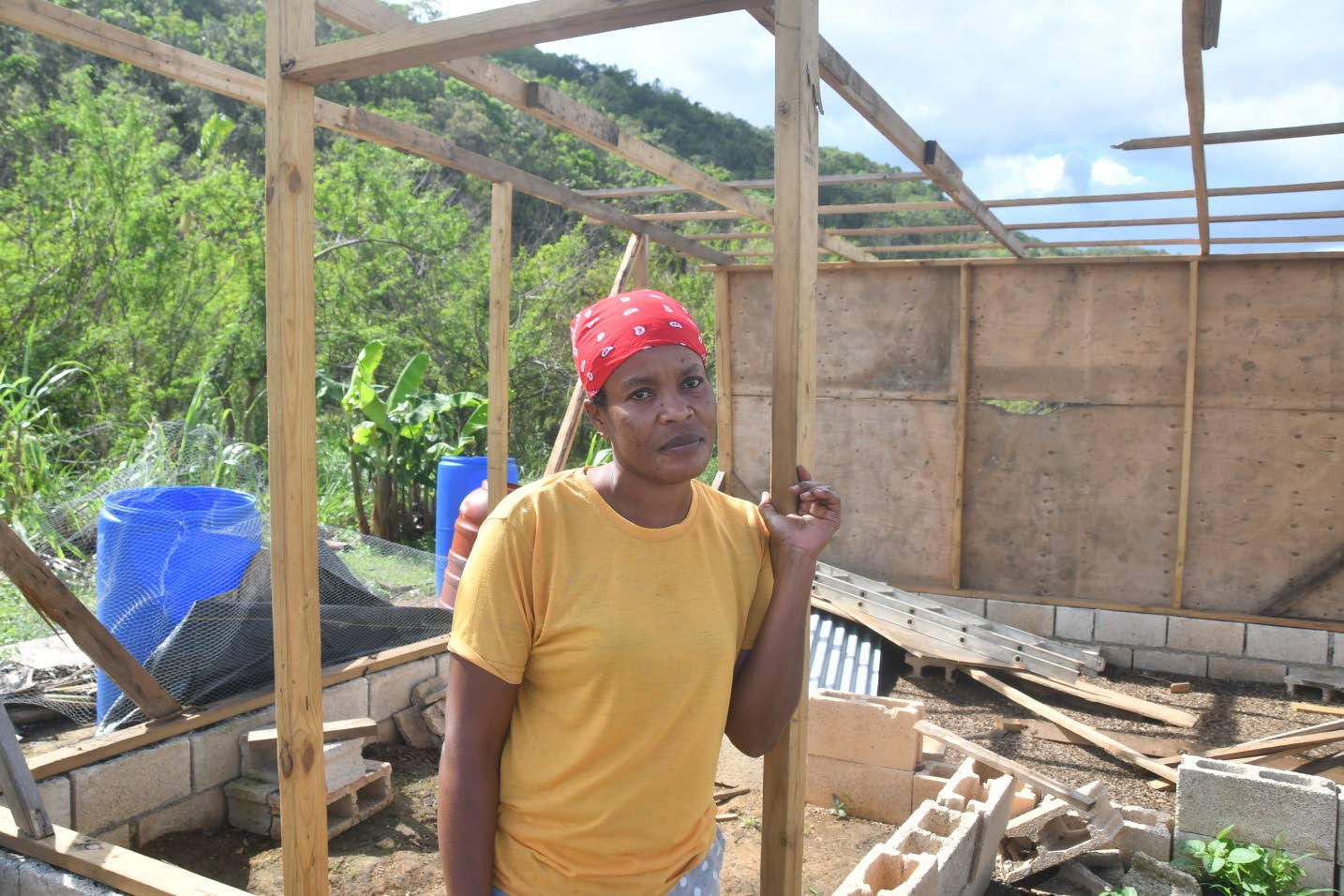
Bog Hole poultry farmer Philisia Downer stands in front of her chicken coop which is being rebuilt. (Photo: Garfield Robinson)
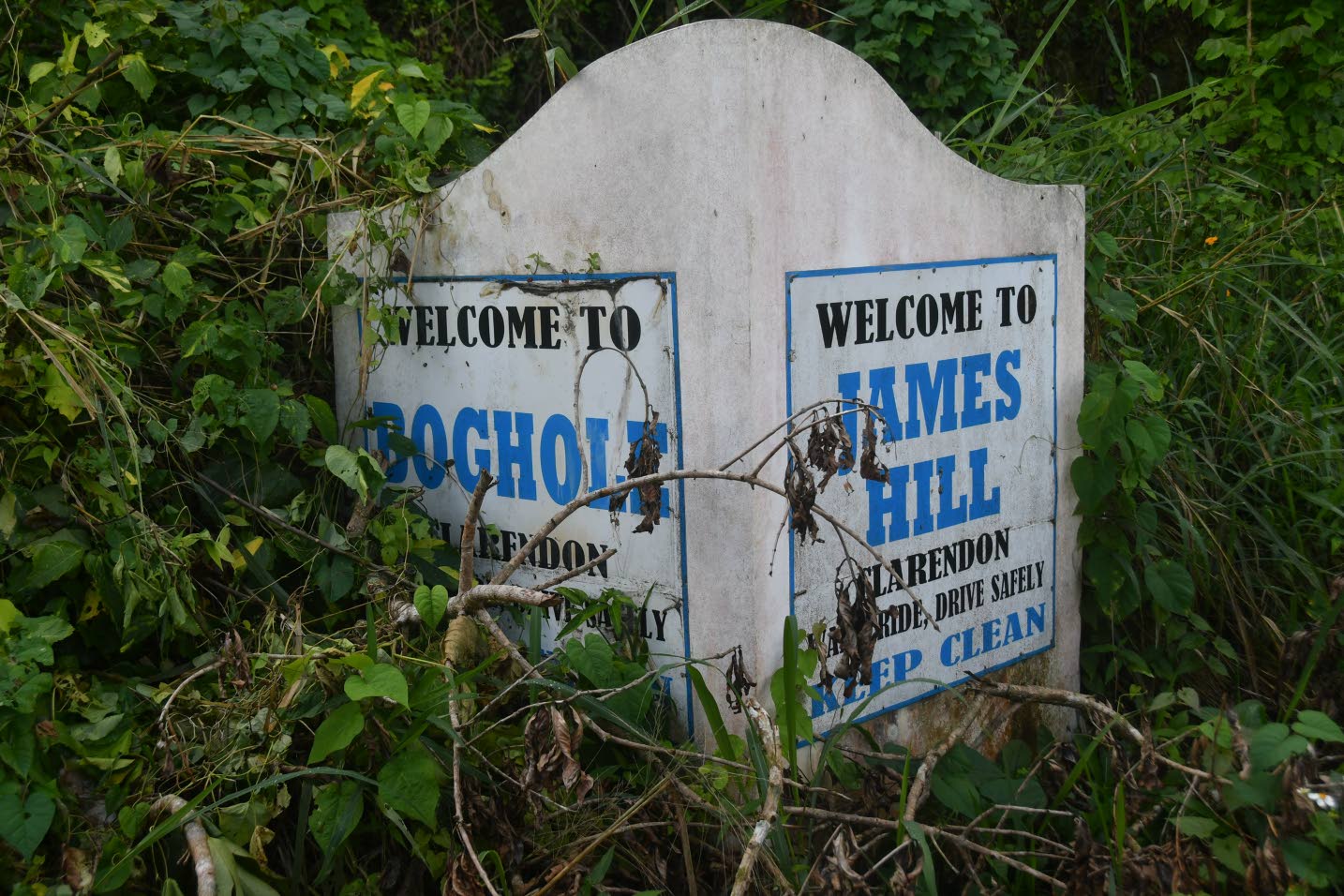
The Boghole and James Hill sign in northern Clarendon. (Photo: Garfield Robinson)
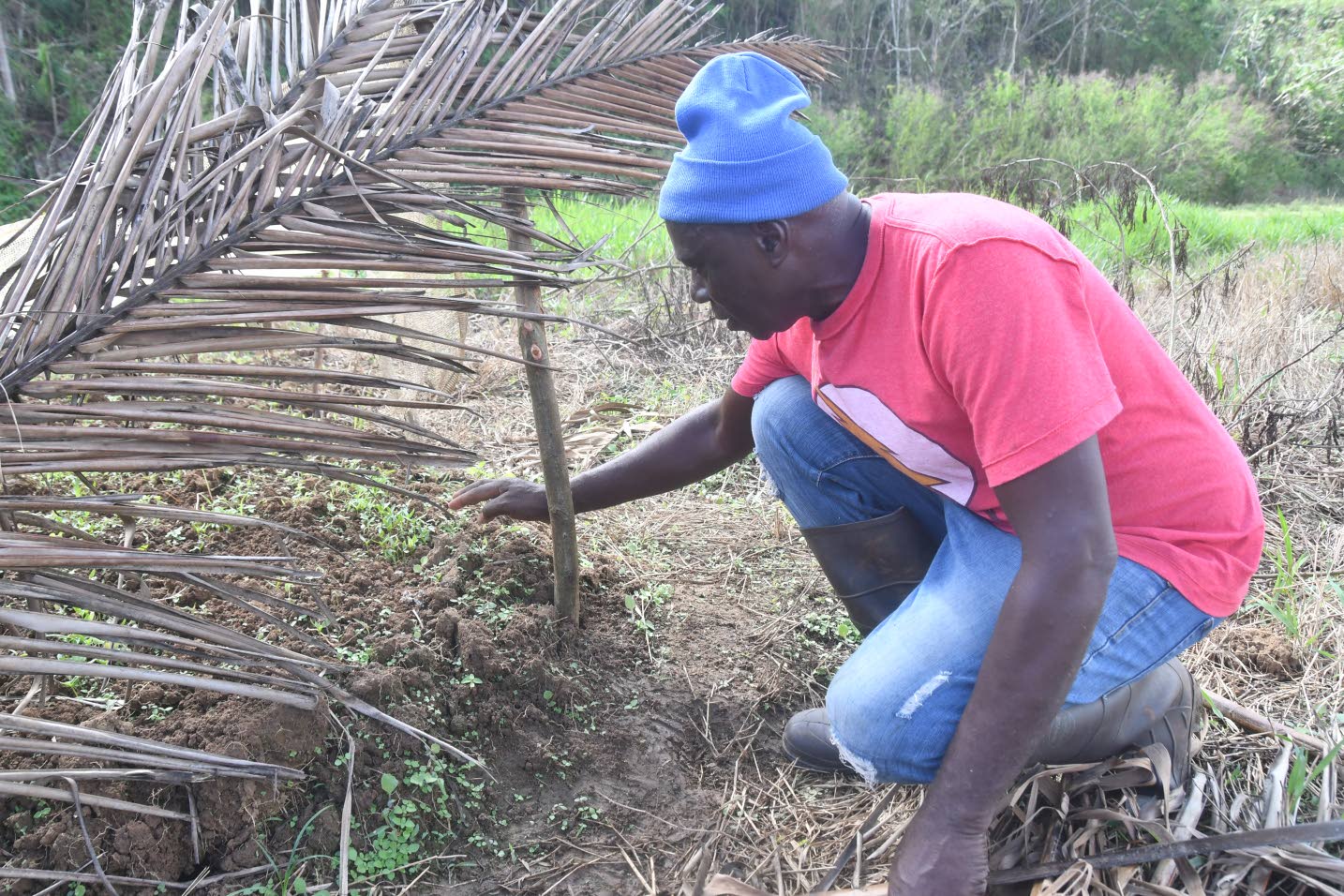
Boghole farmer Albert Jones showing his sweet pepper nursery. (Photo: Garfield Robinson)
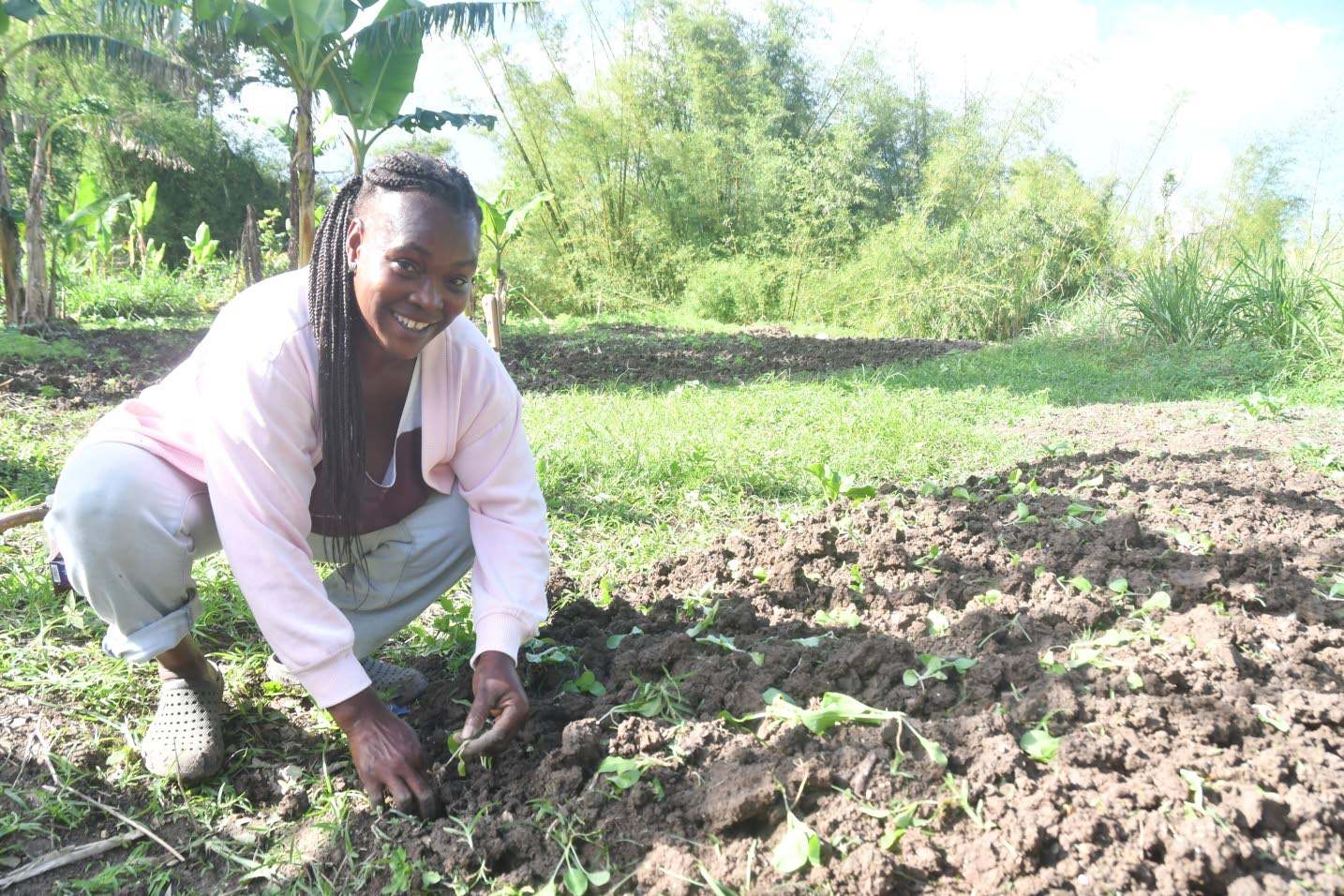
Cave Valley farmer Shernette Campbell is all smiles while planting pak choi on Monday.(Photo: Garfield Robinson)