



Pre-arranged disaster financing hits all-time high in 2024
Jamaica highlighted as compelling example of PAF success
International pre-arranged financing (PAF) for disasters reached a record US$9.4 billion in 2024, marking a significant milestone in global efforts to prepare for and respond to crises before they strike, according to the Centre for Disaster Protection.
In The State of Pre-Arranged Financing for Disasters 2025 report released this week, the centre said the surge reflects growing momentum behind proactive disaster risk management at a time when climate impacts are intensifying and traditional aid budgets are becoming increasingly strained.
The sharp rise in international PAF underscores a growing recognition that reactive, ad hoc funding is no longer sufficient in the face of more frequent and severe shocks.
PAF is crisis financing that is approved in advance and guaranteed to be released when pre-identified trigger conditions are met. Government, in putting this money and proper systems in place before disasters struck, are better able not only to respond more quickly to shocks, but also to reduce losses and protect vulnerable communities.
Colin Bruce, co-chair of the Centre for Disaster Protection, said the record level of PAF in 2024 translated into growth across all country groupings and financing types.
“As we’ve seen in countries hit by recent shocks, having finance ready to flow when disaster strikes can underpin proper planning and help families and businesses recover far more quickly,” he added.
The growth in PAF last year, the report said, was also accompanied by a strong rebound in payouts. This, as disbursements more than doubled to reach US$ 879 million — reversing years of decline seen since the COVID-19 peaked in 2020. Overall volumes were primarily driven by contingent loans, particularly those provided by multilateral development banks (MDBs) such as the World Bank and the Inter-American Development Bank (IDB).
The increase in 2024 was driven largely by growth in World Bank Cat DDOs across both International Development Association (IDA) and International Bank for Reconstruction and Development (IBRD) countries. Twelve new Cat DDOs were approved during the year, seven of them in IDA countries, following changes introduced in 2023 under the Bank’s Crisis Preparedness and Response Toolkit.
While these instruments can provide large-scale, rapid liquidity, the report cautioned that they are most accessible to countries with stronger borrowing capacity. As aid budgets face potential cuts beyond 2025, the centre similarly warned that heavy reliance on loan-based instruments could further disadvantage countries that require grant-based or highly concessional financing.
“Countries that are less able to borrow need better access to PAF, with instruments designed to meet their specific needs,” the report stated.
Referencing Jamaica as a compelling example of how PAF can transform disaster response, the report highlighted the country’s more than decade-old investment in a comprehensive disaster risk financing strategy and its layering of multiple instruments to prepare for a range of “what-if” scenarios, as steps in the right direction.
That strategy was put to the test by Hurricane Beryl and later by Hurricane Melissa — the most powerful storm ever recorded to hit Jamaica and the first Category 5 hurricane to make landfall in the country. In the immediate aftermath, the Government was able to draw on several pre-arranged financing mechanisms.
“As part of its US$1.6-billion disaster risk financing framework, Jamaica had access to national reserve funds, an IDB contingent credit facility, CCRIF SPC insurance, a World Bank catastrophe bond, and an IMF Precautionary and Liquidity Line,” the report noted.
Despite the headline growth, the centre highlighted stark inequalities in access to pre-arranged financing. In 2024, low-income countries (LICs) and fragile and conflict-affected situations (FCS) each received less than 7 per cent of total international PAF, even though these countries face some of the highest levels of exposure to climate and disaster risks.
Additionally, support for PAF from development partners also grew only modestly between 2022 and 2023, rising by about 6 per cent to US$889 million and accounting for just 1.2 per cent of total crisis financing. Allocations to LICs remained minimal, raising concerns about affordability, accessibility and the suitability of available instruments for countries with limited borrowing capacity.
Kimberly Gire, board member and co-chair of the centre, said the findings present both progress and challenge.
“There is unquestionably good news here, with growing momentum behind more proactive approaches to disaster risk. But the report also surfaces challenges. We call on the global community to continue to scale up international pre-arranged financing, improve accessibility and affordability for LICs and FCSs and strengthen transparency from all actors,” she said.
Now in its third year, the centre’s flagship report also called for greater information-sharing from MDBs, humanitarian actors and other PAF providers to enable a more complete global picture. As shocks become more frequent and resources more constrained, the report stressed that transparency and accountability in disaster financing are no longer optional, but essential.
While 2024 marked a record year for pre-arranged financing, the centre concluded that the real challenge ahead lies in ensuring this growth translates into equitable protection for those who need it most.
“While financial resources are not the only requirement, recent hurricanes underscore how essential it is to have funding in place to support effective planning and rapid recovery for families and businesses,” Bruce said.
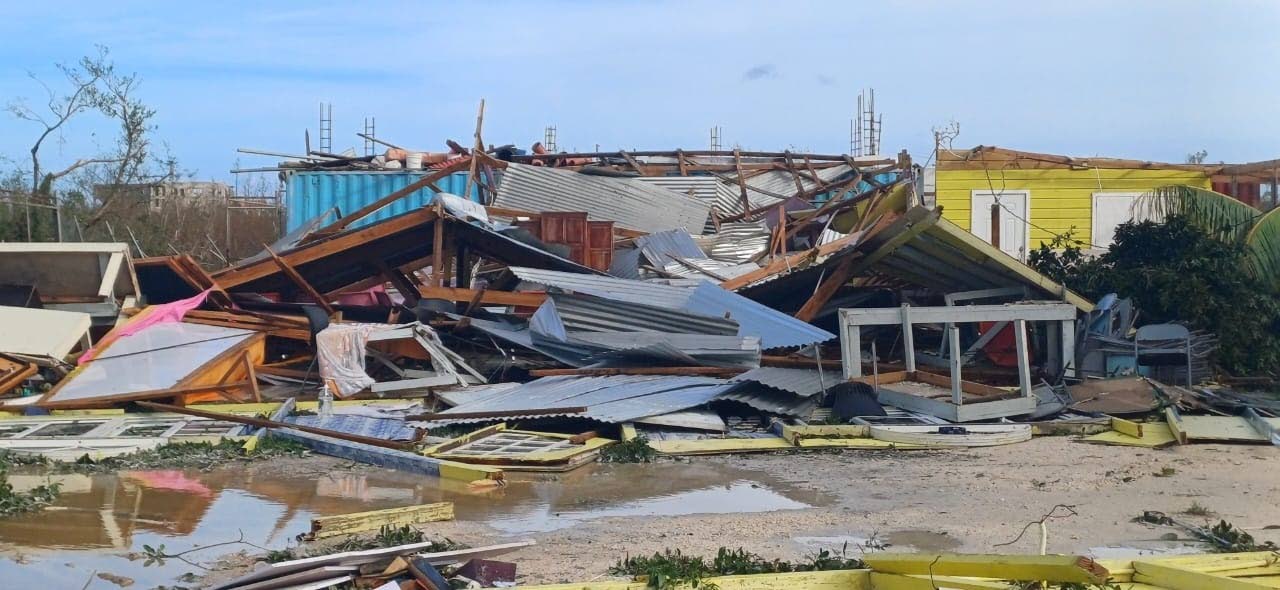
In the immediate aftermath of recent disasters, the Jamaican government was able to draw on several pre-arranged financing mechanisms.


