



US legislator alarmed by US military build-up in Caribbean
WASHINGTON, (CMC ) — United States Senator Peter Welch has expressed alarm at President Donald Trump’s mobilisation of National Guard troops, warships and fighter jets to the Caribbean.
The Democrat of Vermont is also urging Congress to enforce the War Powers Act before the United States embarks on another unauthorised war, lamenting that the Trump Administration has not provided Congress with adequate information about its recent military strikes in the region.
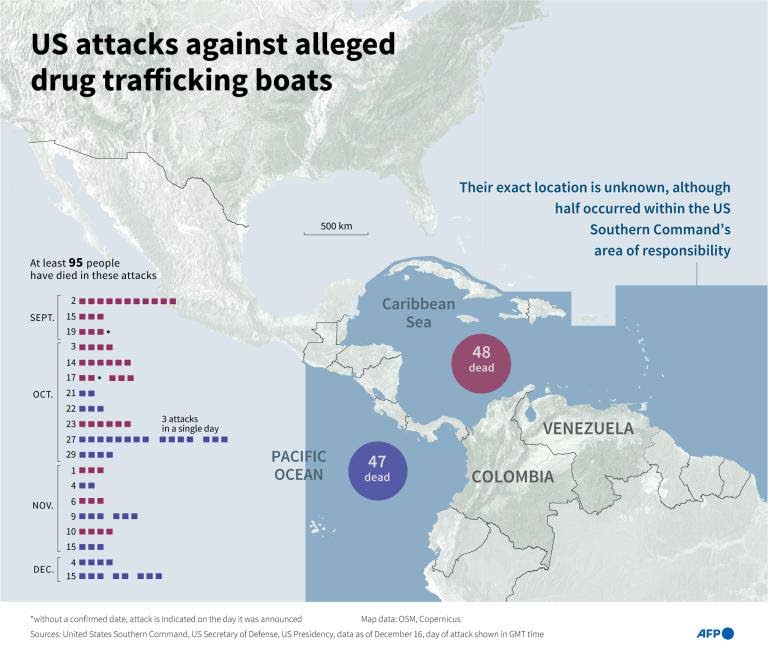
He is also demanding transparency and accountability for attacks that have killed more than 100 people in the Caribbean Sea and Pacific Ocean.
“The question is: why are our warships, a carrier group, and support assets in the Caribbean? They are not there for drug interdiction. The reason they’re there is obvious, and it’s even acknowledged.
“President Trump wants Venezuelan President [Nicolas] Maduro gone. He wants regime change. As the president masses our forces for a war — as he and his associates have explicitly stated is one in which their goal would be the elimination of the Maduro regime — the president continues to refuse to come to Congress and seek Congressional approval for a military action, as is required under the War Powers Act,” said Welch.
“All of us as elected members of the United States Senate have vested in us, under the Constitution Article I, the responsibility and exclusive authority to declare war,” Welch said, adding “let us all accept our duty and demand that the executive be transparent, be accountable, and comply with the provisions of the War Powers Act, and come to Congress for our approval of the military action that is clearly under way.”
In October, Welch voted in support of a War Powers Act Resolution led by California Democratic Senator Adam Schiff, “to stop Trump’s unconstitutional attacks in the Caribbean Sea”, and urged the Senate to question Trump’s legal authority to take the United States to war.
Welch said he also led “every Senate Judiciary Committee Democrat in demanding answers from the Department of Justice about the legality of military actions ordered by Trump” that have now killed more than 100 people in the Caribbean Sea and Pacific Ocean.
As he wages increased pressure on the Maduro Government in Venezuela, Trump disclosed last Friday that the US military had struck an alleged coastal drug loading facility in Venezuela.
When questioned by reporters on Monday, after meeting with Israeli Prime Minister Benjamin Natanyahu, Trump said, “There was a major explosion in the dock area where they load the boats up with drugs”.
Congressman Adam Smith, the leading Democrat on the US House of Representatives’ Armed Services Committee, charged on Tuesday that with Trump’s latest action he clearly wants to drive Maduro from power.
“What is Trump prepared to do next? How far is he willing to take this effort at regime change in Venezuela?”
In an Op-Ed piece in the Orlando Sentinel this week, James Martin, a US national security expert, wrote that the US military strikes in the Caribbean Sea are not only patently illegal, they are shortsighted and counterproductive to American interests.
“While everyday Americans are working harder for less, Donald Trump and Pete Hegseth [US Defence Secretary] are lighting taxpayer money on fire for political theatre, and they are wasting the time and talent of our men and women in uniform,” said the US Coast Guard veteran and candidate for Florida’s 21st Congressional District.
Martin said that the Trump Administration’s rationale for these strikes “is that Venezuelan gangs are narco-terrorists that are plying Americans with fentanyl, so they should be treated as enemy combatants”.
He pointed out that fentanyl is largely trafficked to the United States from Mexico by American citizens in the employ of Mexican cartels.
On Wednesday the US military said that eight people were killed in multiple new strikes on alleged drug boats, bringing the death toll in Washington’s campaign against what it says are narcotics traffickers to at least 115.
US Southern Command, which is responsible for American forces operating in Central and South America, announced two sets of strikes, which were carried out on Tuesday and Wednesday.
On Tuesday, “three narco-trafficking vessels travelling as a convoy” were targeted in “international waters”, it said in a statement on X.
“Three narco-terrorists aboard the first vessel were killed in the first engagement. The remaining narco-terrorists abandoned the other two vessels, jumping overboard and distancing themselves before follow-on engagements sank their respective vessels,” it said.
Accompanying the statement, posted on X, was a video showing the vessels travelling together at sea and then hit by a series of explosions.
The exact location of the strikes was not immediately made clear. Previous strikes have taken place in the Caribbean or the eastern Pacific.
The military said it had notified the Coast Guard to “activate the search and rescue system”, without offering more details about the fate of those aboard the other boats.
Hours later it issued a second statement about strikes on two more vessels conducted on Wednesday, killing five people. Again, it was not clear where the strikes took place.
Since September, the US military has carried out more than 30 such strikes on what it says are boats used to smuggle drugs to the United States, without providing any concrete evidence that the targeted boats are involved in trafficking.
International law experts and rights groups say the strikes likely amount to extrajudicial killings as they have apparently targeted civilians who do not pose an immediate threat to the United States.
In recent months Trump has waged a pressure campaign against Maduro, accusing him of running a drug cartel.
Maduro denies the allegation and has accused Washington of seeking regime change to gain access to the Latin American country’s massive oil reserves.
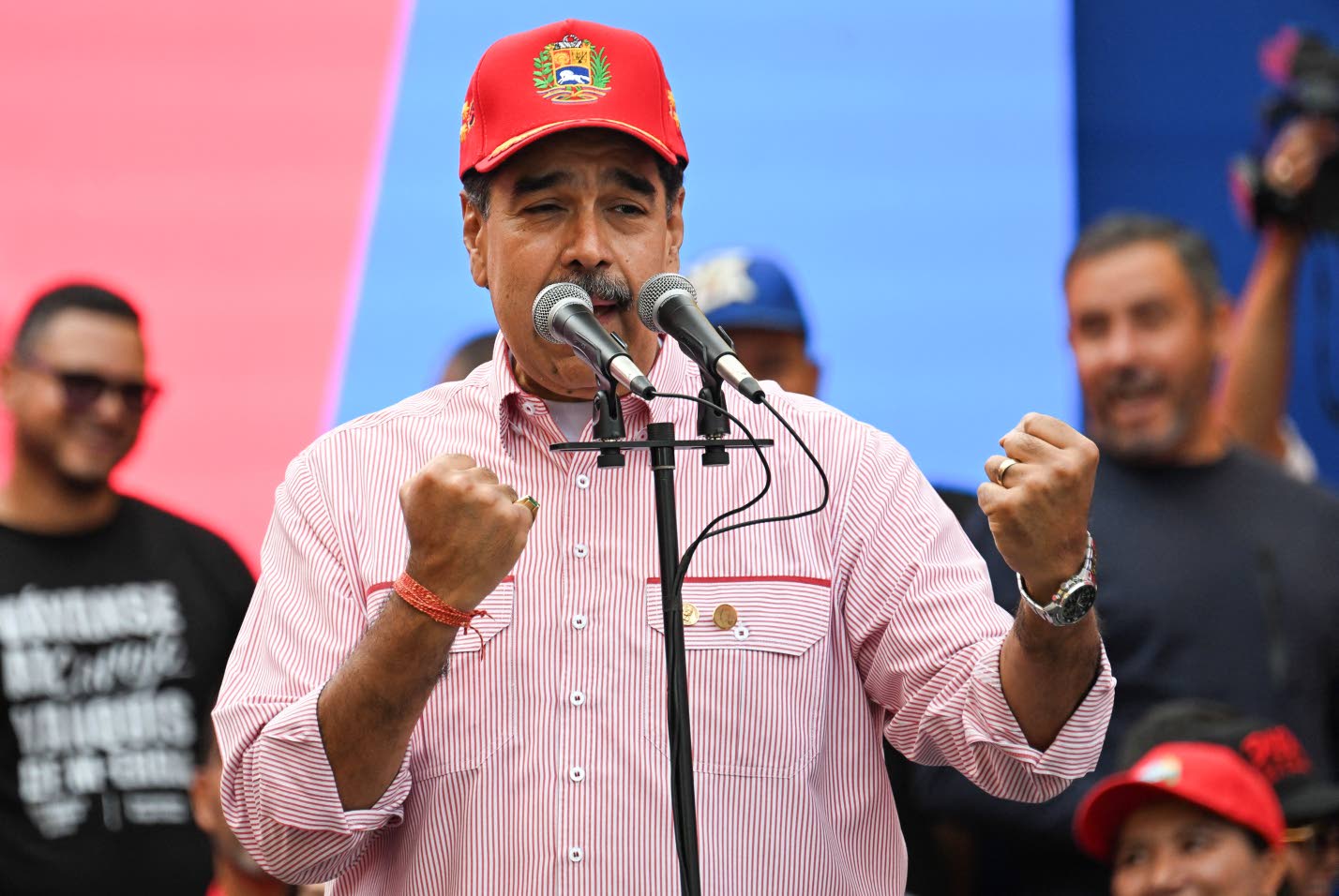
MADURO… denies US President Donald Trump’s allegation that he is running a drug cartel
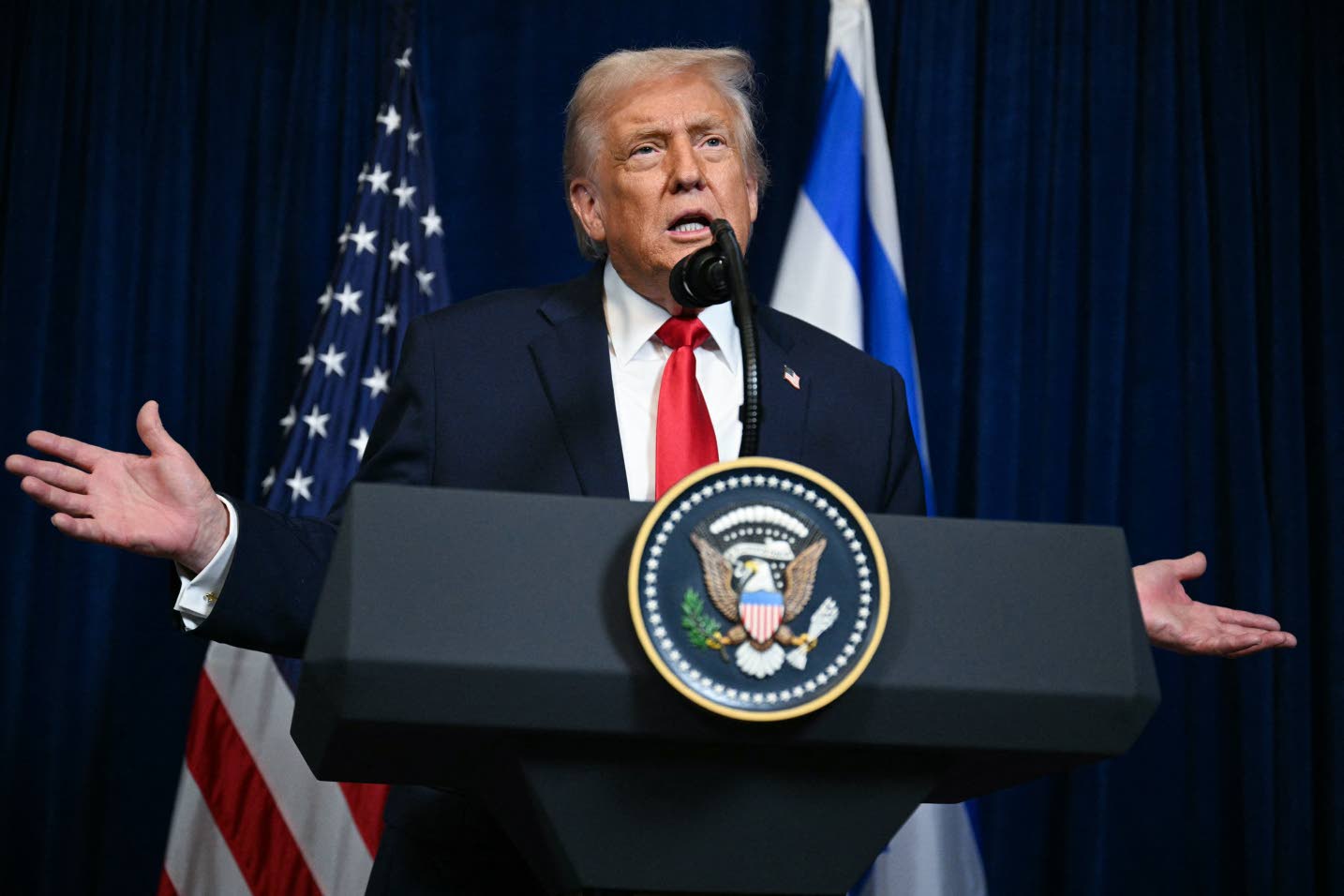
TRUMP… accused of wanting to effect regime change in Venezuela


