



Finance ministry official takes stand in Ruel Reid and co-accused trial
WHETHER contractors doing business with government bodies would necessarily understand the financial framework governing the use of public funds was one of the issues raised in court on Monday, when a senior Ministry of Finance official testified in the trial of former Education Minister Ruel Reid, former Caribbean Maritime University (CMU)President Fritz Pinnock, and their co-accused.
The question was raised by defence attorney Oswest Senior Smith as he cross-examined Barrington Thomas, the principal director of the Accounting and Financial Policy Branch in the Ministry of Finance and the Public Service.
Senior Smith represents Councillor Kim Brown Lawrence (Jamaica Labour Party, Brown’s Town Division) who, along with Pinnock, Reid, Reid’s wife Sharen Reid, and their daughter Sharelle Reid, are accused of participating in a scheme in which more than $25 million was taken from the Ministry of Education and the CMU through transfers to various accounts either owned or controlled by the accused or handed over in cash.
The prosecution alleges that the recipients either knew, or they reasonably should have known, the money was criminal property, resulting in charges of acquisition of criminal property, among others listed in the 35-count indictment.
Thomas, who said he had been in the employ of the Ministry of Finance since 2009 in the then Financial Systems Unit, had previously given testimony on how the ministry sensitises ministries, departments, agencies and some public bodies on the procedures governing how they can access and use public money.
He also detailed how the ministry directs certain government bodies and trains their staff to follow laws governing the spending of public monies, particularly the Financial Administration and Audit (FAA) Act.
Senior Smith queried whether the witness necessarily expected someone outside of Government to be
au fait with the provisions of the FAA Act, to which he responded:
“The general thought is that a person outside of the public sector, meaning somebody outside of working in a ministry, department, agency or public body, would not necessarily be
au fait with the provisions of the FAA Act and its instructions.”
In acknowledging that there is a wide spectrum of people and entities which contract with the Government, Thomas said people or companies outside the ministry providing goods or services may not be fully aware of the inner workings of the legislation that governs funding of government entities.
When questioned by Senior Smith on whether ministries could access funding from any department or agency that fall under them, the witness detailed that in every financial year the Appropriations Act or the budget is approved in Parliamen, and it is the budget which indicates the sources of funding for a ministry.
“Ministries may be approved to receive funds from the Consolidated Fund or from any other designated and approved sources which is determined to be appropriations-in-aid. These sources must have been approved and included in the Appropriations Act for that financial year,” he said.
The witness, when asked, indicated that he disagreed with the attorney that sources of funding could be added retroactively.
Thomas had previously indicated that certain entities have different financial guidelines but are all guided by the FAA Act along with their establishing legislation.
He testified that for payments to be made by government agencies there must be sufficient funds as well as legal authority or agreement for doing so. That legal authority would include valid contracts or purchase orders which serve as binding agreements and outline the terms and conditions under which payments ought to be made.
Previously, in outlining their case against the accused, prosecutors alleged that there were fraudulent payments made for work that was never done or services which were never provided to either the education ministry or CMU, and that money from these payments was transferred from CMU and the education ministry to the accused.
The five accused have maintained their innocence on all counts.
Missing from court on Monday were several defence attorneys. Their absence highlighted ongoing challenges with scheduling which have slowed the pace of the trial.
While the attorneys representing Reid were represented by their junior, who gave reasons for their absence, sitting judge Justice Sanchia Burrell took issue with the absence of Pinnock’s attorney, Hugh Wildman, who she said had not communicated to the court.
“I am placing it on the record that this behaviour by Mr Widlman is frowned upon,” she said.
The trial continues on Friday, February 6 when cross-examination of the witness is expected to continue.
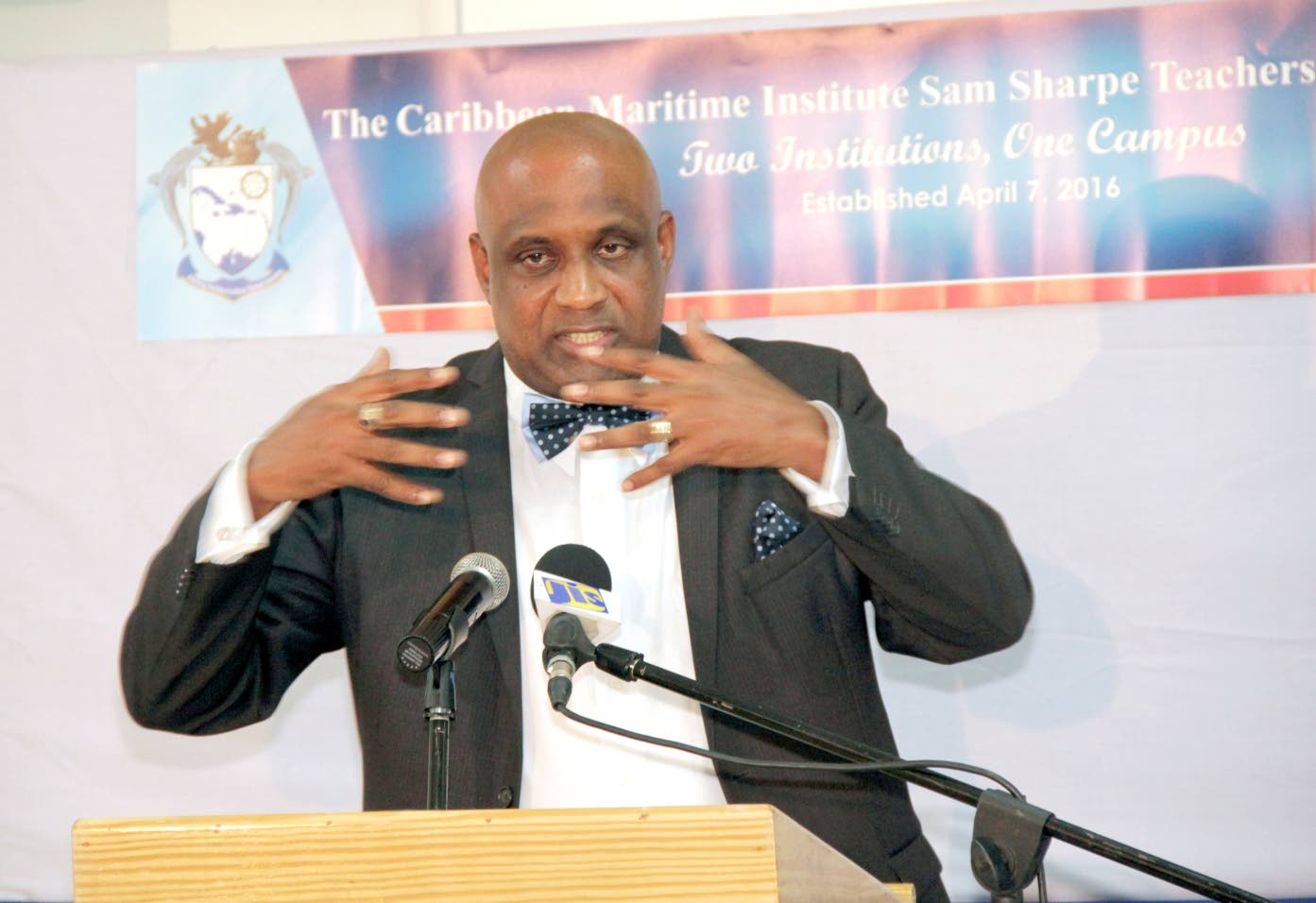
PINNOCK… facing a number of charges before the court


