



Parottee wetlands get lifeline after hurricane damage
As the world celebrated Wetlands Day on Monday, residents of Parottee, St Elizabeth, joined government agencies to clear hurricane debris choking one of Jamaica’s most important mangrove belts.
Speaking at the site, Minister of Water, Environment and Climate Change Matthew Samuda said the condition of the wetlands illustrated the wider environmental toll left by Hurricane Melissa.
“Today is World Wetlands Day and what you see certainly ahead of me but behind the cameras is a wetland that was assaulted by Hurricane Melissa. The damage to our buildings is obvious, but certainly when you have the opportunity to fly above you see the scale of the damage to our forests, our wetlands, and indeed our hillsides and it’s a very difficult thing to absorb because the scale of the damage is unprecedented,” Samuda told volunteers and residents gathered for the exercise.
He said the day was being used to reaffirm the link between communities and the ecosystems that sustain them.
He explained that the immediate focus was the removal of waste that has been blocking waterways since the storm hit on October 28 last year.
“Today’s effort is really to start the process of removing the debris and bulk waste from the wetlands which obviously affects hydrological flow and affects coastal stability,” he said, noting that restoration would continue through replanting programmes to be led by the National Environment and Planning Agency.
A press release issued by the Ministry of Water, Environment and Climate Change on Monday described the clean-up as part of a whole-of-society approach to environmental stewardship, bringing together State agencies, residents and private partners.
According to the release, Hurricane Melissa deposited heavy-duty waste, including fallen trees and household appliances, into the mangrove, undermining their role in coastal protection and biodiversity conservation.
The ministry reported that rapid post-hurricane assessments revealed that nearly 25 per cent of Jamaica’s mangrove forests were degraded, increasing vulnerability along coastlines and threatening livelihoods, homes and marine ecosystems.
The release further noted that clearing debris is a necessary first step to allow natural regeneration of mangrove seedlings and to facilitate targeted replanting efforts.
In its statement, the ministry quoted Samuda as emphasising the strategic importance of the ecosystem.
“Mangroves are among Jamaica’s most powerful natural defences against storm surge and climate impacts. Restoring these ecosystems is not optional; it is essential to protecting communities, livelihoods, and our long-term resilience,” the minister said.
It was also outlined that plans are in place for sustainable reuse of material removed from the site, as wood from fallen trees will be chipped and repurposed to support the Forestry Department’s nursery operations and national tree-planting programmes.
However, Samuda cautioned that the work in Parottee represented only the beginning of a longer recovery process, signalling that similar operations would continue throughout the year.
“This is an important day to mark time. We’re obviously not suggesting that we will complete all bulk waste and debris removal from our wetlands today but certainly we think it’s an important day to mark time as well as to function as a serious work-day,” he said.
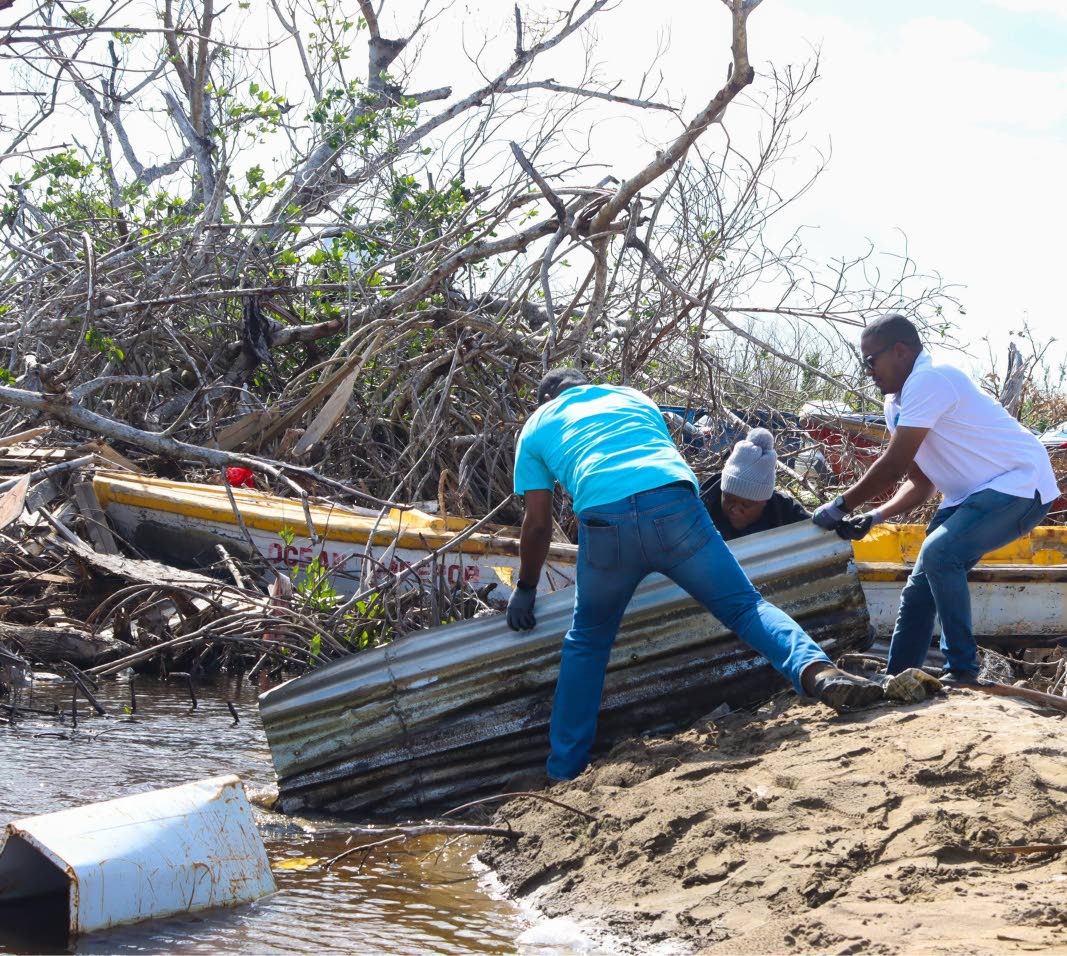
Member of Parliament for St Elizabeth South Western Floyd Green (right) assists residents in removing a sheet of zinc during a clean-up of the wetlands in Parottee, St Elizabeth, on Monday, as part of activities to mark World Wetlands Day.
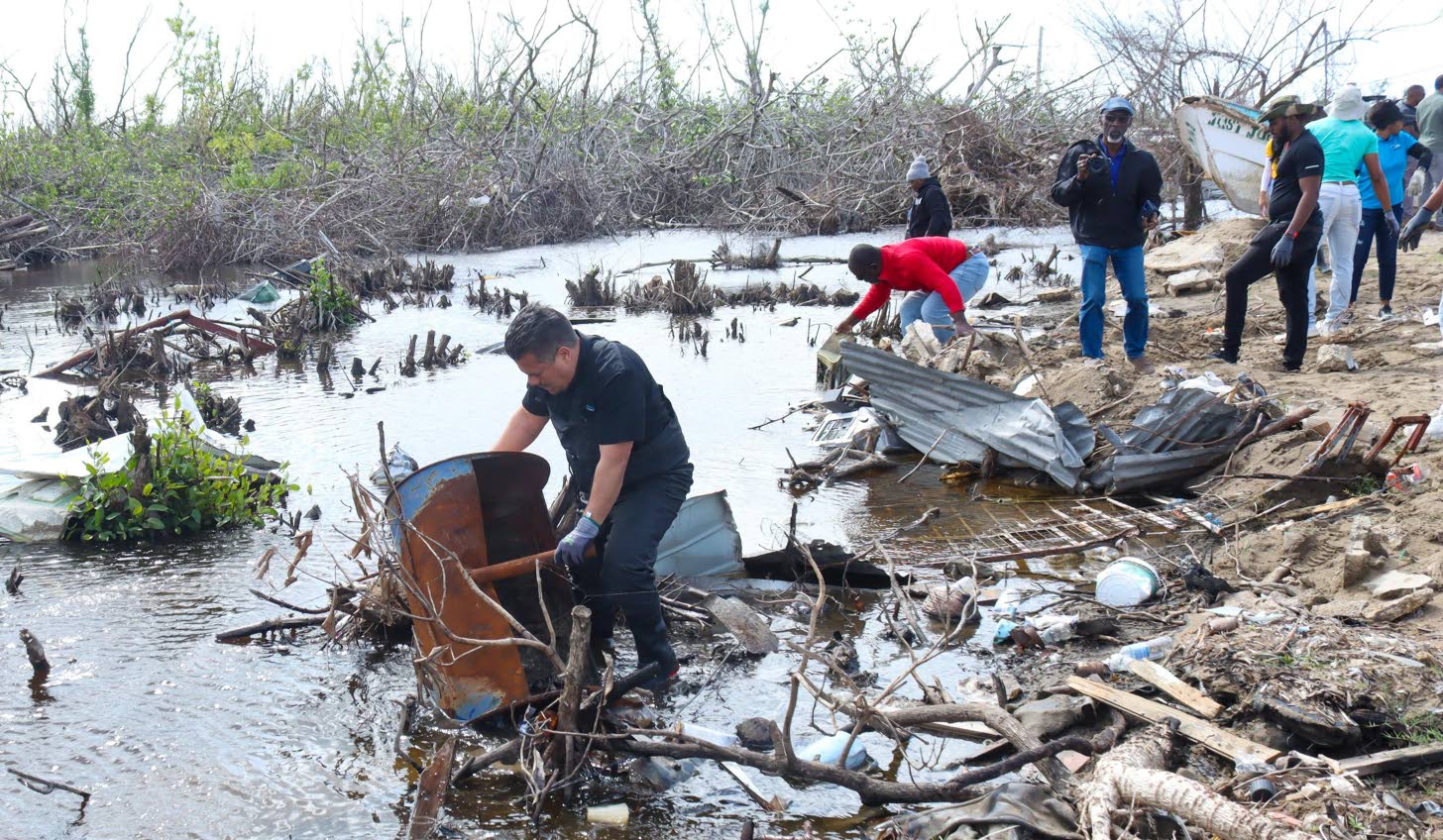
Minister of Water, Environment and Climate Change Matthew Samuda (left) removes an old barrel from the wetlands in Parottee, St Elizabeth, on Monday, as residents and representatives of several government agencies joined efforts to clean up debris left by Hurricane Melissa.
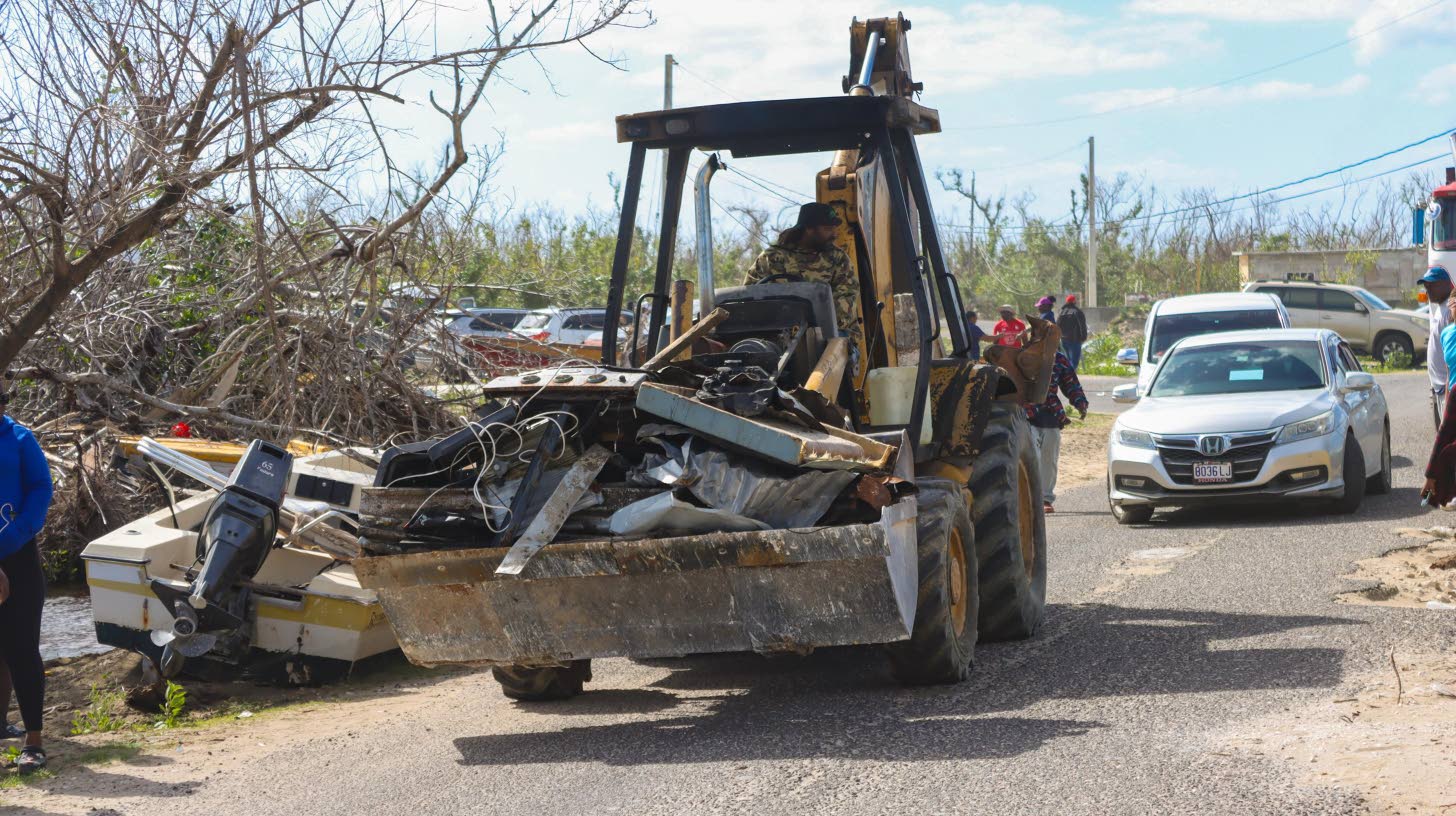
A tractor is loaded with garbage collected from the Parottee wetlands in St Elizabeth on Monday, during a multi-agency clean-up aimed at removing debris left by Hurricane Melissa and restoring the mangrove ecosystem.


