



Brace for gas blow
Petrojam gets green light to hike prices of petroleum products above $4.50 maximum starting next week
ENERGY Minister Daryl Vaz on Wednesday announced a new pricing mechanism for State-owned refinery Petrojam Limited, citing the impact of the ongoing geopolitical tensions in the Middle East and signalling that Jamaicans will have to pay more for petroleum products as early as next week as the entity that has been absorbing billions instead of passing on the full costs to consumers can no longer shield buyers.
While telling Jamaicans “there is no need to panic”, Vaz said the current mechanism has been effective in cushioning consumers, has resulted in significant financial losses to Petrojam in the last four weeks.
“Between March 12 and April 8, 2026, the full increase in transport fuel prices averaged approximately $49.20 per litre. However, only $18 per litre was passed on to consumers based on the Government’s pricing cap at $4.50 per litre per week up or down. This was made possible through Petrojam’s pricing mechanism which absorbed the remaining cost — amounting to approximately US$8.6 million or $1.3 to $1.4 billion over the period — in order to cushion the impact on the Jamaican people,” Vaz told the weekly post-Cabinet press briefing at Jamaica House in St Andrew, Wednesday morning.
“Growing fiscal pressure, particularly if elevated prices persist, if we continue the current pricing mechanism up to June 2026 it would cost the government of Jamaica $11.8 billion, which is unaffordable and unsustainable, and in fact is two thirds of this budget year’s revenue measure,” he noted further.
As such, Vaz said that, as of Wednesday, it had “become necessary to make changes to the pricing mechanism used by Petrojam to respond to the price uncertainty”.
“A tiered approach is being implemented which will see petroleum prices being more closely aligned to global price movements. This will allow Petrojam to be more agile and respond in a timelier manner to price volatility,” the energy minister outlined.
He said this shift for consumers when translated “means that the $4.50 cap cannot be sustained, and it means we will have to have several different tiers of caps, probably three, that will speak to what happens in the market”.
“Let me be blatantly, truthfully, up front, in your face, the Government of Jamaican cannot stomach $11.8 billion with all of what we have to do and the contending priorities, and anybody who tells you any different… rubbish. No Government in a situation like this can sustain that,” Vaz said, noting that the Government was obliged to devise methods to address “the very frightening scenario that we face”.
“My words to you, Jamaica, is definitively we are going to see increases as long as this continues; we will do what we can do, but it is important that you do what you need to do. Understand that you need to conserve starting today. Government is going to have to look at policies to limit movements, especially transportation movements. I don’t know whether or not we go back to a COVID-19 hybrid version of working from home, but something has to happen because the level of traffic that I am seeing on the road doesn’t show me that anybody realises that there is a war and the price of fuel and oil is just continuing to go up and up and up,” he added.
“You have to understand the magnitude of the impact of this war on Jamaica. This level of support is not sustainable indefinitely, especially in a prolonged, high-priced environment. I was very hopeful up to a few days ago that there was going to be some kind of resolution, but it seems to be that it is going in the wrong direction since Monday, and nobody here in Jamaica has any control over that,” Vaz declared.
In insisting that “motorists have saved”, Vaz said the Government through Petrojam in coordination with the Ministry of Energy and the Ministry of Finance “have taken deliberate steps to mitigate the full pass-through of global price increases, stabilise local fuel prices, especially during periods of high volatility, and protect consumers from sudden and sharp increases”.
He, in the meantime, said while it was a certainty that following further deliberations by Cabinet, the Government will come up with plans as to how to conserve.
“It is 100 per cent the responsibility of every Jamaican to realise that we are in a major, major crisis as it relates to the price of oil internationally, and therefore you need to take responsibility for your household and your business to see what you can do,” he said.
Vaz urged calm, noting that, despite the global market volatility, Jamaica’s energy security measures remain intact, supported by established finished product supply contracts and local refining capacity at Petrojam.
“So it’s not a matter of not being able to buy; it’s the price. So there is no need to panic. I saw some footage yesterday in Guyana that there is a shortage and a run on the gas stations down there and panic; we are not in that at all. We are very, very clear as to what we need to do to ensure that we have supply; it is [just] the price and how going forward we can work to minimise the increase on a weekly basis,” he added.
And the energy minister said there will be a slight drop at the pumps today (Thursday) but said this might not be the case come next week.
“There is a reduction of 25 cents per litre on the last increase, but that is not a guarantee going forward. That’s good you have another chance to fill your tanks at the current prices, but that might change dramatically come next week, bearing in mind that Petrojam has to buy and replenish their stock on an ongoing basis at the market price. Prices moved downwards this week but the market conditions remain volatile,” Vaz noted.
He said the Government will continue to closely monitor international developments, maintain a balanced approach between affordability and sustainability, and take timely and measured decisions in the best interest of the Jamaican people.
Ex-refinery prices as of April 9 saw E10-87 gasoline being sold at $176.88; E10-90 gasoline for $184.32; automotive diesel at $189.25; and ultra low sulphur diesel at $196.09. According to the energy minister, without that cap, gasoline prices would have risen by about $26.77 per litre while diesel prices would increase much more, between $65 and $75 per litre.
Prior to the recent geopolitical tensions in the Middle East, global oil prices were relatively stable with on average $70 per litre with moderate fluctuations. The escalation in tensions has disrupted the stability leading to sustained upward pressure on both crude oil and refined petroleum product prices.
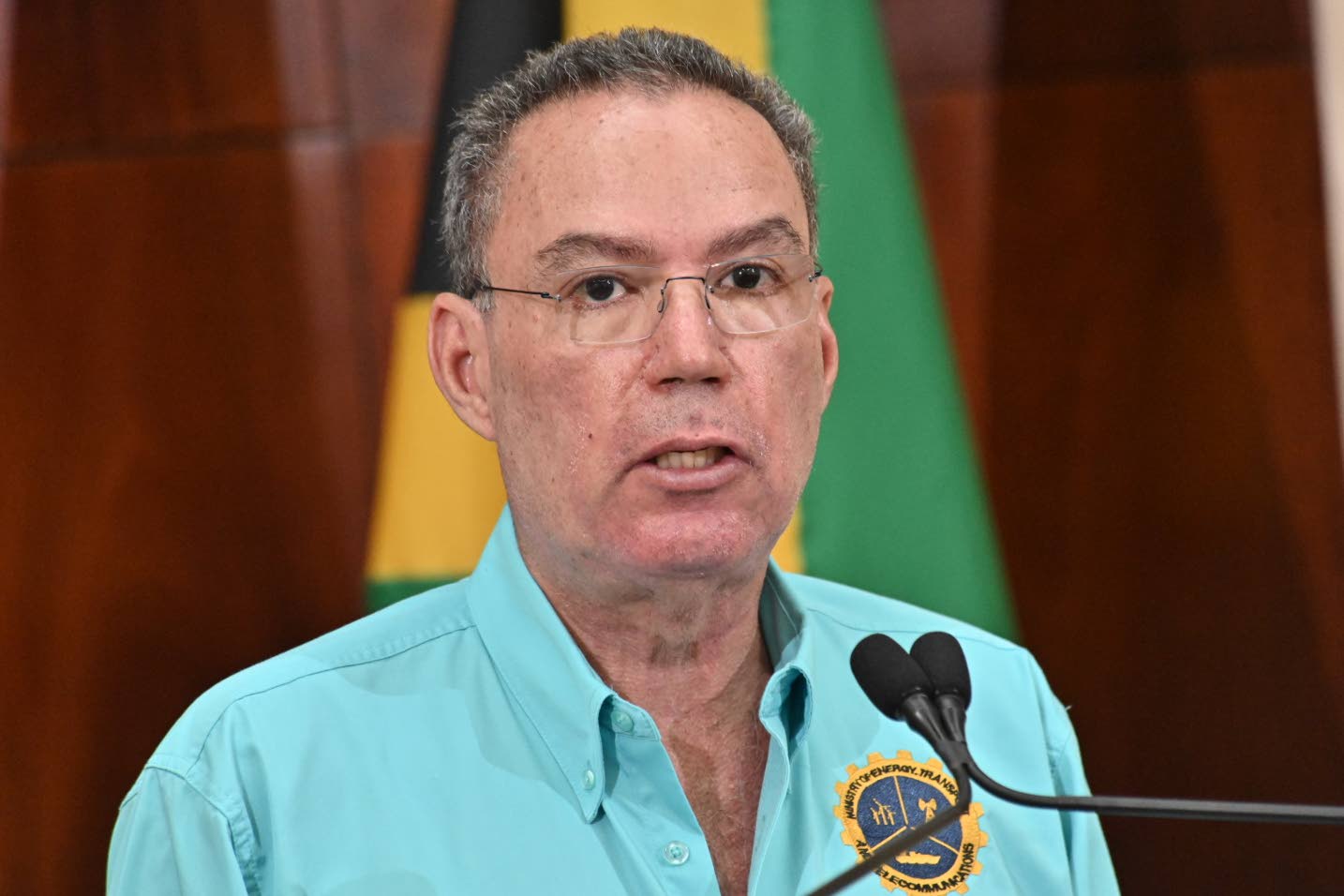
VAZ…a tiered approach is being implemented which will see petroleum prices being more closely aligned to global price movements (Photo: Joseph Wellington)


