



Like Ah Boss, but human
Machel Montano chronicles journey beyond the stage lights
There’s an unspoken standard entertainers are held to by consumers that somehow paints them in the light of immortality. The vulnerability experienced by the ordinary man becomes somewhat inaccessible to these larger-than-life personae as fans embrace the practice of freezing them in their brightest moments — choosing to remember them only in flashing stage lights and thunderous applause.
But the truth is, even kings have quiet battles.
Just days after commanding the road and several stages at Jamaica Carnival, Machel Montano, the undisputed king of soca, stepped into a different kind of spotlight; one that demanded vulnerability.
Soca lovers settled into their seats at Carib 5 Cinema on Tuesday afternoon for the première of Like Ah Boss: Journey of a Soca King to the documentary that was not just as a celebration of fame, but as a revelation of the man behind it.
Viewers leaned into a story that felt less like a highlight reel and more like a confession as layers of the artiste’s life were peeled away, leaving his soul bare.
This was not the Machel the stage knows — the energetic, effervescent personality with the ability to evoke happiness with each note he sings — fans learnt that, even the seeming “happiest man alive” battles his own demons when the stage light go out.
Highlighting Montano’s growth from child prodigy to teen heartthrob and then soca legend, the film gave viewers a behind-the-scenes look into the man who ultimately broke under the weight of his own brand; a man who had to rebuild his career several times over.
Outlining the moments that rarely ever made headlines, Like Ah Boss delved into experiences that feel almost too intimate to witness: Admissions of depression, brushes with suicidal thoughts, the quiet devastation of financial collapse — not the kind of struggles audiences expect from someone whose name is synonymous with celebration, whose music soundtracks joy across continents.
But therein is the message and meaning behind the film. As the film juxtaposed footage of the mega star on stage and in his element, with scenes of him staring into the camera confessing that even as he was teaching a nation and the world to fete, he had to learn how to survive himself.
“There were moments when I thought of doing harm to myself and I had to really dig deep. There have been moments in my apartment, by myself, in the dark, in the corner, crying to the point of no tears,” he confessed at one juncture of the film. “There was a breaking point for me in 1996 where I felt like I just had to stop. I went away from music, stayed inside my room and it was a lot of dark times.”
What makes Like Ah Boss linger long after the credits have rolled is its honesty. It doesn’t downplay the darkness. It allowed Montano to speak not just as a performer, but as a man who has had to confront himself repeatedly, and choose — again and again — to keep going.
“There was something about that loneliness and really wanting to come out of it and succeed that kind of pushed me…out of that depression. I had one of my biggest years in 1997. In 1997 I decided I was gonna win Road March.”
And that he did.
Montano went on to win that competition 12 times, with his most recent victory being this year with his hit single Encore. He has officially surpassed the late Lord Kitchener to become the all-time record holder.
By the end of the film, the title, Like Ah Boss, takes on a different meaning. It is no longer just swagger or stage command, it becomes a testament of endurance, the kind of strength that doesn’t announce itself, but reveals itself in survival.
Montano shared that, despite the lows experienced, he wouldn’t rewrite a single page of his life’s journey.
“Right now my life is full of gratitude. It’s two things I have right now; gratitude and patience, meaning I’m very excited for the next big thing to happen, but I know I have to wait and look back at everything and give thanks,” he told the Jamaica Observer.
Officially in theatres worldwide on May 29, fans of the entertainer are encouraged to go see the film, to go beyond the performance, to understand the price of greatness, and to recognise that even the most celebrated lives are stitched together with unseen battles.
From left: Yendi Phillipps hosts the post-première question-and-answer with soca star Machel Montano, his manager and co producer of the film Che Kothari, and Bart Phillips, co-producer. (Photo: Karl Mclarty)

Attendees take in the on-screen action on Tuesday afternoon. (Photo: Karl Mclarty)
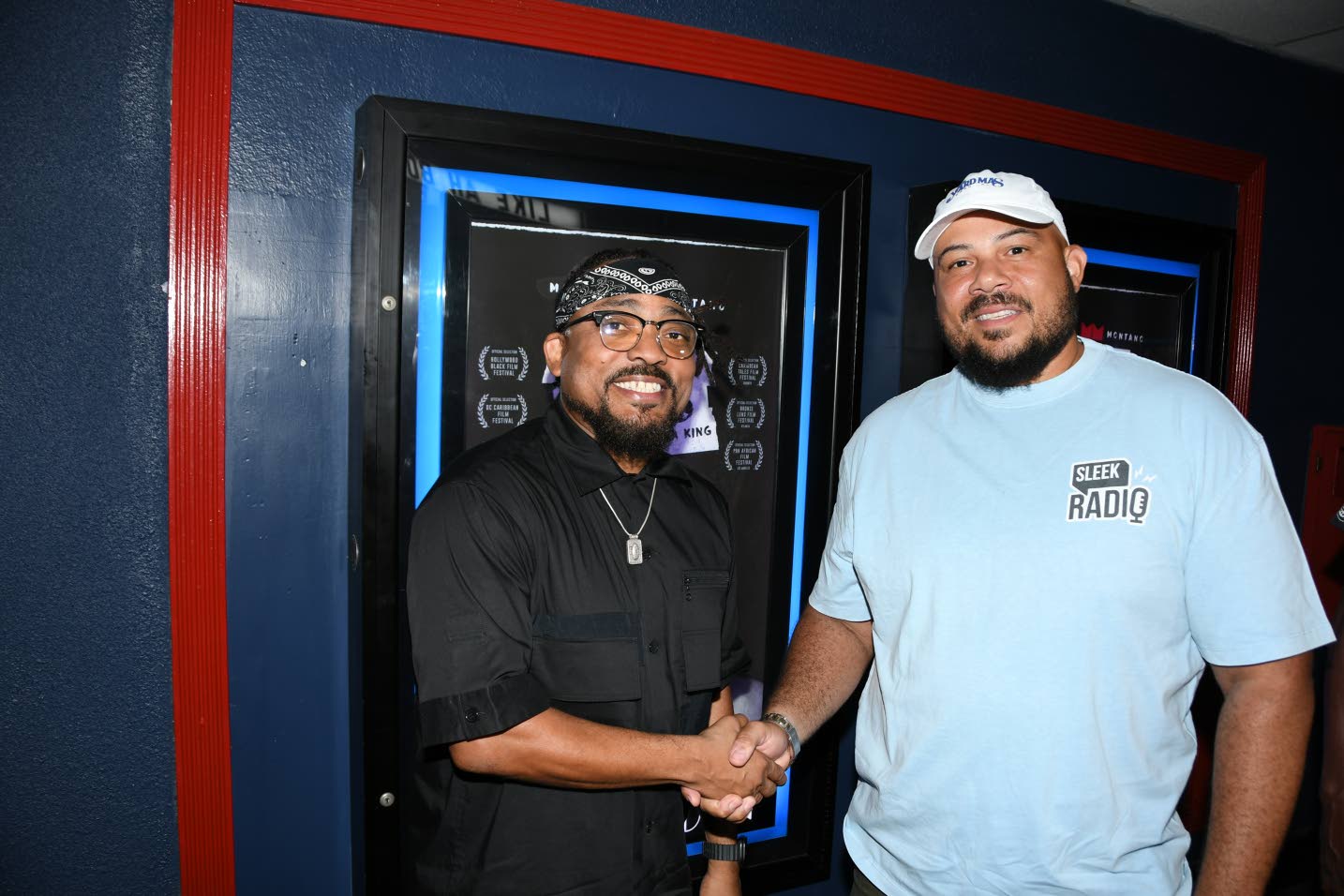
Soca star Machel Montano (left) greets Andrew Bellamy before the start of the première. (Photo: Karl Mclarty)


