



Missing trail to $1.6-b in contracts
UHWI staff now ordered to report all procurment decisions after flouting the rules for years
AFTER failing to upload details of contracts valued at roughly $1.6 billion, the leadership of the University Hospital of the West Indies (UHWI) has moved to overhaul its procurement reporting, making it mandatory for all transactions, regardless of value, to be entered into the Government’s electronic system.
The directive marks a significant shift in how the hospital manages its procurement activities, following damning findings by the Auditor General which revealed widespread non-compliance with established Government guidelines.
UHWI’s Acting Chief Executive Officer Eric Hosin told Parliament’s Public Accounts Committee (PAC) on Tuesday that the hospital has now removed any discretion in how procurement activities are reported, signalling a move towards stricter oversight and accountability.
“Just to note that as of March this year, we have made it mandatory that all, regardless of the amount, procurement must be placed on the [Government of Jamaica Electronic Procurement] GOJEP platform. It’s not optional,” Hosin said.
The change follows revelations that during the audit period, UHWI processed approximately 800 procurement contracts but only 23 were uploaded to the GOJEP platform. Contracts valued between $500,000 and more than $20 million were among those omitted, significantly limiting public visibility into how funds were being spent.
PAC Chairman Julian Robinson did not hide his concern at the scale of the lapse, pointing to the total value of unreported contracts.
“That is just totally unacceptable. I mean, $1.6 billion worth,” Robinson quipped, as he underscored the implications for transparency and public accountability.
Further scrutiny revealed that UHWI had been operating with an informal internal benchmark of $10 million to determine which contracts would be uploaded, a practice that diverged from Government requirements, which mandate the use of the system for contracts above $1.5 million.
Senior director of public procurement at the UHWI Ainsworth Buckeridge indicated that the threshold originated during an early testing phase of the system, but acknowledged that it was inconsistently applied.
“I can’t recall who actually took that decision, but that decision was made basically…I could not single-handedly make such a decision,” Buckeridge told the committee when pressed on how the $10-million benchmark was established.
The lack of consistency emerged as a central concern during the discussion, with officials admitting that even the internally set threshold was not adhered to, as some contracts above and below $10 million were either uploaded or omitted without a clear pattern.
The Ministry of Finance, through its Chief Public Procurement Policy Officer Jovell Barrett, told the PAC that the Government’s requirements were clear and widely communicated across public bodies.
He added that while some entities may face capacity challenges, extensive training resources and advisory support are available, suggesting that the issue may not be rooted solely in a lack of guidance.
In response to the findings, Hosin has indicated that it is undertaking broader reforms beyond simply mandating uploads.
“We have carried out extensive training for not just the members of the Procurement Department, but for all senior managers, for all members of the Procurement Review Committee, and the Procurement Assessment Committee. We have done some extensive training by a very well-known professional and knowledgeable person in that area,” he said
“There is an assessment being done, [and] there are one or two positions that are vacant that we are going to fill, but we want to ensure that the department not just fill position, but make sure that the entire operation is working efficiently and effectively and making sure the persons in the positions are in fact required, necessary, and will drive efficiency going forward,” added Hosin.

A drawing of the multi-storey building to be constructed at a cost of several billion dollars at the UHWI where contracts valued at roughly $1.6 billion were awarded and not reported.
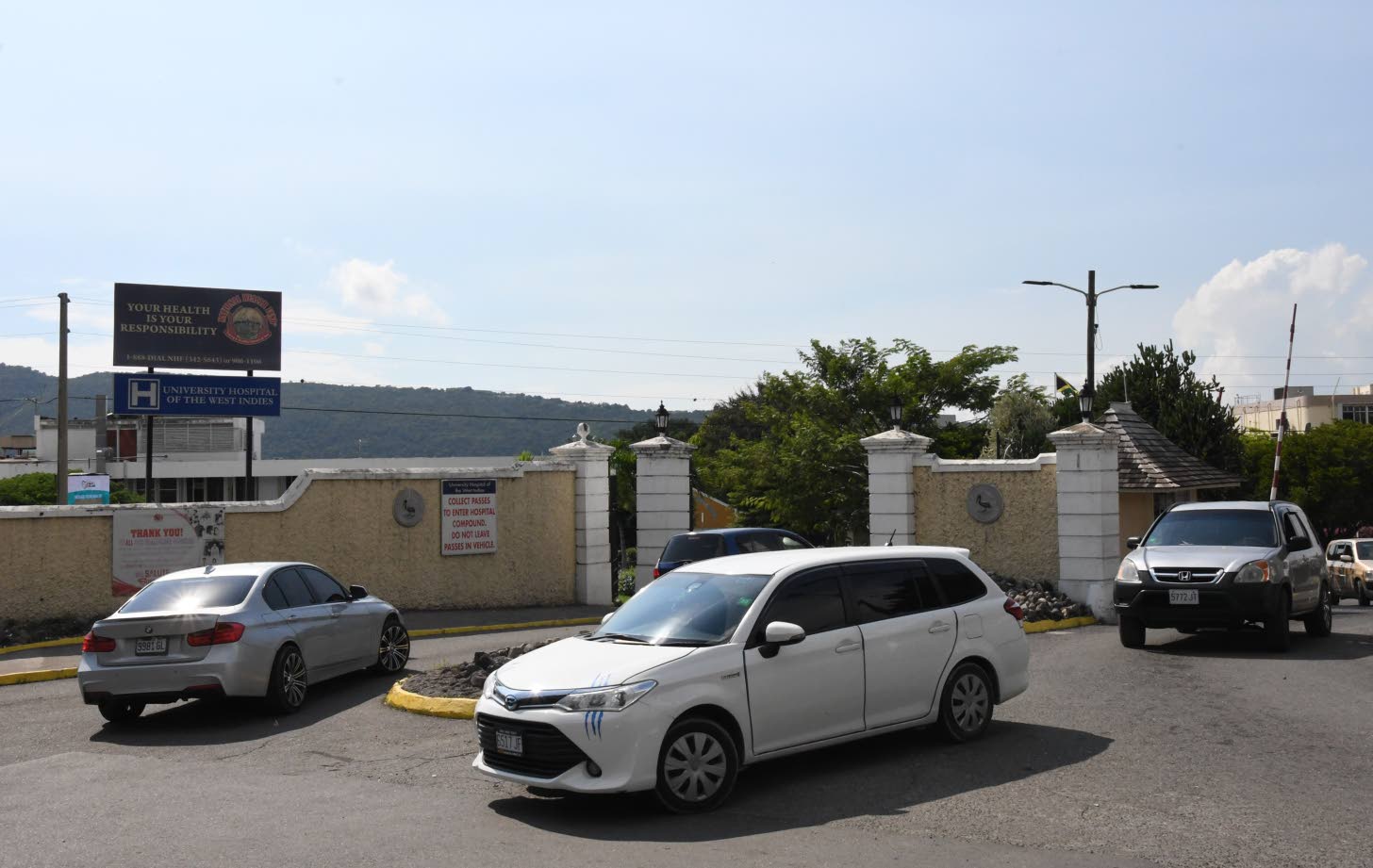
Motor vehicles entering and leaving University Hospital of the West Indies’ main entrance.


