



Not JPS’s fault, says Paulwell
Opposition Spokesman on Energy Phillip Paulwell has rejected claims that the current Jamaica Public Service (JPS) licence is responsible for high electricity costs, arguing that prices are being driven by the Government’s failure to diversify energy sources and expand competition, as he outlined recommendations for a revised licence.
Contributing to the sectoral debate in Parliament on Tuesday, Paulwell pushed back against what he suggested is a misleading narrative surrounding the role of the JPS licence in determining electricity prices, instead pointing to broader policy failures within the energy sector.
He argued that there is a need to fundamentally restructure how electricity is generated, distributed and regulated; proposals which he said should form the basis of any new or amended licence arrangement.
He told Parliament that a key priority must be removing preferential treatment currently afforded to the utility company in the development of new generation capacity.
“The right of first refusal currently enjoyed by JPS for the replacement of its existing generation capacity must be removed. Any new generation licence must be procured through the government-owned GPE (Generation Procurement Entity) by way of an internationally competitive tender, with awards based on least cost of available renewable technology, supported by the most efficient storage solution. You can’t award licences for renewables without thinking about storage, and the level of efficiency in storage has improved tremendously,” he suggested.
Paulwell argued that increasing competition in electricity generation, particularly through renewable energy, would be critical to reducing costs over time. His proposal aligns with broader regional and global trends where governments are moving towards competitive procurement models to drive down energy prices and accelerate the transition to cleaner energy.
He also called for the long-delayed implementation of “wheeling”, a mechanism that would allow large businesses to generate electricity in one location and transmit it across the national grid for use at other sites.
He also called for greater access to self-generation, with a particular focus on special economic zones.
“We have said so repeatedly that owners and tenants of special economic zone facilities must be permitted to generate their own electricity and to distribute it within the zone. This will reduce operational costs, improve competitiveness, and attract investment,” said Paulwell.
For households and small businesses, he stressed the need to improve net metering, so people can sell extra electricity — especially from rooftop solar — back to the grid.
He also proposed a significant shift in how electricity distribution is structured, calling for the introduction of microgrids to expand access in underserved communities.
“Microgrid licences are to be awarded on a competitive basis with a specific mandate to provide service to unserved and underserved communities. Access to every community must be served even where a subsidy is required to make that provision economically viable. This is what it means to build with purpose and to build with people,” Paulwell added.
Beyond generation and distribution, he also raised concerns about inefficiencies and losses within the system, noting that a significant portion of electricity costs is tied to illegal connections and unmetered usage.
“There must be a clear and enforceable mandate for the reduction and elimination of illegal connections and unmetered electricity usage. The government must accept a substantially greater responsibility for addressing this practice… I think we need to increase the penalties where people steal electricity in these wealthy communities and provide a mechanism for the poorer communities to get attached to the grid, lawfully,” he added.
Paulwell also called for clearer separation within the utility’s operations and improved billing transparency for consumers.
“Generation, transmission and distribution must be clearly and accountably separated, and we have one of the most opaque billing systems in the world. We need to open that to greater transparency. All charges must be disaggregated, including generation, transmission, distribution and all categories of system losses. We need to make the consumer more enabled to see exactly what the usages are,” he said.
Consumer protection also featured prominently in his proposals, particularly in relation to compensation for damaged appliances caused by power fluctuations.
“There are so many times when, because of fluctuation in voltages, your equipment at home, your appliances get damages and when you turn to the JPS for compensation, they say, ‘Did you read the fine print of your contract?’ We have to change that to give consumer better protection,” he urged.
Paulwell’s recommendations come amid ongoing debate over the future of the JPS licence, which is set to expire in 2027, and broader concerns about electricity affordability in Jamaica, reiterating his push for a more consumer-focused energy sector.
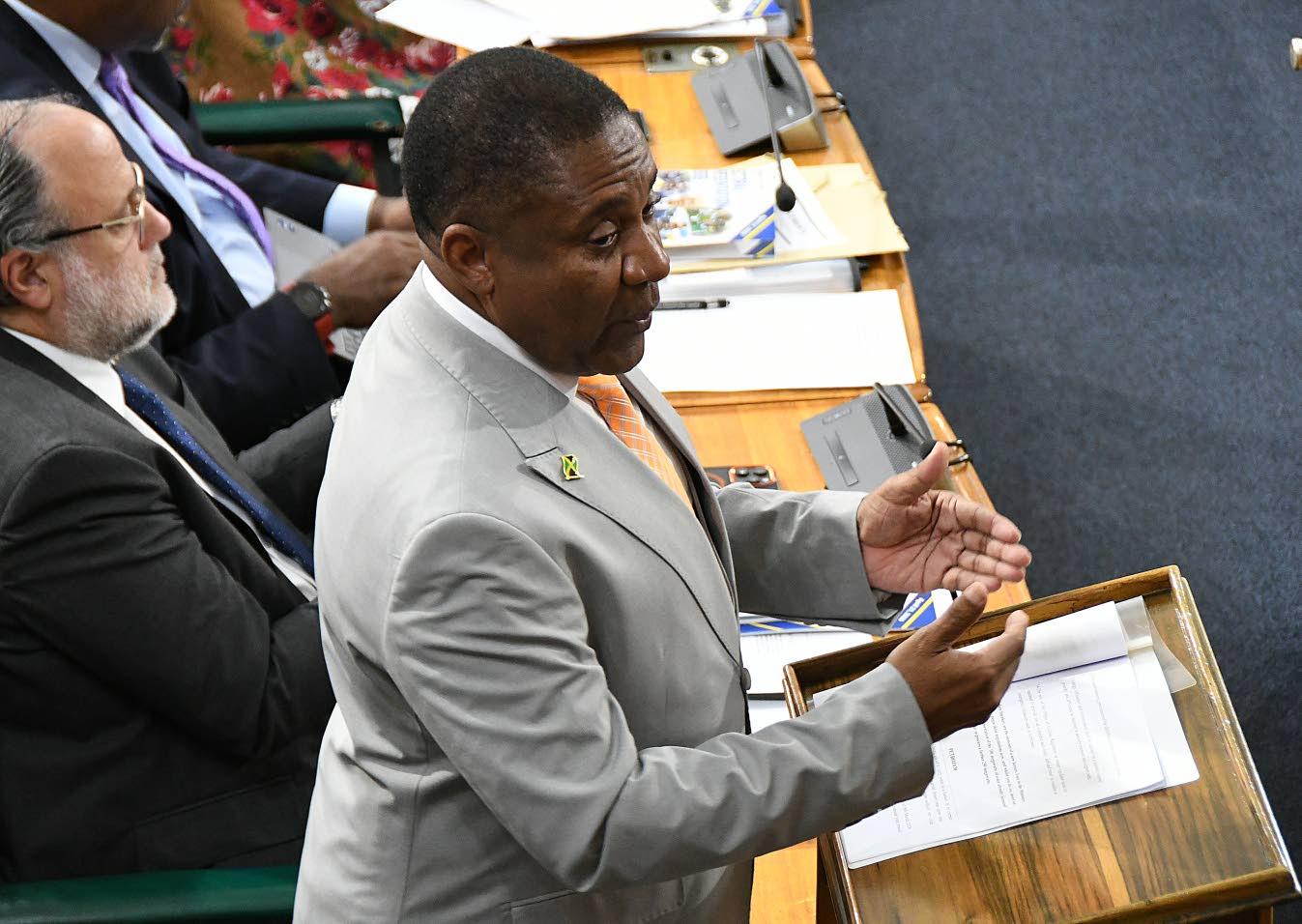
Opposition Spokesman on Energy Phillip Paulwell speaks, Tuesday, during his contribution to the 2026/27 Sectoral Debate. (Photo: Karl McLarty)


