



CHILD SEX SHOCK
Police reveal cases of children under 12 engaging in sexual behaviour, sparking debate on parental and school responsibility
SHOCKING cases involving an 11-year-old and a six-year-old, as well as a nine-year-old and a four-year-old engaging in sexual activity were revealed on Wednesday, as crime officer for Area Two, Superintendent Keniel Henry, addressed Parliament’s Joint Select Committee reviewing the Child Diversion Act.
The disclosures jolted the committee into a wider debate on how Jamaica treats children who are below the age of criminal responsibility, but are already displaying harmful sexual behaviour. It raised questions among members about gaps in both the Child Diversion Act and the broader child protection framework.
Detailing the incidents, Henry, who also works with the Criminal Investigations Branch at the Jamaica Constabulary Force (JCF) said the cases reflect a troubling pattern driven by exposure within children’s environments, rather than isolated misconduct.
“So we are seeing reports where an 11-year old and a six year old are having oral sex, and when you interview the child, the child is saying that it’s the environment that they’re in where they have seen it. We have another case of a nine-year-old and a four-year-old,” he revealed.
He warned that current legislation offers limited options for intervention in such cases, noting that these children cannot be charged but still require structured support.
“I am wondering if provisions could be made to treat with those children who are under the age of criminal responsibility so that they could be placed on programmes so their psychosocial welfare can be taken care of,” he suggested.
The revelations left legislators stunned as they argued about who should shoulder the blame. Committee chairman Delroy Chuck argued that accountability should, in some cases, fall on parents.
“I mean in all sincerity, four, six, nine years old?! No, no, with due respect, these children need care and protection, and I think somebody had mentioned a parental order. These are children where you should have a parental order against these parents, because what do you do with a four-, a six-year-old child?” Chuck queried.
Henry, however, urged a more holistic view, pointing to the role of schools and wider social exposure.
“It’s the environment as well, so we have to look at it holistically and look at these children under the age that are being exposed to these kinds of behaviours and they are practising it. So sometimes, yes, the parents are to be blamed, but sometimes as well, the parents cannot be blamed based on the nature,” he said, referring to the nature of the cases he has seen.
Furthermore, Education Minister Dr Dana Morris Dixon maintained that, regardless of where incidents surface, the origin of such behaviour must be traced back to the home.
“The first child that introduced it at school, they learned it at home. So in any way we look at it, a child does not wake up and learn this behaviour on their own. They learned it somewhere, and that first one who would have introduced it would have learned that at home,” she insisted.
The discussion then widened to include older minors and the complexities of so-called “close-in-age” sexual activity, where both parties are under 18. Head of the Centre for the Investigation of Sexual Offences and Child Abuse Superintendent Kerry-Ann Bailey outlined how such cases typically emerge.
“Usually for us, in our experience, the female child is brought to us first, and this, in most cases, has to do with either the incident happened at school, and they’re referred from the guidance counsellors or the school administrators, or you will find that the child is now pregnant, or the parents may have stumbled on text messages, or some messages to see that they’re corresponding, and so on, or if they find that they have contracted an STI (sexually transmitted infection), usually it’s the female child that is brought in, brought in by a guardian or parent,” she explained.
She added that the dynamics of these cases are not always straightforward, noting that girls are not exclusively victims in such situations.
“And in that case, when we do the interviews, they usually tell us, ‘you know, it’s my boyfriend, or we had decided to go meet at his home, or when the parents are not there’, and there’s an agreement, and in some cases, it’s the female that’s actually the initiator of the encounter,” she said.
The committee heard that under the current law, one child in these scenarios is often classified as the offender and referred to diversion programmes, even where the activity is consensual between minors.
Against that backdrop, Member of Parliament for Portland Eastern Isat Buchanan called for new legislation focused on welfare-based intervention and parental accountability, arguing that such cases point to deeper issues of neglect.
The Child Diversion Act was designed to steer young offenders away from the formal justice system, but Wednesday’s deliberations exposed clear limitations when dealing with children who cannot be criminally charged.
Therefore, Morris Dixon indicated that amendments to the Child Care and Protection Act (CCPA) are already being prepared, which could provide a more appropriate framework for such cases.
“A lot of what we’ve been talking about here falls under the ambit of CCPA, where there is no criminal activity at all, but the children need care and protection and they’re exposed to a lot of things in our communities and in our homes, and there a lot of problems there so we will be doing this same joint select committee and so I urge the presenters to identify what’s really for child diversion versus CCPA,” she disclosed.
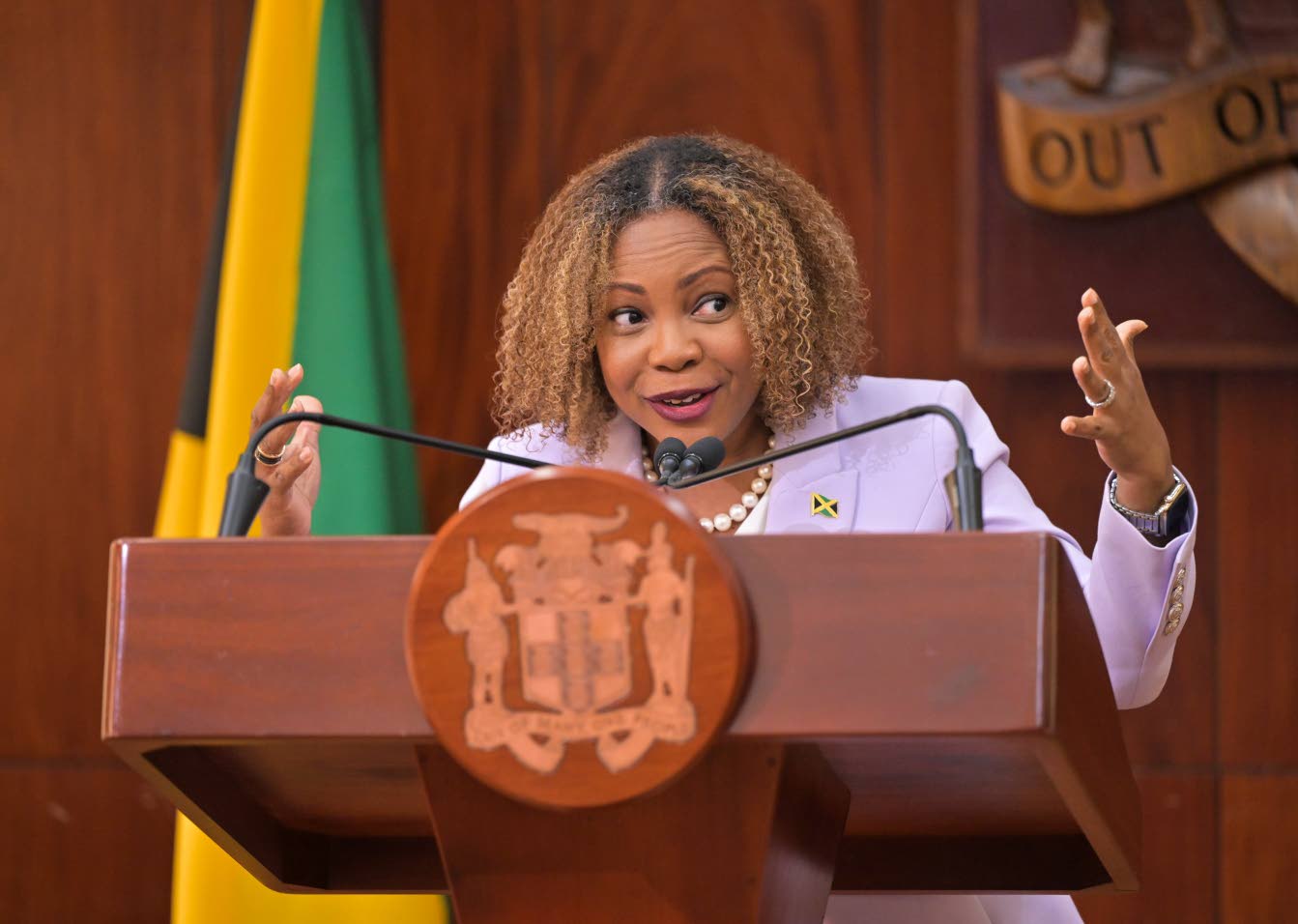
Education Minister Dr Dana Morris Dixon maintained that, regardless of where incidents surface, the origin of such behaviour must be traced back to the home.

Isat Buchanan called for new legislation focused on welfare-based intervention and parental accountability.


