



Jamaica’s strategic leap in post-disaster governance
IN the aftermath of catastrophic shocks, countries are often judged not only by how quickly they rebuild, but by how intelligently they do so, albeit an unfamiliar mandate.
Jamaica’s National Reconstruction and Resilience Authority ( NaRRA) Bill marks a decisive shift from reactive recovery to proactive, institutionalised resilience-building, positioning the country as an emerging thought leader in disaster governance.
At its core, the legislation establishes a centralised authority tasked with the coordination, prioritisation, and execution of reconstruction and resilience initiatives following the devastating impact of Hurricane Melissa. But beyond its immediate purpose, the Bill represents something far more significant: a modern governance model that integrates infrastructure recovery, climate resilience, and public sector accountability into a single, performance-driven framework.
Comparative Insight: Learning from New Zealand
Jamaica’s approach invites comparison with the Canterbury Earthquake Recovery Authority (CERA), established following the 2011 Christchurch earthquakes in New Zealand. Like Jamaica’s new authority, CERA was designed as a centralised body with broad powers to coordinate recovery efforts, streamline decision-making, and fast-track reconstruction. It was appropriate for its context and governance structure and timely in terms of the legislative imperatives.
Jamaica’s model appears to advance this framework through the NaRRA Bill in several critical ways. While CERA focused heavily on rapid recovery, Jamaica’s legislation explicitly mandates performance indicators, monitoring systems, and reporting standards from inception. Critically, Jamaica embeds resilience and environmental considerations directly into programme and planning requirements, reflecting a forward-looking, climate-adaptive approach, integrated in national priorities. Further, the explicit inclusion of procurement systems and project registers enhances transparency and reduces the risk of inefficiencies or corruption, an area for which many recovery efforts globally have faced criticism.
A New Model of State Coordination
This centralised coordination architecture represents a deliberate shift towards integrated, legislated disaster governance rather than an ad hoc administrative response. By consolidating core functional domains, public procurement oversight, programme implementation monitoring, risk management, and capital project prioritisation within a single statutory authority, Jamaica is operationalising a whole-of-government coordination model designed to mitigate systemic fragmentation, a well-documented constraint in post-disaster recovery frameworks.
This approach is consistent with international precedents, such as the legislative mandate underpinning CERA, but advances beyond it by embedding ex-ante performance management systems, enforceable reporting obligations, and Cabinet-aligned programme governance within the primary legislation. The result is a hybrid governance model that integrates strategic oversight with executional control, reducing latency in decision-making while maintaining institutional accountability.
Critically, this model reflects an emerging legislative and policy thrust among small island developing states (SIDS), particularly within the Caribbean, where exposure to hydro-meteorological hazards necessitates anticipatory governance systems. In this context, Jamaica’s framework aligns with global resilience doctrine by institutionalising “build back better” principles into law, thereby shifting disaster response from episodic, reactive interventions to continuous, risk-informed development planning.
As such, the authority is not merely a coordinating body, it is a statutory instrument for resilience mainstreaming, ensuring that disaster recovery, climate adaptation, and national development are no longer treated as parallel processes but as a unified policy continuum.
This positions Jamaica within a growing cohort of jurisdictions adopting legislated resilience frameworks to enable rapid recovery while strengthening long-term adaptive capacity, effectively moving disaster governance away from a knee-jerk response towards structured, anticipatory statecraft.
Positioning Jamaica as a Leader
Progressively, governance structures have had to shift globally to ensure climate resilience incorporates a single cross-cutting agency that is supported by legislation to achieve effectiveness.
What emerges from Jamaica’s recently tabled legislation is a governance architecture that is both technically robust and strategically aligned. Importantly, it reflects an understanding that resilience is not just an environmental issue, but also a matter of economic stability, infrastructure integrity, and institutional capacity. It is clear, therefore, that Jamaica is positioning itself at the forefront of small island developing states’ (SIDS) response to climate vulnerability.
This is particularly significant in a global context where climate-related disasters are increasing in frequency and intensity. Countries are searching for scalable, replicable models of resilience governance. Jamaica’s framework, if effectively implemented, could serve as a blueprint for others navigating similar vulnerabilities.
The Real Test: Execution
Legislation, however well designed, does not guarantee outcomes. The effectiveness of the authority will ultimately depend on institutional capacity, sustained political will, inter-agency coordination, and disciplined monitoring and enforcement.
Experience from New Zealand offers a useful lesson. CERA benefited from strong central coordination and expedited decision-making powers following the Christchurch earthquakes, but it also faced criticism over stakeholder engagement, local government alignment, and the pace of transition once the recovery phase matured. These challenges underscore that execution is not simply about speed, but also about the balance between urgency and inclusion, central authority and institutional collaboration.
Jamaica’s legislation anticipates some of these risks by embedding requirements for reporting, audits, and periodic review. These provisions, if rigorously applied, can anchor transparency and course correction over time. The real opportunity lies in ensuring that these mechanisms function as active management tools rather than procedural formalities.
Again, if effectively operationalised, they will help ensure that the authority evolves into a results-driven instrument of national transformation rather than another administrative layer within the public sector.
When resilience is treated as a national development priority, its absence is most evident in contexts such as Haiti and Dominica, where delayed legislative action and fragmented coordination structures contributed to prolonged economic and social recovery. These cases underscore the necessity of establishing a single, empowered authority with cross-government reach.
Lessons from New Zealand through the rapid establishment of CERA demonstrate that timely legislative action and centralised coordination are critical to stabilising recovery environments and preventing disjointed, chaotic responses.
The NaRRA Bill, therefore, represents a decisive shift from reactive recovery to institutionalised resilience. In the aftermath of Hurricane Melissa, it embeds centralised coordination, performance accountability, and integrated planning across ministries and agencies, ensuring recovery processes are structured, coherent, and aligned with national development priorities.
Jamaica is not simply rebuilding, it is institutionalising resilience as a core function of the State, positioning itself as a leading model within the Caribbean and the wider SIDS context for anticipatory, legislated disaster governance.
Seya Wilson is a climate resilience researcher, health and environment project manager, and monitoring and evaluation specialist. Send comments to the Jamaica Observer or seya.wilson@gmail.com.
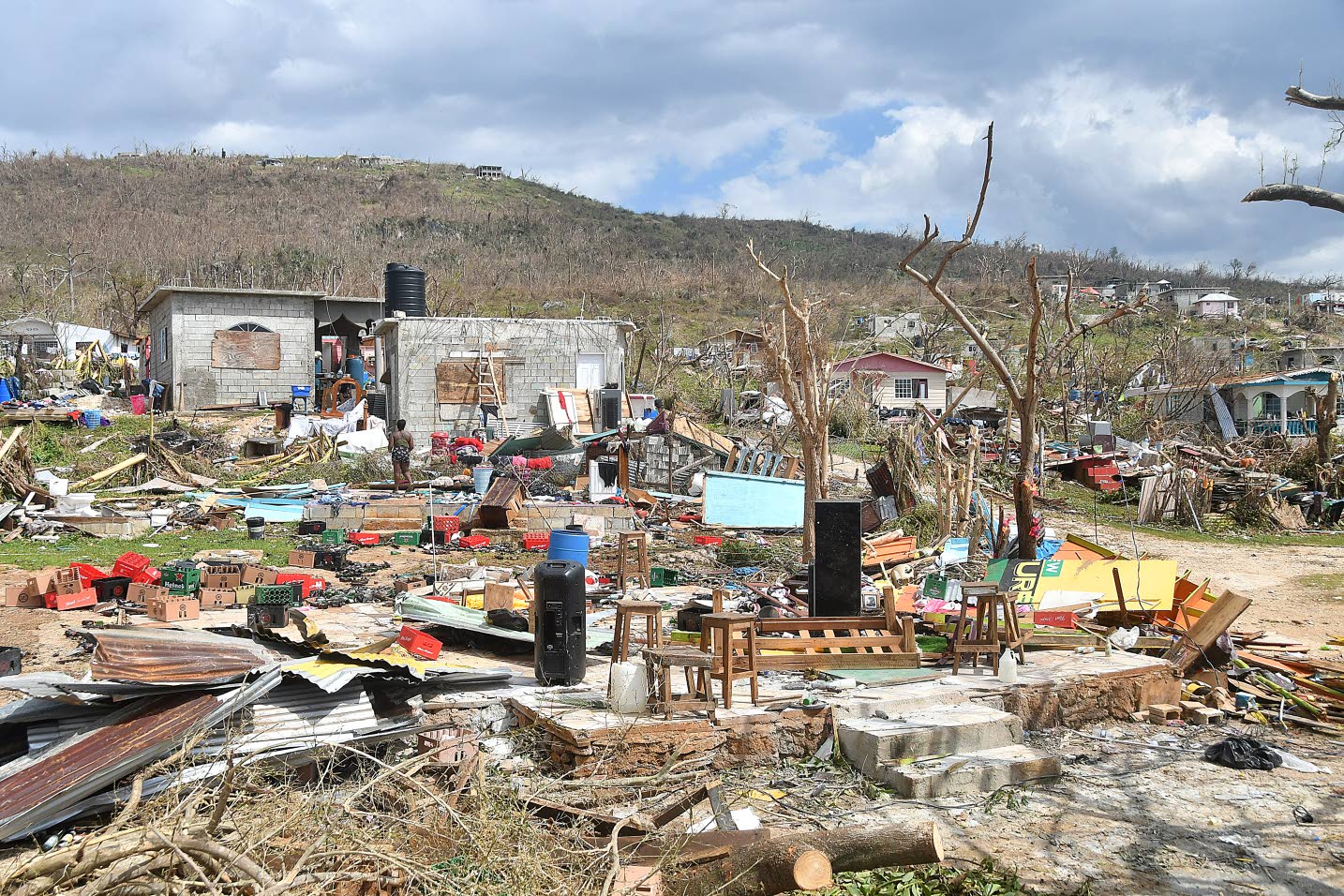
A section of Westmoreland after Hurricane Melissa’s rampage on October 28, 2025. (Photo: Garfield Robinson)


