BOJ sees inflation averaging as high as 7.5 per cent
BANK of Jamaica policymakers in March privately projected inflation could average as high as 7.5 per cent over the next two years as oil prices and geopolitical tensions threaten to drive up costs and weaken growth, minutes of the central bank’s latest meeting show.
The minutes also revealed growing concern among policymakers about weaker tourism, slower economic growth, and a worsening external accounts position, even as the central bank kept its benchmark interest rate unchanged at 5.50 per cent.
BOJ’s March 31 statement had already signalled that inflation would rise and that uncertainty had increased because of the conflict in the Middle East, but the newly released minutes provide a more detailed picture of the scale of the risks being weighed internally by the Monetary Policy Committee (MPC).
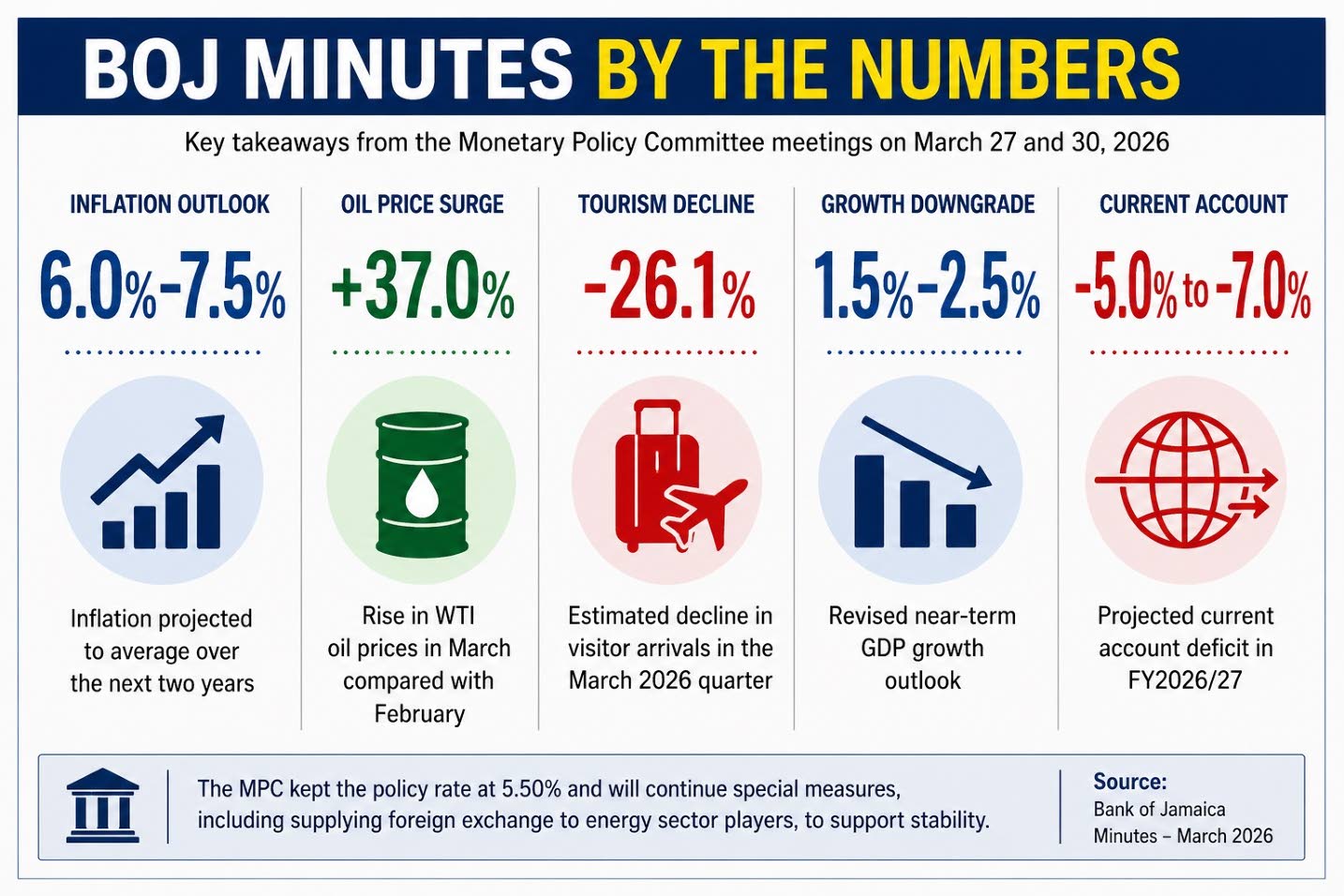
According to the minutes of the MPC’s March 27 and 30 meetings, domestic headline inflation is now likely to trend above the bank’s previous projection of 5.9 per cent, averaging between 6.0 per cent and 7.5 per cent over the next two years. Core inflation, which excludes agricultural food products and fuel, is also expected to rise above earlier forecasts amid new tax measures and the risk of second-round effects from higher oil and shipping costs.
The bank said the risks to inflation remain skewed to the upside, with the biggest threat being a prolonged or wider conflict in the Middle East that could trigger further increases in international commodity prices and shipping rates.
At the time of the meeting, West Texas Intermediate crude oil prices had risen by about 37.0 per cent in March compared with February, while international fertiliser prices had climbed by 20.3 per cent and average grain prices had increased by 4.2 per cent, according to the BOJ’s summary of discussions.
The inflation outlook has shifted despite a lower-than-expected reading in February when annual headline inflation was 3.9 per cent, below the bank’s forecast of 5.7 per cent. BOJ said the miss largely reflected a smaller-than-anticipated increase in agricultural food prices.
The central bank also cut its near-term growth expectations.
The minutes said real gross domestic product growth for the June 2026 to December 2027 period is likely to trend below the bank’s February forecast of 2.6 per cent, within a revised range of 1.5 per cent to 2.5 per cent. Over the March to September 2026 quarters the economy is still projected to contract by an average of 3 to 5 per cent as the country continues to absorb the effects of Hurricane Melissa.
Tourism, one of Jamaica’s main sources of foreign exchange, was highlighted as a key area of concern.
Visitor arrivals for the March 2026 quarter were estimated to have declined 26.1 per cent year over year, more than previously anticipated, with the BOJ warning that stopover arrivals could remain weak over the next eight quarters because of higher airfares and softer travel demand linked to geopolitical tensions. Remittance inflows are also expected to come in below forecast amid weaker growth in source markets.
The worsening outlook for tourism and remittances is expected to feed into a sharp deterioration in Jamaica’s external accounts.
The current account surplus is estimated to narrow to 0.1 per cent of GDP in fiscal year 2025/26, from 3 per cent in fiscal year 2024/25. BOJ expects it to swing to a deficit of between 5 and 7 per cent in fiscal year 2026/27 as higher fuel costs and weaker services inflows weigh on the balance of payments.
In that environment, BOJ’s gross international reserves are projected to moderate to between US$5 billion and US$5.5 billion by the end of fiscal year 2026/27, though policymakers said reserve levels remain a strong buffer for the economy.
Against that backdrop, the MPC unanimously decided to keep the policy rate at 5.5 per cent and continue special foreign exchange market measures, including directly supplying the foreign exchange needs of selected players in the energy sector to preserve market stability.
The committee also discussed signs of steepening in Jamaica’s yield curve, noting that medium- to longer-dated Government yields had risen as inflation expectations and uncertainty increased, though members said immediate policy action was not required.
The minutes showed policymakers were balancing rising inflation risks against a fragile recovery, with members agreeing that the current policy stance remains appropriate for now but reiterating that the bank stands ready to tighten monetary policy if inflation expectations worsen or the oil shock proves prolonged.
The bank’s next monetary policy decision is scheduled for May 20.