



Frog legs join fakes as list of contraband found at port grows
…Hill calls for coordinated approach as illicit trade robs billions from national coffer
AGRICULTURAL commodities such as frog legs and exotic animals are among the latest illicit goods being intercepted at the nation’s ports that have been contributing to the more than $26 billion in tax and excise revenue lost annually.
They join cigarettes, alcohol, fuel, counterfeit handbags, footwear and clothing, along with pharmaceuticals —including sexual enhancers and weight-loss products — and a range of other items that are being illegally imported through the island’s ports as part of organised smuggling operations.
Speaking at the second staging of the Anti-Illicit Trade (AIT) Forum hosted by the Jamaica Chamber of Commerce (JCC) last week, Acting Commissioner of Customs Kirk Benjamin said smugglers are increasingly becoming more willing to traffic almost any item once there is a profit to be made.
“We continue to find a myriad of items — from the usual cigarettes to alcohol and medication — but in the area of agricultural produce we have also been seeing some other items. We recently had a container with frog legs, so apparently there is an appetite for exotic foods, as people have been smuggling it in. These items require a permit and none was presented, so the cargo was abandoned and remains detained,” Benjamin said.
He said that illicit goods currently enter through all points of entry including airports, seaports, warehouses and even high-volume mail systems where smugglers attempt to blend in. However, unregulated coastal areas pose an even greater challenge as they are often used to transport exotic animals and other contraband via small vessels —making them harder to monitor.
While Customs continues to intercept significant quantities of illicit goods, Benjamin said it remains impossible to catch everything. As a result, the agency has been pushing to strengthen its security apparatus to improve detection and enforcement.
“We have been building out our marine unit — we have two now and are looking to increase that to four or five in short order so that we can have full-island coverage. We are also expanding our staffing, have added a canine unit, and very soon the use of drones. Additionally, we have invested in new scanning technologies, and these scanners can detect a great deal,” he noted.
Minister of Industry, Investment and Commerce Aubyn Hill, who also addressed the forum, called for stronger coordination between Government and the private sector, stressing that illicit trade must be treated as an urgent economic threat.
“The private sector’s role is essential. Businesses must invest in strengthening supply chain integrity while industry bodies support more effective intelligence-sharing. At the same time, financial institutions must also apply the full rigour of their anti-money laundering frameworks to significantly reduce the proceeds of illicit trade,” Hill said as he further stressed the need for legislation to keep pace with evolving threats.
He pointed out that more than 44,374 non-conforming or illicit products were identified in the domestic market in 2024 alone, moving through informal and unregulated distribution channels on a large scale.
“That figure rose to 75,000 in 2025 — a more than 69 per cent increase in one year. This is big business,” Hill stated, while noting that every dollar lost to illicit trade is a dollar that cannot be invested in education, health care, or infrastructure — key pillars of national development.
“Illicit traders, as non-compliant taxpayers, undermine legitimate businesses and suppress the level of private sector dynamism that Jamaica’s growth strategy requires, and as result we must protect our ports and strengthen enforcement across the board,” the minister added.
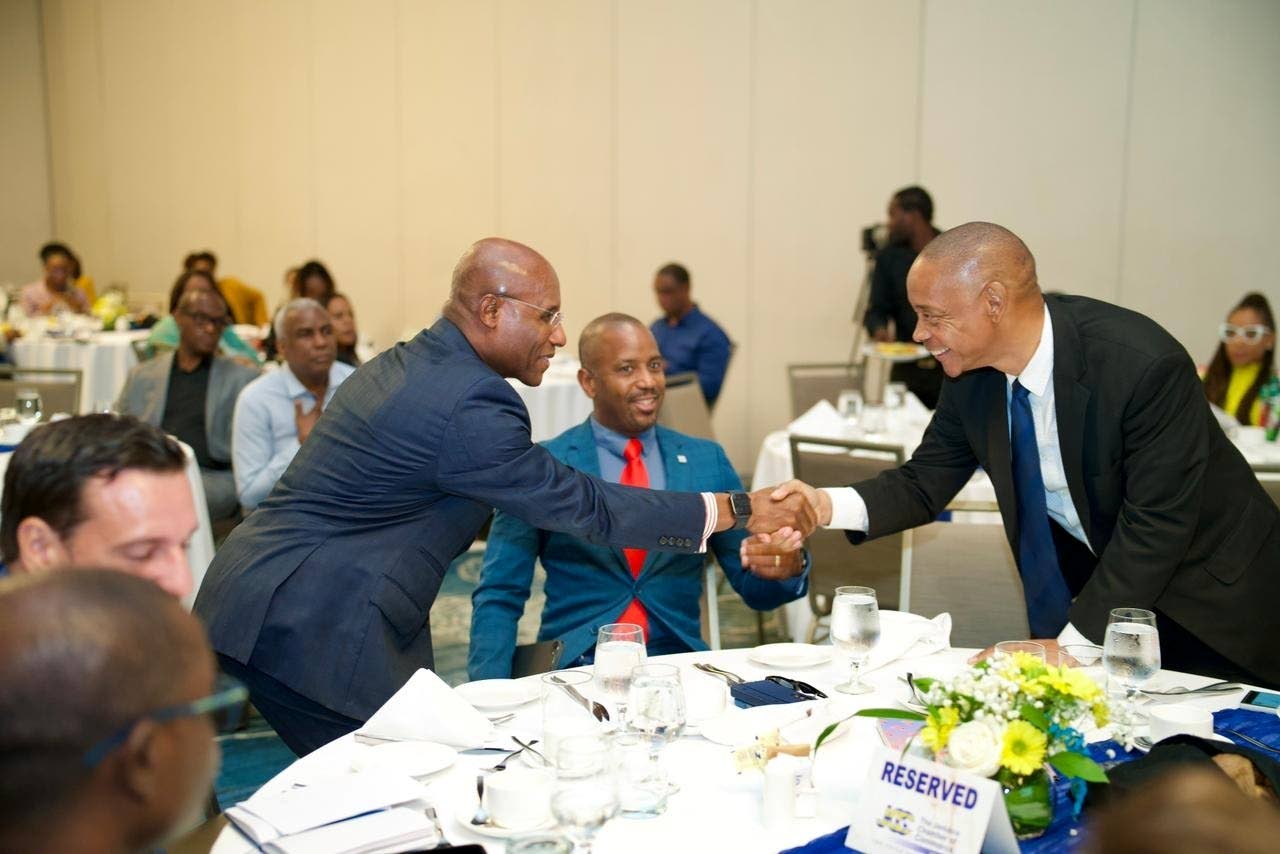
Minister of Industry, Investment and Commerce Aubyn Hill greets Dennis Chung, chief technical director of the Financial Investigations Division, during the recent Anti-Illicit Trade Forum. Seated at centre is Emile Leiba, president of the Jamaica Chamber of Commerce.
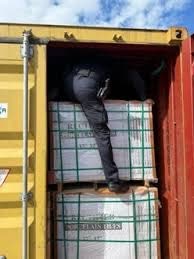
Exotic goods join the list of illicit items found at the nation’s port.


