



US$15-million upgrade for Petrojam
DECLARING that there is no time more important than now to strategically position the State-owned oil refinery Petrojam in Jamaica’s energy future, portfolio Minister Daryl Vaz has announced that the company is investing approximately US$15 million ($2.4 billion) in critical infrastructure upgrades.
Vaz made the announcement on Tuesday during his contribution to the 2026/27 Sectoral Debate in the House of Representatives.
He said the upgrades will include electrical improvements, new storage capacity, pipeline installations, and major furnace rehabilitation to strengthen reliability and long-term performance.
According to Vaz, the construction of a new asphalt storage tank, pipeline installations at Berth 2 in Montego Bay, and the replacement and rehabilitation of two key furnaces will also be done in the upgrade.
“In addition, a scheduled 90-day refinery turnaround will deliver key upgrades aimed at improving efficiency, reducing unplanned outages, and enhancing fuel quality. At the same time, an independent technical assessment is underway to evaluate long-term upgrade options, ensuring the refinery remains competitive as regional refining capacity declines,” said Vaz.
The energy minister noted that as the only operational petroleum refinery in the region, Petrojam is a critical national asset with significant strategic value — not only for Jamaica, but for the wider Caribbean.
“Its geographic location and refining capability provide a unique opportunity to strengthen energy security while expanding regional influence,” he said.
While Petrojam has recorded significant losses over the past three years, Vaz told the House that for the 2026/2027 financial year, it is projecting sales of 12.21 million barrels, with 7.2 million barrels allocated to the domestic market and 4.9 million barrels for export.
“This dual role ensures reliable local supply while generating valuable foreign exchange earnings,” he said.
In the meantime, the energy minister reiterated that Petrojam is unable to sustain the $4.50 cap on fuel increase in light of the ongoing Middle East War. He pointed out that between March 12 and April 8, 2026, transport fuel prices rose by about $49.20 per litre, but only $18 was passed on to consumers due to the Government’s pricing cap.
“The remaining cost was absorbed by Petrojam to cushion households and businesses. That is a buffer of about US$8.6 million ($1.3–1.4 billion) worth of protection that this Government has provided for Jamaicans during this energy crisis.
“So when the Opposition Leader [Mark Golding] rises, and tells the Jamaican people that gas is cheaper than water, I would urge him to be reminded that 63 per cent of that cost is not being passed on to the consumer,” said Vaz.
He stated that while this buffer is effective, this intervention is costly, with projections reaching $11.8 billion by June 2026 if maintained.
“As a result, the Government is introducing a revised tiered pricing system to better reflect global market changes while managing price volatility,” Vaz reminded the House.
He added that, in looking ahead, the Government is actively exploring opportunities to further optimise Petrojam’s role through strategic partnerships, diversification, and potential public-private collaboration.
“This includes examining cleaner fuel options such as LNG (liquefied natural gas), expanding renewable integration within operations, and aligning with broader climate and sustainability goals.
“In essence, Petrojam is not just a refinery, it is a strategic national asset that must be leveraged wisely to support energy security, economic resilience, and Jamaica’s long-term development,” declared Vaz.
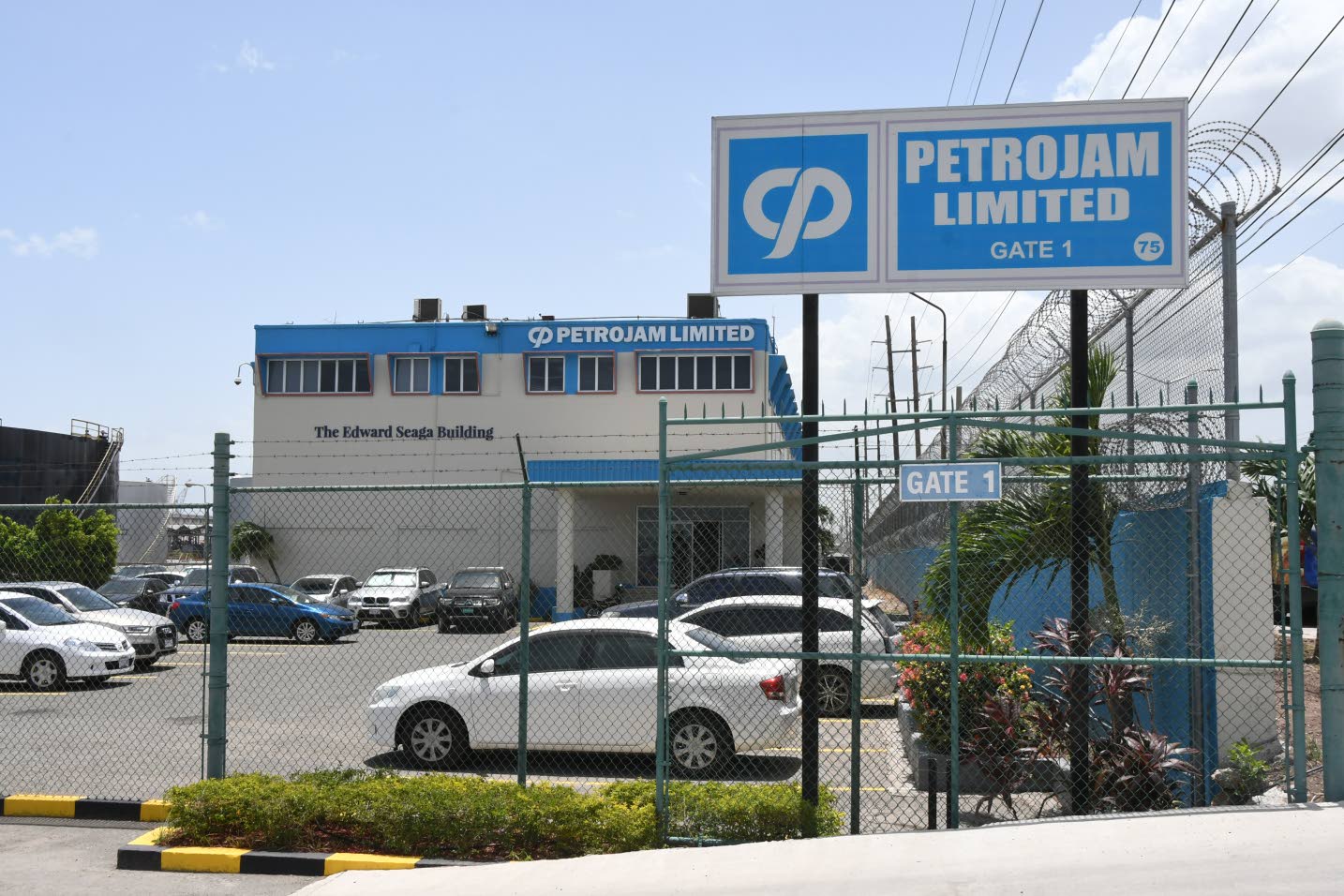
The entrance to the State-owned Petrojam refinery in the Corporate Area.


