It didn’t start with ‘Hill and Gully’
Cultural icon Fae Ellington opened a can of worms when she courageously took on those dancehall artistes who sacrilegiously used the Stephen “Di Genius” McGregor reworked rhythm of the well-known ‘Hill an’ Gully’ folk song and infused it with some rather crude and rude lyrics.
Now we all know “Miss Fae” to be a very peaceful woman, so the fact that she got so “bringle” (cross, angry, miserable) about this vexing matter behoves all well-thinking citizens to sit up and take notice. Needless to say, this latest cultural kerfuffle has brought into sharp focus the hypocrisy and confusion surrounding Jamaica’s cultural norms. This controversy also shines a light on the matter of artistic freedom versus civic responsibility, not to mention common decency.
The sad truth is that we have become a very confused nation regarding our cultural identity, which our political directorate and intelligentsia have failed to effectively tackle with any sense of urgency since the attainment of Independence in 1962.
For starters, our coat of arms in no way reflects anything Jamaican. It is supposed to be a symbol of our heritage, unity, and resilience, but the two featured individuals are Tainos, who most Jamaicans know very little about and cannot relate to; a crocodile; and a number of pineapples for good measure.
Then there is the controversy surrounding the mace as the symbol of authority in the House of Parliament. This is an ancient relic of our colonial past which Member of Parliament Dr Angela Brown Burke ill-advisedly sought to remove during a recent sitting of the House, ostensibly in protest against the alleged refusal of House Speaker Juliet Holness to acknowledge her attempts at wanting to address the chamber.
Quite appropriately, renowned constitutional lawyer Dr Lloyd Barnett has opined that it is part of an archaic practice, not relevant to our history or constitutional reality, which should be discontinued. In this regard, this writer is proposing that the mace be replaced with a well-sculpted symbol carved out of the lignum vitae, the tree which boasts the national flower of Jamaica.
In the meantime, St James Southern Member of Parliament and the People’s National Party spokesperson on culture and information Nikeisha Burchell was stopped in her tracks by House Speaker Holness on Wednesday when she sought to begin her debut sectoral debate presentation using the Jamaican dialect, which, according to the Standing Orders, is not allowed. She was expected to speak ‘properly’ using the King’s English.
Revered cultural icon, Louise Bennett, had her work cut out for her with her in-your-face bid to legitimise the Jamaican dialect and make it an acceptable part of our culture. Yet decades later, it is still not allowed in our Parliament.
Meanwhile, there is an ongoing debate about how uptown people can “get on bad” during Jamaica Carnival season without being condemned, while those in dancehall who “skin out” are chastised for being slack and out of order. What a ‘hataclaps’!
And if we were to go way back in history when internationally acclaimed reggae artiste Bob Marley began his illustrious career in Trench Town, there were many middle and upper class Jamaicans who dismissed him as the “little dutty Rasta boy”.
Mention should also be made of the Emancipation Park monument, Laura Facey’s symbolic work that has been heavily criticised by certain elements in the society as being inappropriate. Lennie Little-White, a respected Jamaican film-maker, in a post entitled ‘Who’s Art Anyway?’ compares that monument and Michelangelo’s nude works, including the famous
David statue which represents the pinnacle of high art. Says he, “Albert Huie was crucified when he painted a nude, black woman with pubic hair; Kapo’s naked men with elongated genitals caused many prudes to stare.” He goes on to describe similar expressions of outrage emanating from the “topanaris” with respect to nude works by renowned artists such as Barrington Watson, Edna Manley, and Judy MacMillan. To top it off, I must highlight those ‘infamous’ Fern Gully wood carvings (no pun intended) which remain a major tourist attraction.
But back to Ellington’s protestations. It must be understood and accepted that Jamaica’s moral standards have slipped into the dungeon. Who remembers schoolchildren gyrating to that popular dancehall song Romping Shop? Lest we forget, “slack tunes” have always been with us, from Ruckumbine to Push Wood in the Fire etc. The Mighty Sparrow taught us rather succinctly about subtlety in language with a tinge of double entendre. His
Congo Man and Saltfish songs stand out as masterpieces of that calypso genre.
Oh, by the way, the Rude Boy billboard didn’t just take the cake, it took the whole bakery!
Let’s face it, we are living in a country where moral standards are declining at a rapid rate. It starts in many homes where children are violently scolded accompanied by a barrage of “bad words”. In the streets, at sports events, entertainment venues, domino games, even at funerals, and not to leave out political meetings, “40-shilling words” are spewed with wild abandon. And not just in a state of aggression. They are also used on celebratory occasions and, yes, in the dancehall, lyrics and all, as well as Parliament (albeit sotto voce).
It is in this context that the ‘hill and gully’ controversy must be examined, dissected and rationalised. The sad truth is that “buttuism” is rampant in the land, and no amount of pontification and censorship is going to bring about any meaningful change. The nation has to go back to basics, starting from the potty training stage, which means greater emphasis needs to be placed on parental guidance as well as the setting and maintaining of standards by those who are in positions of influence.
For now, Jamaica is not only caught up in a “hill and gully ride”, but we may well be going to hell in a hand basket! Time to check ourselves before we wreck ourselves.
Lloyd B Smith has been involved full-time in Jamaican media for the past 50 years. He has also served as a People’s National Party Member of Parliament and Deputy Speaker of the House of Representatives. He hails from western Jamaica where he is popularly known as the Governor. Send comments to the Jamaica Observer or lbsmith4@gmail.com.
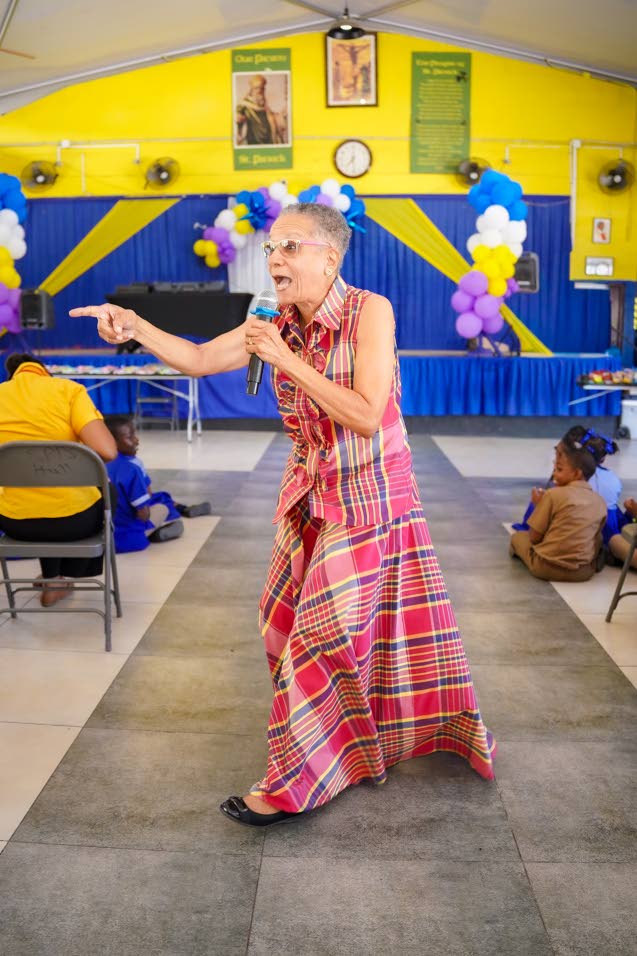
Fae Ellington (Photo: Mohic Ferguson)
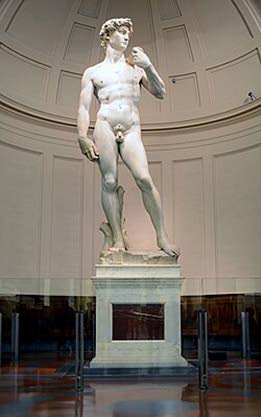
Michelangelo’s David

Parliamentary macel