



GLOBAL OIL SHOCK THREATENS JAMAICA’S INFLATION PROGRESS
Fuel prices jump nearly 25 per cent in 11 weeks ahead of Statin data and upcoming BOJ policy meeting
JAMAICA’S latest fuel-price surge is threatening to complicate the Bank of Jamaica’s efforts to keep inflation under control just as policymakers had begun cautiously easing monetary conditions earlier this year.
The issue comes into sharper focus today (Friday) with the release of the Statistical Institute of Jamaica (Statin) April inflation data, while the Bank of Jamaica’s Monetary Policy Committee is due to meet later this month against a backdrop of rising oil prices and escalating tensions affecting global energy markets.
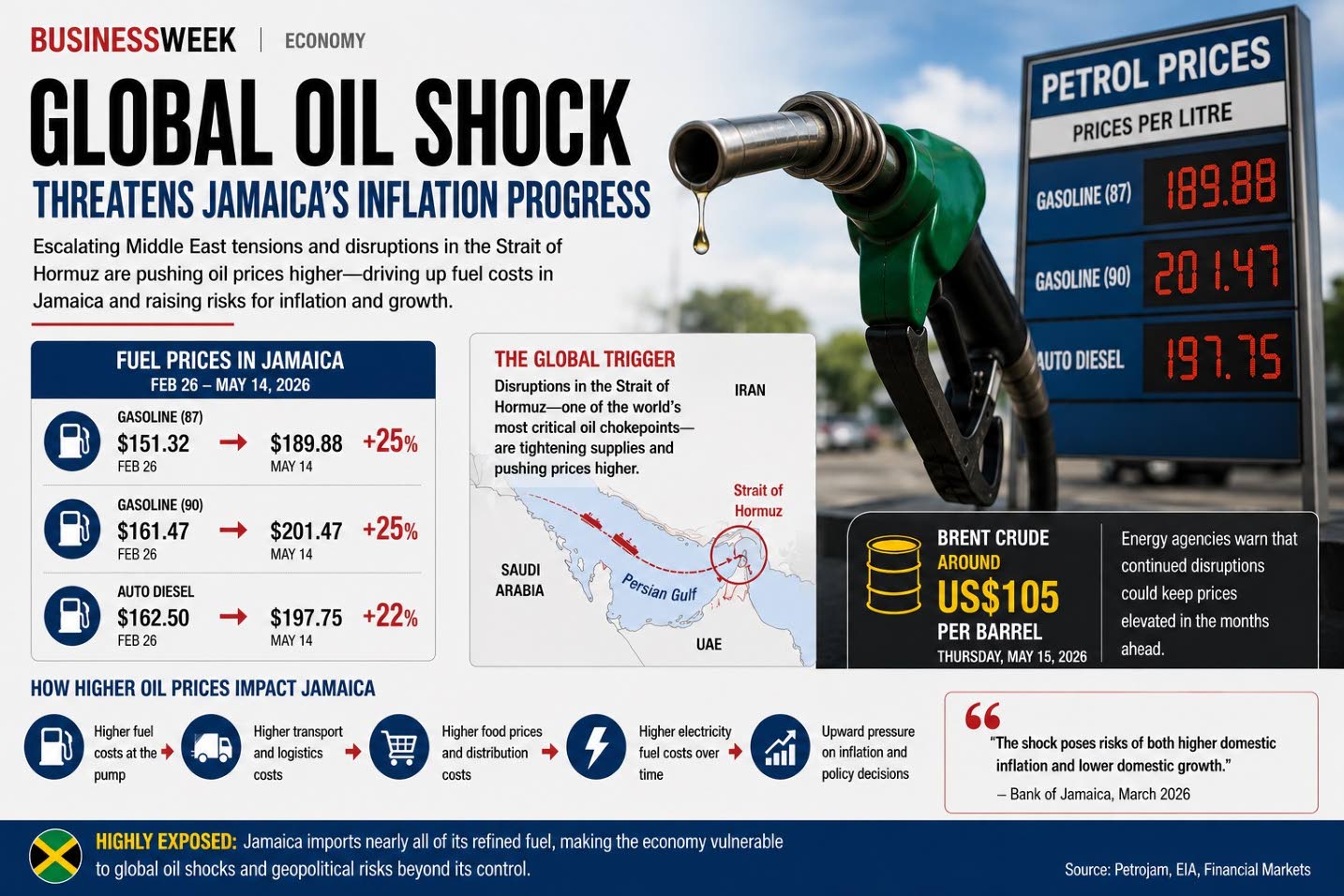
Petrojam prices show regular gasoline (87) rising from $151.32 per litre on February 26 to $189.88 per litre on May 14 — an increase of roughly $38.56 per litre, or about 25 per cent. Premium gasoline (90) increased by about $40 per litre over the same period, while auto diesel rose by roughly $35.25 per litre to almost $198 per litre. The increases come amid worsening disruptions affecting oil flows through the Strait of Hormuz, the narrow shipping route connecting the Persian Gulf to global markets and one of the world’s most critical energy chokepoints, as the escalating war involving Iran and the United States continues to disrupt tanker movements and tighten global energy supplies.
The US Energy Information Administration (EIA) said flows of crude oil, condensate and petroleum products through the strait fell to 14.6 million barrels per day in the first quarter from 20.7 million barrels per day in the previous quarter, a decline of nearly 30 per cent. The EIA said supply disruptions linked to the conflict are proving worse than earlier expected, prompting the agency to sharply increase its forecast for global oil inventory declines this year.
International benchmark Brent crude traded around US$105 per barrel on Thursday after earlier climbing above US$110 this week, as ongoing tensions involving Iran and disruptions affecting tanker movements through the Strait of Hormuz continued to keep global energy markets on edge. Rising crude oil prices, higher shipping costs and tighter refined fuel supplies have all contributed to higher landed fuel costs for import-dependent markets such as Jamaica.
The Bank of Jamaica (BOJ) had already warned in March that the inflation outlook was subject to “a high degree of uncertainty”, largely because of the conflict in the Middle East and the resulting increases in international commodity and energy prices. The central bank said the shock posed risks of both “higher domestic inflation and lower domestic growth”, reflecting the difficult position facing central banks globally as rising energy prices threaten to slow economic activity while also pushing inflation higher. The BOJ nevertheless kept its benchmark policy rate unchanged at 5.50 per cent in March after cutting rates in February as inflation pressures showed signs of easing earlier in the year. That outlook has since become more complicated as fuel prices accelerated through March and April.
Higher oil prices typically spread through the economy in stages, first affecting gasoline and diesel costs before feeding into transportation, electricity generation, food distribution and broader business operating expenses over time. Jamaica Public Service’s fuel rate for electricity bills declined in April to $26.852 per kilowatt-hour from $33.008 in March, reflecting earlier fuel-price movements and the lagged nature of electricity pricing adjustments. But sustained increases in global oil prices could place renewed upward pressure on electricity fuel costs in the months ahead if current disruptions persist.
The latest increases mean motorists filling a 45-litre tank of regular gasoline are now paying roughly $1,735 more than they would have in late February. Commercial transport operators and businesses dependent on diesel face similar pressure, particularly in logistics, agriculture, manufacturing and tourism-related transportation. Because Jamaica imports nearly all of its refined fuel, the country remains heavily exposed to swings in international oil prices, shipping disruptions and geopolitical shocks far beyond its borders.
The sharpest local increases came between March and early May as global supply concerns intensified. Gasoline 87 rose from $154.38 per litre on March 5 to above $190 per litre by May 7 before easing marginally in the latest weekly adjustment. Auto diesel followed a similar path, climbing from $166.75 per litre in early March to $197.75 by May 7. While the latest Petrojam adjustment showed a slight decline of roughly 25 cents in both gasoline 87 and diesel prices, forecasts from international energy agencies suggest broader pressure on oil markets could persist if disruptions affecting the Strait of Hormuz continue.
The entrance to the State-owned Petrojam refinery in the Corporate Area.
.


