


Subscribe Login
Jamaica Observer
ePaper
The Edge 105 FM Radio Fyah 105 FM
Jamaica Observer
ePaper
The Edge 105 FM Radio Fyah 105 FM
    • Home
    • News
      • Latest News
      • Cartoon
      • International News
      • Central
      • North & East
      • Western
      • Environment
      • Health
      • #
    • Business
      • Business Bites
      • Social Love
    • Sports
      • Football
      • Basketball
      • Cricket
      • Horse Racing
      • World Champs
      • Commonwealth Games
      • FIFA World Cup 2022
      • Olympics
      • #
    • Entertainment
      • Music
      • Movies
      • Art & Culture
      • Bookends
      • #
    • Lifestyle
      • Page2
      • Food
      • Tuesday Style
      • Food Awards
      • JOL Takes Style Out
      • Design Week JA
      • Black Friday
      • #
    • All Woman
      • Home
      • Relationships
      • Features
      • Fashion
      • Fitness
      • Rights
      • Parenting
      • Advice
      • #
    • Obituaries
    • Classifieds
      • Employment
      • Property
      • Motor Vehicles
      • Place an Ad
      • Obituaries
    • More
      • Games
      • Elections
      • Jobs & Careers
      • Study Centre
      • Jnr Study Centre
      • Letters
      • Columns
      • Advertorial
      • Editorial
      • Supplements
      • Webinars
    • Home
    • News
      • Latest News
      • Cartoon
      • International News
      • Central
      • North & East
      • Western
      • Environment
      • Health
      • #
    • Business
      • Business Bites
      • Social Love
    • Sports
      • Football
      • Basketball
      • Cricket
      • Horse Racing
      • World Champs
      • Commonwealth Games
      • FIFA World Cup 2022
      • Olympics
      • #
    • Entertainment
      • Music
      • Movies
      • Art & Culture
      • Bookends
      • #
    • Lifestyle
      • Page2
      • Food
      • Tuesday Style
      • Food Awards
      • JOL Takes Style Out
      • Design Week JA
      • Black Friday
      • #
    • All Woman
      • Home
      • Relationships
      • Features
      • Fashion
      • Fitness
      • Rights
      • Parenting
      • Advice
      • #
    • Obituaries
    • Classifieds
      • Employment
      • Property
      • Motor Vehicles
      • Place an Ad
      • Obituaries
    • More
      • Games
      • Elections
      • Jobs & Careers
      • Study Centre
      • Jnr Study Centre
      • Letters
      • Columns
      • Advertorial
      • Editorial
      • Supplements
      • Webinars
  • Home
  • News
    • International News
  • Latest
  • Business
    • Business Bites
  • Cartoon
  • Games
  • Food Awards
  • Health
  • Entertainment
    • Bookends
  • Regional
  • Sports
    • Sports
    • World Cup
    • World Champs
    • Olympics
  • All Woman
  • Career & Education
  • Environment
  • Webinars
  • More
    • Football
    • Elections
    • Letters
    • Advertorial
    • Columns
    • Editorial
    • Supplements
  • Epaper
  • Classifieds
  • Design Week
The Indus Waters Treaty — Part I
Columns
By Dr Pradeep Kumar Saxena  
May 15, 2026

The Indus Waters Treaty — Part I

The Indus River System comprises six major rivers — the Indus, Chenab, Jhelum, Ravi, Beas, and Sutlej — flowing through the territories of both India and Pakistan. The system sustains drinking water, agriculture, and electricity generation across the Indus Basin, supporting hundreds of millions of people on both sides of the border.

When British India was partitioned in 1947, the Indus River System was also divided between the two successor states. The geographic reality was stark: India, as the upper riparian State, held the headwaters of most rivers, while Pakistan’s agricultural heartland — the heavily irrigated Punjab plains — depended critically on continued water flows from the east.

India, for its part, required access to the system for its own development objectives in Punjab and Rajasthan, while seeking stability and normalised relations with its new western neighbour. Despite its own pressing domestic needs, India concluded this highly concessionary water-sharing pact with Pakistan on September 19, 1960, an agreement facilitated by the World Bank.

The trajectory of the negotiations was shaped, from the outset, by the asymmetry between India’s reasonable and constructive approach and Pakistan’s maximalist, sometimes absurd, demands — an asymmetry that anchored outcomes far more favourably to Pakistan than equity would have warranted. The World Bank’s first substantive proposal of February 5, 1954 illustrates this plainly. Even at this initial stage, it required significant one-sided concessions from India:

• All planned Indian developments along the upper reaches of both the Indus and Chenab were to be abandoned, with those benefits accruing to Pakistan instead.

• India was required to forgo diverting approximately six million acre-feet (MAF) from the Chenab River.

• No Chenab waters at Merala (now in Pakistan) would be available for Indian use.

• No water development would be permitted in Kutch from the river system.

Despite these considerable impositions, India accepted the proposal in good faith almost immediately, signalling its genuine desire for a speedy resolution. Pakistan, by contrast, delayed its formal acceptance for nearly five years until December 22, 1958. As a result of this goodwill gesture of India, the restrictions were imposed on her while Pakistan continued developing new uses on the western rivers without equivalent constraints. Pakistan absorbed the lesson that obstruction pays and cooperation costs — and has applied this lesson consistently ever since.

Under the treaty’s allocation formula, India received exclusive rights to the three eastern rivers — the Sutlej, Beas, and Ravi — while Pakistan received rights to the waters of the three western rivers — the Indus, Chenab, and Jhelum. India was permitted certain limited, non-consumptive uses of the western rivers within its own territory, primarily for run-of-river hydropower generation, subject to extensive design and operational restrictions.

In volumetric terms, the eastern rivers allocated to India carry approximately 33 MAF of annual flow, while the western rivers allocated to Pakistan carry approximately 135 MAF — giving Pakistan roughly 80 per cent of the system’s water. India received 20 per cent in exchange for relinquishing all claim to the vastly larger western system.

The critical point is that India did not gain new water from the agreement. What India received was formal acknowledgement of flows it already accessed in exchange for relinquishing all claim to the far larger western system. India was permitted certain non-consumptive uses of the western rivers within its territory — primarily run-of-river hydropower generation.

Perhaps the most striking anomaly of the treaty is the financial provision. India agreed to pay approximately £62 million (approximately $2.5 billion in present value) as compensation to Pakistan to build water resources infrastructure in Pakistan-occupied Kashmir. This payment represents a unique precedent in which the upstream country, which was already surrendering the majority of the system’s water, additionally paid the downstream country for the “privilege” of doing so. India essentially subsidised Pakistan’s acceptance of a deal that heavily favoured Pakistan on the fundamental question of water allocation.

The treaty imposes a series of specific design and operational restrictions on India’s use of the western rivers that have no corresponding obligations on Pakistan’s side:

• India can develop only a limited irrigated cropped area (ICA) in its territory.

• India faces strict limits on the volume of water that can be held in any storage facility on the western rivers.

• India must comply with specific design criteria for any hydropower facilities on the western rivers, including restrictions on pondage and storage capacity.

These restrictions are one-directional: They constrain India’s lawful development of resources within its own territory while imposing no equivalent transparency or restriction requirements on Pakistan. The result is a treaty that treats the upstream State — India — as the party requiring oversight and restraint, while the downstream State benefits from guaranteed flows.


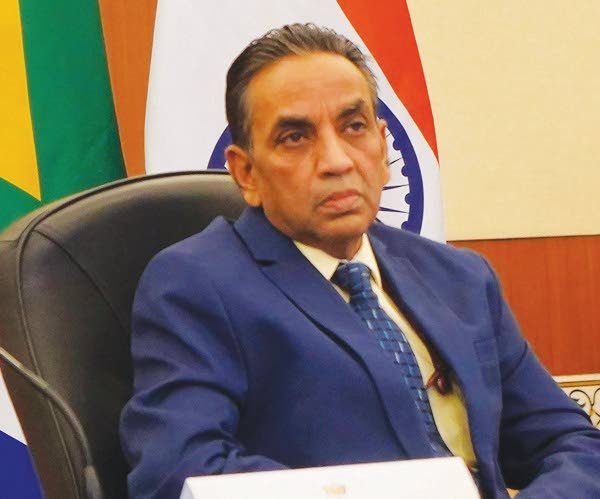
Dr Pradeep Kumar Saxena is the former Indian commissioner for Indus Waters.
{"xml":"xml"}{"jamaica-observer":"Jamaica Observer"}
img img
0 Comments · Make a comment

ALSO ON JAMAICA OBSERVER

Wray, Pottinger register wins at ACC outdoors
Latest News, Sports
Wray, Pottinger register wins at ACC outdoors
May 15, 2026
KINGSTON, Jamaica –  Jamaicans Despiro Wray of Florida State University and Brandon Pottinger were winners on Friday’s second day of the Atlantic Coas...
{"jamaica-observer":"Jamaica Observer"}
US team ‘devastated’ by lack of home support, says World Cup doc maker
Latest News, Sports
US team ‘devastated’ by lack of home support, says World Cup doc maker
May 15, 2026
LOS ANGELES, United States (AFP) — For most national soccer teams, playing a tournament on home turf is a huge advantage. For the United States, it ca...
{"jamaica-observer":"Jamaica Observer"}
68-y-o bearer killed during robbery attempt in Half-Way Tree
Latest News, News
68-y-o bearer killed during robbery attempt in Half-Way Tree
May 15, 2026
KINGSTON, Jamaica — A bearer employed at a popular financial institution was shot dead during an attempted robbery on a section of Half- Way Tree Road...
{"jamaica-observer":"Jamaica Observer"}
St Elizabeth police ramp up road safety efforts
Latest News, News
St Elizabeth police ramp up road safety efforts
May 15, 2026
ST ELIZABETH, Jamaica — Police in St Elizabeth on Friday distributed 30 helmets to motorcyclists in Junction as part of a road safety initiative. Head...
{"jamaica-observer":"Jamaica Observer"}
MAGA loyalist’s nomination as US ambassador to Jamaica draws mixed reactions
Latest News, News
MAGA loyalist’s nomination as US ambassador to Jamaica draws mixed reactions
Vanassa McKenzie, Observer Online reporter, mckenziev@jamaicaobserver.com 
May 15, 2026
The nomination of controversial political figure and former TV anchor Kari Lake Halperin as the next United States ambassador to Jamaica has drawn mix...
{"jamaica-observer":"Jamaica Observer"}
UPDATE: Ukrainian aircraft given green light to leave Trinidad and Tobago
Latest News, Regional
UPDATE: Ukrainian aircraft given green light to leave Trinidad and Tobago
May 15, 2026
PORT OF SPAIN, Trinidad (CMC) — The Airports Authority of Trinidad and Tobago  (AATT) Friday night said that a Ukrainian aircraft impounded at the Pia...
{"jamaica-observer":"Jamaica Observer"}
Holness departs Jamaica for official engagement in Turks and Caicos Islands
Latest News, News
Holness departs Jamaica for official engagement in Turks and Caicos Islands
May 15, 2026
KINGSTON, Jamaica — Prime Minister Dr Andrew Holness departed the island on Friday for the Turks and Caicos Islands (TCI) where he is scheduled to par...
{"jamaica-observer":"Jamaica Observer"}
NCB Foundation makes $525,000 vision kit donation for child’s month
Latest News, News
NCB Foundation makes $525,000 vision kit donation for child’s month
May 15, 2026
KINGSTON, Jamaica – The NCB has donated $525,000 in vision kits for children through the Jamaica Society for the Blind (JSB) as the country marks Chil...
{"jamaica-observer":"Jamaica Observer"}
❮ ❯

Polls

HOUSE RULES

  1. We welcome reader comments on the top stories of the day. Some comments may be republished on the website or in the newspaper; email addresses will not be published.
  2. Please understand that comments are moderated and it is not always possible to publish all that have been submitted. We will, however, try to publish comments that are representative of all received.
  3. We ask that comments are civil and free of libellous or hateful material. Also please stick to the topic under discussion.
  4. Please do not write in block capitals since this makes your comment hard to read.
  5. Please don't use the comments to advertise. However, our advertising department can be more than accommodating if emailed: advertising@jamaicaobserver.com.
  6. If readers wish to report offensive comments, suggest a correction or share a story then please email: community@jamaicaobserver.com.
  7. Lastly, read our Terms and Conditions and Privacy Policy

Recent Posts

Archives

Facebook
Twitter
Instagram
Tweets

Polls

Recent Posts

Archives

Logo Jamaica Observer
Breaking news from the premier Jamaican newspaper, the Jamaica Observer. Follow Jamaican news online for free and stay informed on what's happening in the Caribbean
Featured Tags
  • Editorial
  • Columns
  • Health
  • Auto
  • Business
  • Letters
  • Page2
  • Football
Categories
  • Business
  • Politics
  • Entertainment
  • Page2
  • Business
  • Politics
  • Entertainment
  • Page2
Ads
img
Jamaica Observer, © All Rights Reserved
  • Home
  • Contact Us
  • RSS Feeds
  • Feedback
  • Privacy Policy
  • Editorial Code of Conduct