



Women who want to have children: ‘Help us!’
A WhatsApp group called Life of Women with Polycystic Ovarian Syndrome (PCOS), Endometriosis and Fibroids has become a support network for more than 240 Jamaican women who want children but are unable to conceive because of their diagnoses and the high cost of treatment options that could make pregnancy possible.
Amid continued calls from the Ministry of Health for Jamaicans to have children to help boost the country’s declining birth rate, the women are appealing to the Government for assistance with medication and fertility treatments such as in vitro fertilisation (IVF), saying they are willing and ready to become mothers but cannot afford the medical costs to make their desires achievable.
Diagnosed with PCOS — now polyendocrine metabolic ovarian syndrome (PMOS) — at 19 years old, Cassandra Ahloc Bernardroiva said she created the
WhatsApp group on May 13 after realising there was little attention being given to women who desperately want children but face reproductive health conditions that make conception difficult.
She said after posting a video to social media sharing her own story, women 20 to 45 years old from across Jamaica quickly joined the group in search of a safe and understanding community where they could share advice, resources, and encouragement while navigating their diagnoses together.
“The group has opened my eyes to a lot of things. I have almost 250 women in here, and everybody wants to get pregnant. We are sharing ideas among each other. You have some ladies who have been seeing their period for six months and want it to stop, you have ladies who have not seen their period for three years and want it to come; you have ladies who used to be skinny, myself as one, and then all of a sudden you just bloat up and get so big…when you go to the doctor they tell you you’re obese, maybe it’s because you’re fat why you can’t get pregnant; and you have women who are bigger than me and they’re having children, so it’s frustrating for us,” she told the Jamaica Observer.
Now 31 years old, Bernardroiva said, like many of the women in the group, she’s tried to have children, each attempt failing and leaving her exposed to invasive questions from family members and friends about why she has not got pregnant.
Referencing Health Minister Dr Christopher Tufton’s recent announcement of the development of a National Fertility and Family Support Strategy to address the country’s declining birth rate — tasked with the responsibility to develop a family support strategy within 12 months — she appealed to the minister to remember women who are struggling to conceive.
“It’s 247 ladies in the group. I only want one child, but most of the ladies in the group probably want two or three. If you’re saying that you need more babies in the country for the economy to thrive or for us to be good in the years to come, then help us. A lot of us probably don’t have the money to get IVF and certain treatments that the doctors would recommend when you already do a lengthy amount of fertility treatments and they see that it’s not working, and they recommend more expensive things. Give us that help; pay some money for us to do that because by helping us, you’re also helping the economy,” she reasoned.
“Every day you go on the [social] media you would see them saying women are not having kids. The 247 of us are not not having kids because we don’t have the money to take care of the children, we’re not having them because we don’t have proper fertility help and we need affordable health care. Whether IVF treatment or whatever treatment you can offer to us, all of us would be happy to do it today.
“Most people have tagged him [Tufton] in the video [posted to raise awareness and support], and we haven’t seen any response or heard any response. If he could help us we would really, really appreciate it,” said Bernardroiva.
Jamaica’s fertility rate has fallen to approximately 1.3 children per woman — well below the replacement level of 2.1. According to the Ministry of Health, the decline poses serious risks to the country’s long-term economic stability, workforce sustainability, and social support systems, contributing to an ageing population, rising dependency ratios, and reduced economic productivity.
Jonelle Llewellyn, a 33-year-old member of the Life of Women with Polycystic Ovarian Syndrome, Endometriosis and Fibroids community, shared that she found the group shortly after she was diagnosed with premature ovarian insufficiency.
“When I joined the group it was 90-something members at the time, and it quickly grew… There was great interest, and what I saw, I couldn’t believe it. These are people from all over the island speaking about their similar journey. People want to just have children. I think it was one of the first messages I saw, a woman saying, ‘I’ve been trying to have a child for years and can’t have it,’ and it’s just several testimonials that you see in real time,” she told the Observer.
She shared that some of the women in the group still lack knowledge about their diagnosis and treatment options, with some claiming that doctors prescribe medications with little information on their purpose, or speak in medical jargon. As a result, many women have turned to the WhatsApp group and artificial intelligence to decode these things.
“Advocacy campaigns such as PCOSTalkJa and PCOS1in10Ja have contributed meaningfully to public awareness of the condition. But awareness, without accessible diagnosis and affordable treatment, reaches its limit. The women in the group have heard the conversations. They are waiting for the system to follow through,” Llewellyn said.
“The health minister has said the Government is not asking Jamaicans to have children for statistical reasons but is committed to building conditions where family formation is genuinely affordable, structurally supported, and celebrated. That commitment must extend to women for whom the barrier is not affordability or attitude but [instead] a body that has been failed by a system that never properly looked at it,” Llewellyn said.
She said the National Taskforce on Fertility and Responsible Parenting deserves the country’s full support but argued that any strategy developed must go beyond economic incentives and recognise reproductive health conditions such as PCOS, premature ovarian insufficiency, and endometriosis as major contributors to Jamaica’s declining fertility rate.
“Screening must be embedded at the primary care level. Affordable, visible pathways to specialist care must be created and standardised, and the data collection mandate must extend beyond counting how many Jamaican women are affected [and be geared instead] toward a rigorous investigation into why the system has failed to reach them for so long. Life with PCOS represents something policymakers rarely encounter — a ready, willing, and already-organised sample of the very women the strategy must reach. The means of communication is accessible by design. The evidence inside it is anything but simple,” said Llewellyn.
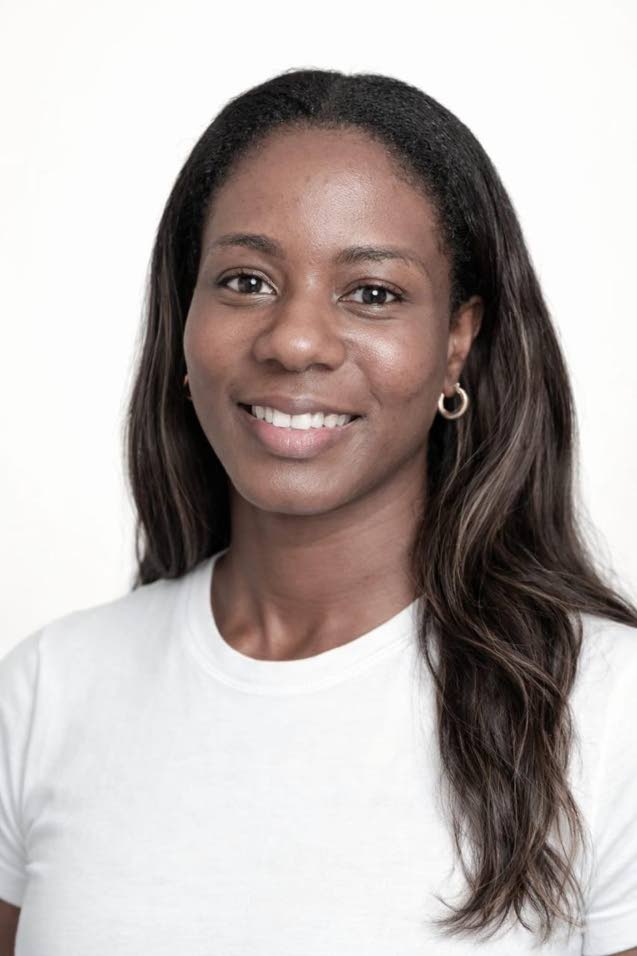
LLEWELLYN…affordable, visible pathways to specialist care must be created and standardised
![BERNARDROIVA...every day you go on the [social] media you would see them saying women are not having kids](/jamaicaobserver/news/wp-content/uploads/sites/4/2026/05/image_2-239.jpg)
BERNARDROIVA…every day you go on the [social] media you would see them saying women are not having kids


