



Jamaicans see unequal society, corruption becoming normalised — survey
A large share of Jamaicans believe the country is unequal, corruption is becoming normalised, and many would leave if given the chance, according to a new nationwide survey examining the “hearts and minds” of the Jamaican people.
But while the findings point to deep frustration with fairness, opportunity, and public institutions, they also reveal a society still strongly anchored in family, education and respect — even as many Jamaicans grapple with fear, social division and what presenter and CEO of Market Research Services Limited (MRSL) Kisha-Kaye Anderson described as a growing moral “grey area”.
The study, conducted by MRSL among 1,102 Jamaicans across all 14 parishes, found that 81 per cent of respondents believe “the world is not level”, while 42 per cent said they would pack up and leave Jamaica tomorrow if given the opportunity.
At the same time, 30 per cent said corruption had become “necessary for peace and happiness” in Jamaica, while nearly one in three respondents believe it is acceptable to break the law sometimes in order to get ahead.
Unveiling the findings during a forum at S Hotel in St Andrew on Monday, MRSL Executive Chairman Don Anderson said the results reflect a country caught between strong traditional values and mounting social pressures.
“It’s heartening to know that we reject wrongdoing, but pressure — life pressure — sometimes makes the area grey,” Anderson said following presentation of the findings which showed that minorities of Jamaicans consider stealing, breaking the law, or hurting others are acceptable under certain circumstances.
The survey found that family remains the most important value to Jamaicans, followed by education, independence, religion, and spirituality.
But the discussion quickly evolved into a wider examination of identity, inequality and social breakdown, with attorney and businessman Howard Mitchell arguing that Jamaica has failed to adequately reform its social structures despite decades of economic and political development.
“I strongly believe that Jamaica needs social reform,” Mitchell said during the panel discussion following the presentation.
“Norman Manley, when he retired, spoke to the need of the next generation to reform and reconstruct Jamaica’s social and economic life. I think we’ve made progress in the economic reconstruction. We have failed in our social reform and reconstruction.”
Mitchell said many of the behaviours and frustrations reflected in the findings are rooted in unresolved questions around identity, inequality and self-worth.
“No society can be successful without the deliberate shaping of the values and the attitudes of the members of that society in the way that all of the members of the society come to a consensus that they want it to go,” he said.
“And that’s the value of this study, because it initiates a process of finding out what Jamaicans think about themselves.”
Historian Verene Shepherd also linked many of the findings to Jamaica’s colonial and post-emancipation history, particularly the enduring search for dignity, family stability, and respect.
“Under chattel enslavement our family was disrupted, captured, and trafficked, separated from family, put on plantations everywhere in the Americas and other places,” Shepherd said.
“So in the aftermath of emancipation, one of the most important things was the reconstruction of the black family. So since then, that has been a central, important activity.”
The findings on respect also drew strong reactions.
Researchers found that Jamaicans were more likely to prioritise being respected than showing respect, with lower-income respondents particularly focused on the issue.
Shepherd argued that the issue runs deep within Jamaican society and frequently manifests itself through classism and social inequality.
“We have to find a way to fix that,” she said, referring to the 81 per cent of respondents who believe Jamaican society is unequal.
“If 81 per cent of people indicate a strong belief in the systematic inequality in the systems of Jamaica, then we have a problem.”
The survey also pointed to growing anxieties around safety and trust.
Nearly half of respondents said they would remain silent if they knew someone was going to be harmed rather than speak up and risk becoming a target themselves.
And while most Jamaicans rejected vigilante justice, bribery, and violence, researchers found sizeable minorities who viewed such actions as acceptable under certain circumstances.
One of the more striking findings involved corruption and public accountability.
While many respondents expressed frustration with corruption becoming embedded in daily life, 81 per cent also said prominent people being sent to prison for corruption would send a strong message to the country.
The discussion also turned sharply toward education, with both Mitchell and Shepherd arguing that the school system continues to reproduce inequality and disconnect many children from their identity and history.
“We have widened access but there’s still some inequality because of the differences in the infrastructure of the schools,” Shepherd said. “Some schools are better-resourced than other schools; some schools look ‘pop down’, some schools are very nice.”
She also questioned whether Jamaican children were being adequately taught about their African heritage and national identity.
“Our children are disconnected from the kind of past to which they should be connected,” she said.
Migration pressures also featured heavily in the findings, particularly among women and younger Jamaicans.
Although nearly seven in 10 respondents said they were proud to be Jamaican, many also admitted they would leave the island if better opportunities became available elsewhere.
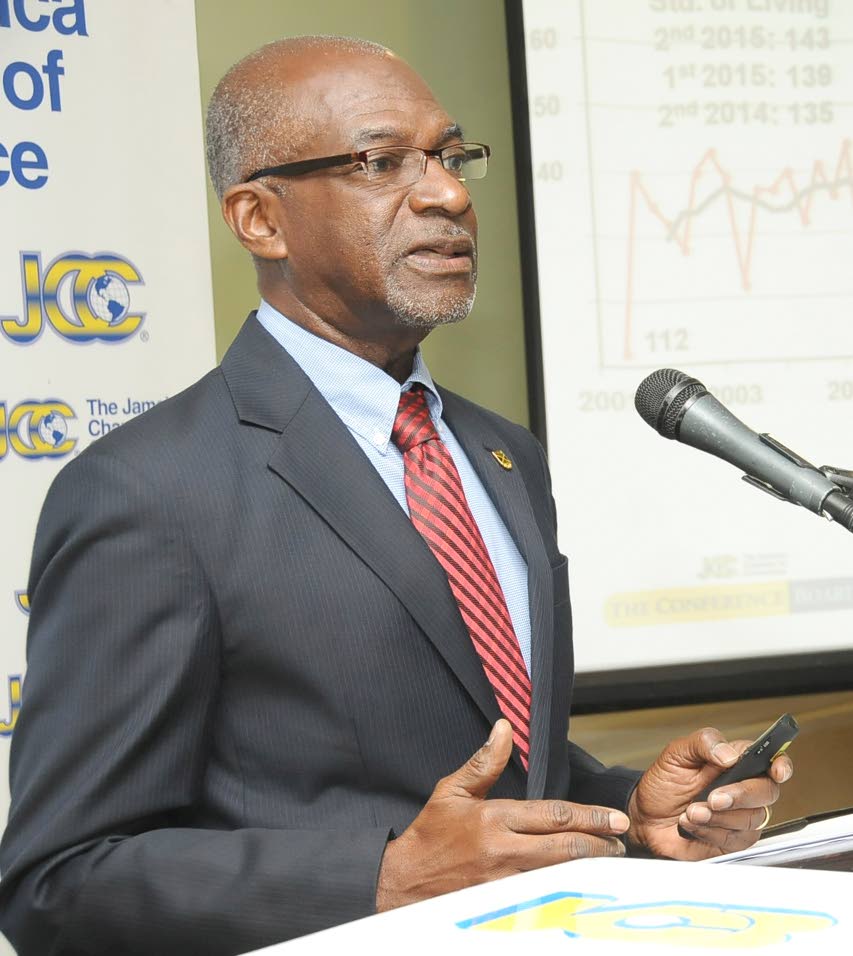
ANDERSON… it’s heartening to know that we reject wrongdoing, but pressure sometimes makes the area grey


