



Take the “Force” out of Jamaica Constabulary Force
The shooting death of Latoya “Buju” Bulgin by police in Granville, St James, and the callous handling of the her body have stirred up a hornet’s nest of controversy over the quality of policing in Jamaica.
Add the fact that the deceased was in the process of transporting people to protest the shooting death of 17-year-old Tjey Edwards — also by the police — from the same community and the yet-to-be resolved shooting death of an American citizen by the police in the vicinity of the Donald Sangster International Airport in the tourism mecca of Montego Bay, all within the space of 12 days in a single parish, and one gets a toxic mix of events that begs for the common factor in all three incidents — police killings — to be redressed.
There has been no shortage of commentary on the possible causes and recommendations of what needs to be done to support the police’s admirable incursion against one of the world’s worst homicide rates while at the same time insisting there be less collateral damage in the form of citizens, innocent or otherwise.
Greater professionalism, better training, and improved community relations are but a few of the palliatives being bandied about. These seem only to relieve the symptoms of a disease without curing the underlying cause. Something more ingrained and sinister is at work.
To understand what is happening in the Jamaica Constabulary Force (JCF) today, one has to go back to its genesis. The law establishing the JCF was enacted November 28, 1867. Significantly, this was in the aftermath of the Morant Bay Rebellion of 1865.
The word “Force” in the name unmasks the goal of the colonial masters, which was to use repressive means to reduce the likelihood of a repeat riot or rebellion by former slaves who had been granted full freedom 30 years earlier on August 1, 1838.
Service to the community was not a part of its genetic make-up at conception. The mission statement the JCF would eventually adopt as part of the civilising process — ‘We serve, we protect, we reassure with courtesy, integrity, and proper respect for the rights of all’ — has remained aspirational, a label identifying attributes and a culture at odds with the organisation’s DNA.
The JCF has never really reformed. The improved forensics, more deadly weaponry, increased mobility, smart-looking uniforms, better educated recruits, although necessary and welcome, do not alone a reformed police department make.
Modern police organisations seek to foster a service-oriented non-paramilitary type of culture, even in how they name themselves. Two examples will suffice: London Metropolitan Police Service and New York Police Department (NYPD). The JCF must shed the brutish paramilitary culture and adopt instead a people-centric, service-oriented culture.
How this is to be achieved is a subject for another place and time. But the first step must be to stop reinforcing the old culture. The old culture is fed and given new life when holders of the highest political offices, in trying to sound tough in the fight against crime, use language that show wanton disregard for due process and life; when the head of the JCF displays arrogance and is dismissive of voices that point to the looming disaster of police killings that have gone beyond the pale; and, most troubling, when a significant number of the citizenry in a Latin American Public Opinion Project (LAPOP) survey express they would be willing to give up some of their human rights in order to give the police a free hand to go after criminals.
Speaking at a JCF graduation ceremony for the 91st Staff and Junior Command Courses, Prime Minister Dr Andrew Holness was reported on the pages of this newspaper’s May25, 2026 edition as directing “the JCF to urgently review and reform its procedures for dealing with injured and dead people at crime scenes, stressing that their foremost duty ought to be the preservation and protection of human life”. Calling on the JCF to reform itself from within is akin to expecting a leopard to change its own spots. Radical intervention from outside the organisation is necessary.
This is by no means an indictment of the JCF and the fine men and women who night and day risk their lives to keep the rest of us safe. It is, in fact, a plea for them to have the type of police organisation they and Jamaica deserve. This can only be achieved by going beyond cosmetic and superficial remedies in treating the root cause of a sore that so far has been resistant to other forms of treatment.
God forbid these early mutterings against the number of police killings, which is approaching 140 ahead of mid-year in a tiny country of 3 million people, could grow into something much larger like the “defund the police” movement we see in the United States and some other countries.
Dr Henley Morgan is founder and executive chairman of the Trench Town-based social enterprise Agency for Inner-city Renewal (AIR) and author of My Trench Town Journey: Lessons in Social Entrepreneurship and Community Transformation for Development Leaders, Policy Makers, Academics and Practitioners. Send comments to the Jamaica Observer or hwardmorgan+articles@gmail.com.
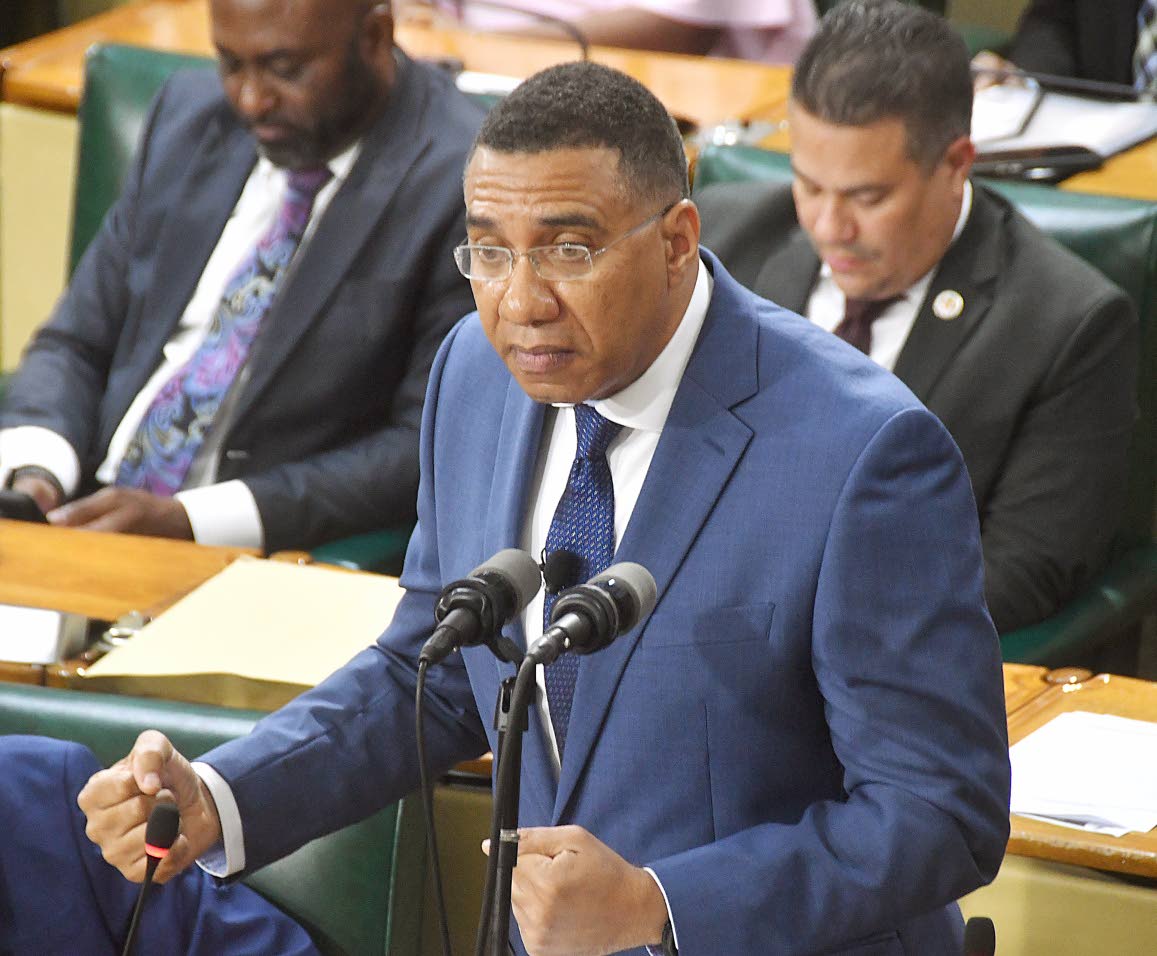
HOLNESS…urged the JCF to urgently review and reform its procedures for dealing with injured and dead people at crime scenes (Photo: Garfield Robinson)

Henley Morgan


