



Unlocking Caribbean growth through scale and collaboration
The Inter-American Development Bank (IDB) Group’s investment arm, IDB Invest, held its flagship Sustainability Week 2026 (SW26) in Bridgetown, Barbados, from May 26-28.
In his remarks opening the conference, IDB Invest CEO James Scriven described his key goal as “mobilising capital at scale”, with an “originate to share” business model to provide US$3.5 billion in extra capital to the region through products such as local currency financing and loan guarantees. He mentioned the IDB was working on a US$300-million loan to Jamaica Public Service (JPS), had financed the first EDGE environmentally certified hotel in Guyana and a US$50-million modernisation of the Bridgetown Port in Barbados, as well as helping finance underserved communities there.
Scriven noted that this was the first time the event had been held in the Caribbean, with previous locations including Panama in 2019; Miami in 2021; and, most recently, Manaus in the Brazilian Amazon in 2024. He believed that despite being small, fragmented, not very connected, and very vulnerable, the Caribbean’s geopolitical importance meant, through increasing connectivity, regional integration, and securing supply chains, the region could position itself as a hub for business opportunities in sustainable investment, resilience, and growth.
Scriven stated that 10 years ago he started this journey with IDB Invest with only one person at one office in Jamaica and around US$20 million or US$30 million invested (see my 2016 Jamaica Observer interview ‘The head of the IDB’s new IIC visits Jamaica with new vision’). he noted with pride that IDB Invest (formerly the Inter-American Investment Corporation [IIC]) now has 30 people based across the region, headed by the “Messi of the Caribbean”, Caribbean Managing Director Darryl White, and a total investment of US$2 billion shared as follows: US$900 million in financial services, US$700 million in infrastructure and energy, and US$400 million in the real economy over a total of 58 projects.
On the last day of the sustainability event, White, who is based in Barbados at Prime Minister Mia Mottley’s request, moderated a key panel on how to create an enabling environment for investment with IDB Caribbean head Anton Edmunds, the Caribbean Development Bank’s (CDB) Dwayne Squires, and Barbados Minister of Public and Private Investment Indar Weir.
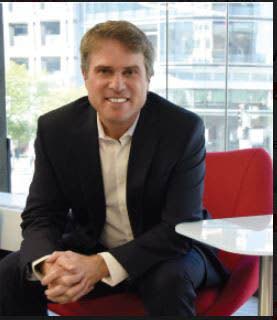
James Scriven,
Weir, noting that the ease of doing business was the key question, observed that Barbados had recently put 13 pieces of legislation under one minister to make the country “ready for investment” and create “bankable projects”, with the private sector seen as a stakeholder to dialogue with and establish mutual understanding.
Edmunds, arguing that this approach needs to be placed on steroids across the region, argued that the Caribbean needs “regulatory convergence”, meaning, a transparent and regulatory flat, open regional space. He highlighted a recent European Investment Bank (EIB) conversation in which the EIB noted that to attract more European investors the Caribbean needs to improve regional regulatory predictability, project readiness (the problem being not a lack of ideas but bankable projects, hence the project preparation facility provided by One Caribbean headed by Ian Mills), and, most importantly, capacity.
Edmunds correctly noted that while a lot of money has been spent on capacity, it is the same people doing all the work. There is a need, therefore, to unlock a way to bolster the role of people pushing policy through layers with the correct skills, for example, in the critical area of public-private partnerships (PPPs). Commenting on this, moderator White noted that “size is a constraint even though we want it to be an advantage”, with the latter including “the accessibility of decision-makers”.
Squires of CDB expanded on Edmunds’ point, noting that regional “scaling” requires a “harmonised regulatory environment” and said that five years ago the CDB started working on its PPP unit and, so far, Jamaica was the most advanced in the region, with a great framework and projects, including energy, water, and roads.
Critically, Edmunds noted that when the World Bank, IDB, and CDB all go to talk to governments with their separate agendas, it is time-consuming. He suggested that they should, instead, figure out how to work together. Each year development banks are given lending targets to hunt “to keep the lights on”, but the reality is that in some areas other institutions do things better, acceptance of which would allow for more collaboration. This also applies to the private sector, which needs to double down, for example, on an enabling environment for small and medium-sized enterprises (SME). In short, the harsh reality is that both multilaterals and the private sector need to partner and not always seek to satisfy individual interests first.
This point was supported by moderator White, who, importantly, noted that countries in the region face common problems — food, energy, and crime. The Caribbean, therefore, needs to aggregate its efforts, including in seeking sources of funding, with a portfolio approach to projects such as the proposed regional stock exchange. Only scale, combined with the political will to drive things through, will suffice.
Minister Weir noted that critical to the region moving in the right direction was “reducing frictions”, an emphasis which dated back to the 1960s and the creation of a Caricom geographic space. He emphasised reducing fragmentation and the need for the region to “sing from the same hymn sheet”, citing the recent travel agreement between Barbados and Guyana, which was also mentioned by Prime Minister Mottley in her interview with Scriven the day before.
In fact, Prime Minister Mottley, in her Wednesday, May 27 interview with Scriven, also briefly mentioned the Caribbean Multi-Guarantor Debt for Resilience Initiative — launched by the IDB, the Development Bank for Latin America and Caribbean (CAF), and the CDB — which she believed, in a perfect world, “could ultimately unlock 17 to 18 per cent of GDP [gross domestic product]” or US$2.7 billion over several years in fiscal space.
Her key role in this initiative had been covered in the Tuesday afternoon panel moderated by Avinash Persaud, special advisor to the IDB president, in his panel with underwriter Lydia Knoll of AXA XL; Adam Carter, managing director of Investment Banking for CIBC, and Ian Durant, director of economics at CDB, about which more will be said.
Keith Collister


