



Young blood donors targeted as Jamaica battles chronic shortfall
HEALTH officials are calling on more young Jamaicans to become regular blood donors as the country continues to collect only about half of the blood needed annually. The officials say attracting younger donors is critical to securing the nation’s future blood supply.
The appeal came during a blood drive at Victoria Jubilee Hospital in Kingston on Tuesday, which brought together healthcare professionals and blood bank officials in a renewed effort to boost the country’s blood stocks amid persistent shortage.
Senior Medical Officer at Victoria Jubilee Hospital Dr Garth McDonald said Jamaica continues to grapple with a blood shortage.
“The National Blood Transfusion Service (Blood Bank) has a massive shortage of blood. They actually need about 60,000 units per year to supply the population and we’re getting just about 30,000. So it means that we are always in need,” Dr McDonald said.
He warned that the shortage has direct consequences for patient care, particularly in surgeries and emergency situations where blood must be readily available.
“Blood has to be donated and available before we can proceed to do many surgeries. In its absence, it would mean some of the elective surgeries would be postponed, emergency patients would be put at greater risk, and sometimes this affects outcome,” he continued.
While increasing the country’s blood supply remains the immediate priority, blood donor organiser with the Blood Bank, Igol Allen, said building a younger donor base is essential to ensuring a sustainable supply. He said encouraging Jamaicans to begin donating early would help create lifelong donors.
“We need to start with the young people because the younger people start to donate, the longer they are able to donate for,” he said.
Allen also encouraged more men to become regular donors, noting that while they are often eligible to donate blood, they are less likely to volunteer than women. He stressed that every donation has the potential to save up to three lives and reminded Jamaicans that there is no substitute for blood.
McDonald noted that women suffering obstetric haemorrhages are among those most vulnerable to blood shortage, adding that maternal haemorrhage remains one of the leading causes of maternal deaths annually.
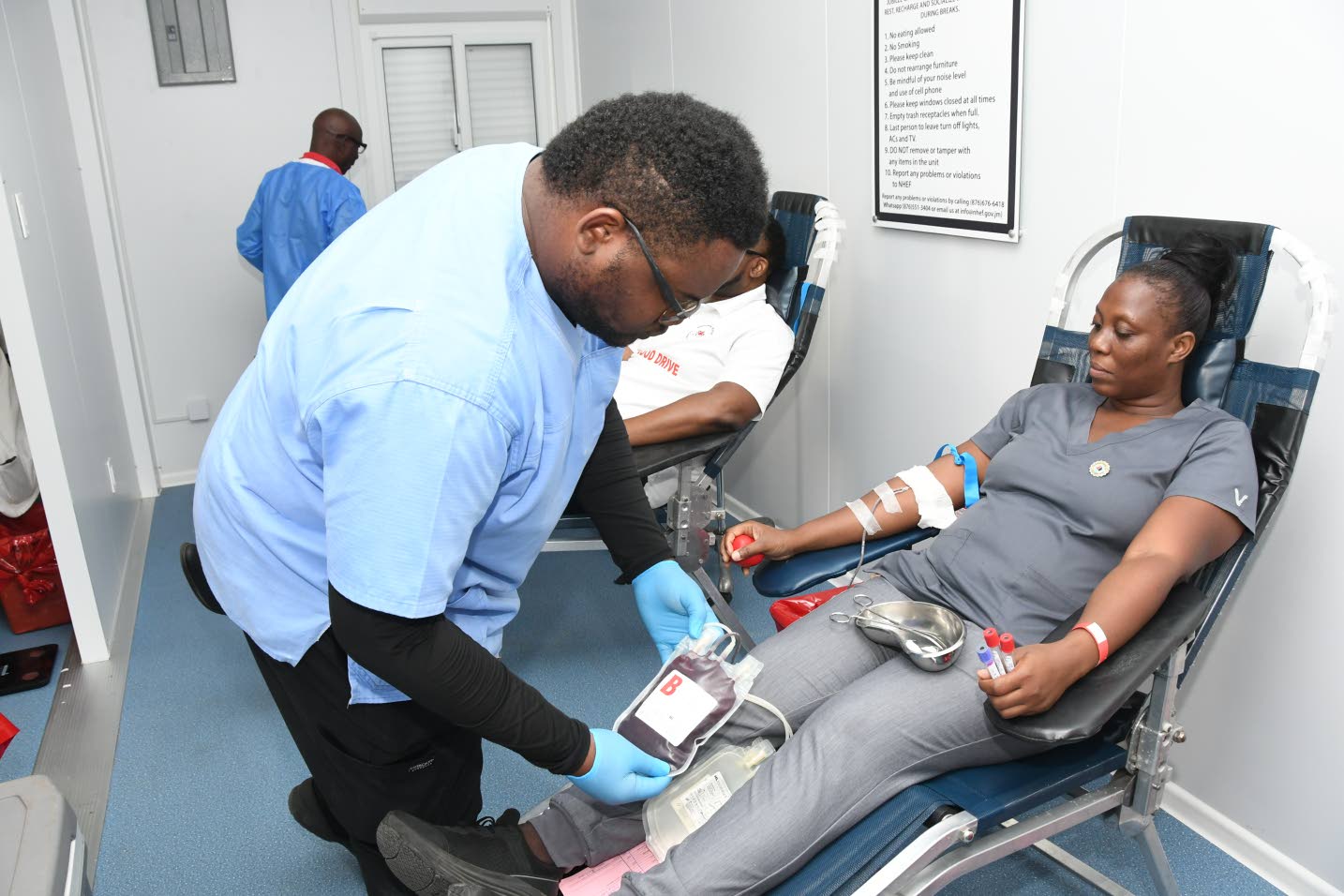
Nurse Brandon Jenkins takes blood from nurse Andrea Williams of Victoria Jubilee Hospital during a blood drive at the hospital, which brought together health-care professionals and blood bank officials in a renewed effort to boost the country’s blood stocks. (Photo: Karl Mclarty)
Nurse Huntley Walker’s observations over more than two decades at the Blood Bank lends weight to Allen’s appeal, with the veteran nurse saying younger Jamaicans have generally not embraced blood donation as readily as the middle-aged.
“The age grouping usually fluctuates, but I find the middle-aged people to be more willing to give. Younger ones, like 17, 18, will give, but the middle-aged are mostly those that will give,” Walker said.
Walker said many people only consider donating after they have become too old to begin, underscoring the importance of developing the habit early.
“Older people, sometimes when they are willing to give, it’s too late because they stop collecting blood at age 60 if you have [never] donated at all. But if you have donated during your lifetime… we give you an extra five years,” he continued.
The impacts of the shortage are not merely theoretical. Nurse Brandon Jenkins, who works in emergency care at the University Hospital of the West Indies, said such situations are “more common than you may think”.
Jenkins said blood shortage can delay procedures and affect emergency treatment for both adults and children, reinforcing the need for more Jamaicans to donate regularly.
Dr McDonald said addressing the shortage requires a proactive approach and encouraged Jamaicans, particularly younger people, to help strengthen the national blood supply before it reaches critical levels.
“The best way is to be proactive and to help fill up the blood bank so they have the greater capacity to help us and other hospitals across our nation,” he said.
By the end of Tuesday’s blood drive, organisers had registered 118 prospective donors and collected 77 units of blood, exceeding the target of 50 units.


