



‘Economic contradiction’
MSMEs key to Jamaica’s growth but locked out of gov’t contracts, bemoans Fayval Williams
ROSE HALL, St James — Minister of Finance and the Public Service Fayval Williams says Jamaica’s micro, small and medium-size enterprises (MSMEs) remain central to the country’s economic future, but far too many continue to be excluded from government procurement opportunities.
Addressing the launch of the MSME Procurement Integration Project at Iberostar Hotels and Resorts on Friday, Williams said the disparity must be corrected if Jamaica is serious about inclusive economic growth.
“Jamaica has some 425,000 micro, small and medium-sized enterprises and the data says they employ between 60 to 70 per cent of our workforce and contribute approximately 44 per cent of our gross domestic product. They are not a small part of our economy, they are its foundation, yet many of these businesses remain spectators when government contracts are awarded — that is an economic contradiction,” Williams declared.
She argued that government procurement should be viewed as more than simply acquiring goods and services, but as one of the country’s most powerful economic development tools.
“Every procurement decision is also an investment decision. It determines who grows, who hires, who innovates, who exports, and, ultimately ,who prospers,” she said.
Williams commended the Public Procurement Commission (PPC) for spearheading the initiative, in partnership with her ministry through the Office of Public Procurement Policy, the Ministry of Industry, Investment and Commerce, the Development Bank of Jamaica, and other public and private stakeholders.
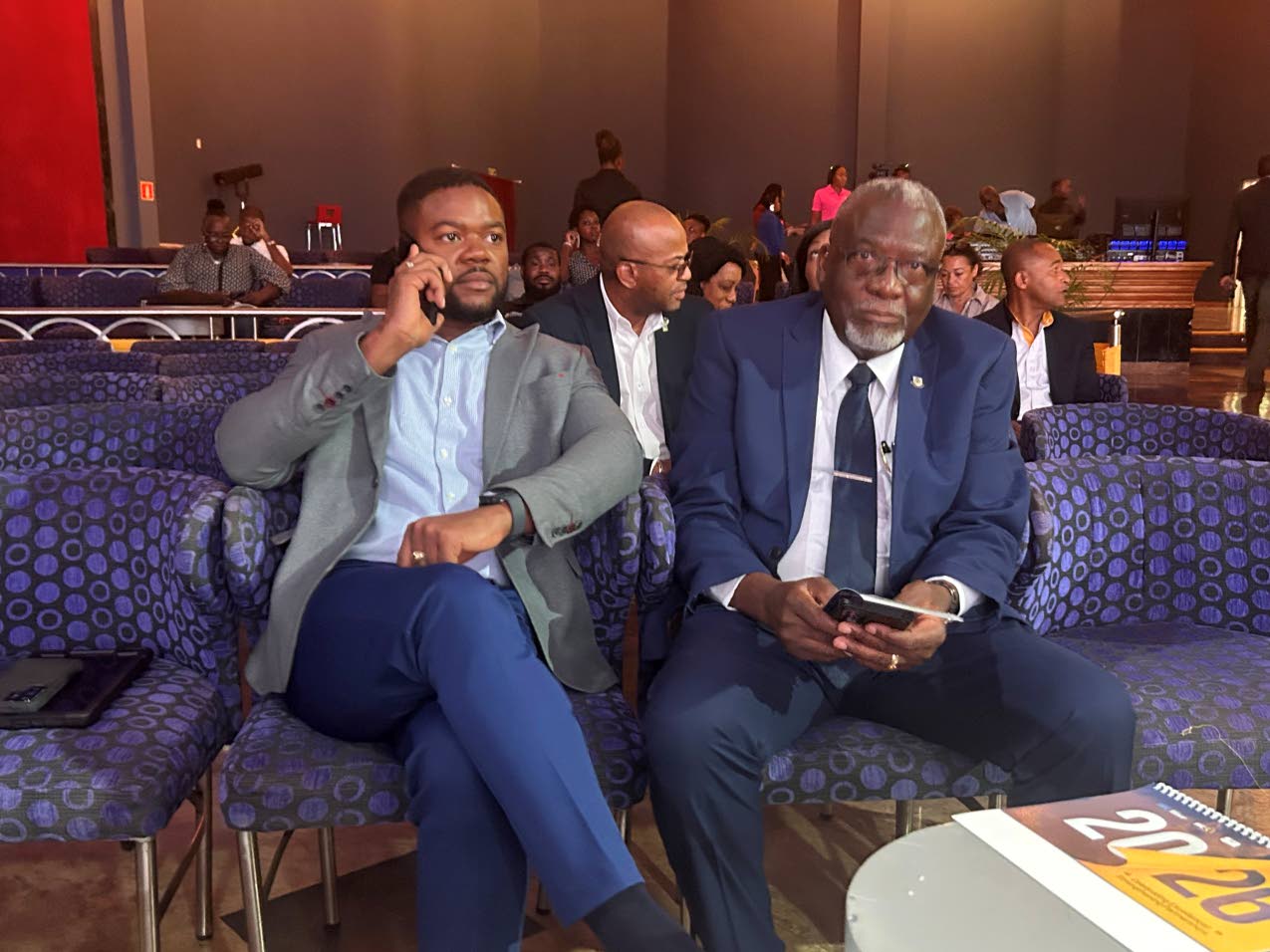
Mayor of Montego Bay Councillor Richard Vernon (left) and custos of St James Bishop Conrad Pitkin in attendance at the launch of the micro, small and medium-size enterprises Procurement Integrated Project at Iberostar Hotels and Resorts on Friday. (Photo: Horace Hines)
She described the launch as a “significant breakthrough” in Jamaica’s development agenda, aimed at transforming procurement into a catalyst for entrepreneurship, employment and national growth.
“For too long, many small businesses have viewed government procurement as something out of their reach — inaccessible and reserved for larger, established firms. We are changing that narrative,” Williams said.
According to the Cabinet minister, recent procurement data revealed that during the 2023/24 and 2024/25 financial years, along with the first nine months of 2025/26, more than 29,000 procurement transactions fell below the single-source threshold of $3 million for goods and services and $5 million for works, representing contracts valued at $36.2 billion.
She noted that these included more than 12,400 contracts for goods worth $13.7 billion, over 12,500 service contracts valued at $14.4 billion, and more than 4,300 works contracts totalling $8.2 billion.
“These are precisely the types of contracts many Jamaican MSMEs are capable of delivering. Yet only a small proportion of these opportunities have been awarded using the set-aside framework,” Williams pointed out.
The Public Procurement (Set Asides) Order, 2019 reserves 20 per cent of contracts for MSMEs. This accounts for approximately $37 billion worth of contracts that are not fully taken up by the entities.
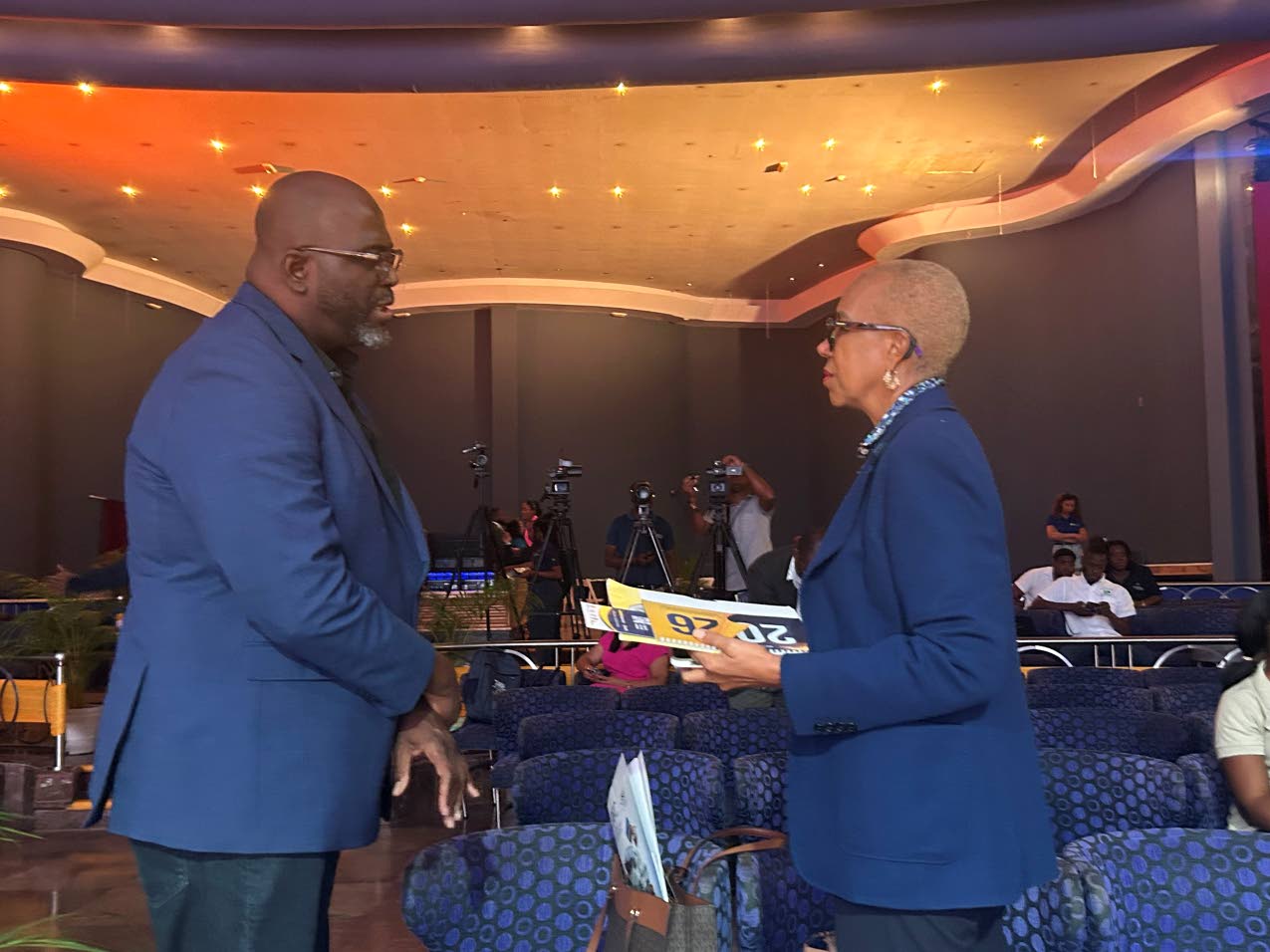
Acting chief executive officer of the Jamaica Business Development Corporation, Harold Davis (left) making a point to Minister of Finance and the Public Service Fayval Williams during the launch of the micro, small and medium-size enterprises Procurement Integrated Project at Iberostar Hotels and Resorts on Friday. (Photo: Horace Hines)
She underscored that the challenge is not a lack of opportunity, but ensuring those opportunities are deliberately identified and matched with capable local businesses.
Williams noted that the 12-month MSME Procurement Integration Project is designed to address those barriers by improving supplier visibility, strengthening registration systems, and increasing procurement readiness.
“Participation begins with visibility. If the Government doesn’t know of you, it cannot do business with you,” she said, urging entrepreneurs to formalise their businesses, organise their financial records, and prepare themselves for competitive bidding.
Williams also underscored that procurement alone would not be enough to build successful businesses, noting that access to financing, training, technical assistance, and investment capital remain critical.
She pointed to the recent launch of the Jamaica Stock Exchange Micro Market as one such avenue to help smaller enterprises access equity financing and scale up their operations.

A section of the audience in attendance at the the launch of the micro, small and medium-size enterprises Procurement Integrated Project at Iberostar Hotels and Resorts on Friday. (Photo: Philp Lemonte)
Williams said the initiative will expand across the island over the coming months with the aim of registering more suppliers, training more procurement practitioners and increasing the number of MSMEs securing government contracts.
“Our objective extends beyond increasing the number of contracts. Our objective is to build stronger businesses, create better jobs, strengthen communities and expand Jamaica’s productive capacity. That is how we build a stronger and more resilient economy,” she said.
The launch also featured the North-Western Boot Camp, a capacity-building initiative targeting MSMEs in the parishes of St James, Trelawny, and Hanover.
In bringing his remarks, mayor of Montego Bay Montego Bay, Councillor Richard Vernon argued that “as a hub of commerce and tourism, Montego Bay stands to benefit profoundly from this integration”.
“MSMEs are the backbone of our local economy — providing employment, fostering entrepreneurship, and anchoring resilience in times of disruption, as we are now witnessing in real time. Yet, their participation in public procurement has historically been constrained by limited access, capacity gaps, and procedural complexity.
“I anticipate that the road show will directly address these barriers by equipping suppliers with readiness tools, and by sensitising procurement officers to the importance of inclusivity and accountability in contract awards,” Vernon stated.


