



America at 250
The just-celebrated 250th anniversary of the signing of the Declaration of Independence in the US, which sets out the principles and grievances leading to the decision of the original 13 colonies to separate from Great Britain, is a monumental milestone in America’s journey from revolutionary beginnings to its present-day status as the pre-eminent global military and industrial power.
Amidst the pomp and circumstance, there is the opportunity and necessity to reflect on themes of liberty, equality, democracy, self-governance, individualism, and moralism embodied by the most frequently quoted part of the preamble to the document: “We hold these truths to be self-evident, that all men are created equal, that they are endowed by their Creator with certain unalienable rights, that among these are life, liberty and the pursuit of happiness, that to secure these rights, governments are instituted among men, deriving their just powers from the consent of the governed.”
Any serious analysis of the state of the union must begin with an admission that, notwithstanding its many achievements, judged against the ideals contained in the Declaration of Independence drafted by Thomas Jefferson and adopted by congress on July 4, 1776, the so-called American experiment has and continues to experience setbacks and shortcomings. These arise from an inbred culture that is resistant to economic, social, and racial inclusiveness and equity, and other issues the founders could not have foreseen.
The United States celebrated the 250th anniversary of the signing of the Declaration of Independence on July 4.
The book titled America Comes of Age is possibly the most widely regarded, influential, and enduring analysis of the American society and its challenges. Authored by French political scientist Andre Siegfried and published in 1927, the book chronicles the great promise that is America weighed down by the search for the elusive “better angels of our nature”, the term used by Abraham Lincoln in his first inaugural address to juxtapose the country’s destiny with greatness against a seemingly inherent bent towards self-annihilation.
Broadly speaking, Siegfried was critical of America’s ruling class’s almost mindless preoccupation with remaining wedded to its original Anglo-Saxon customs and racial profile, as well as its abiding “fear of being overwhelmed from within, and of suddenly finding one day that they are no longer themselves”.
Much time was spent in the book on the complex and often segregated nature of American society and the resulting restrictions placed on blacks and other minorities during that period pursuing the ideals contained in the Declaration of Independence and guaranteed by the American Constitution, which came later. Another observation by Siegfried, who did a study tour across the US to provide the research underpinning his analysis, was the deliberate, almost institutionalised standardisation in American life intended to force conformity and suppress individualism in the pursuit of material success.
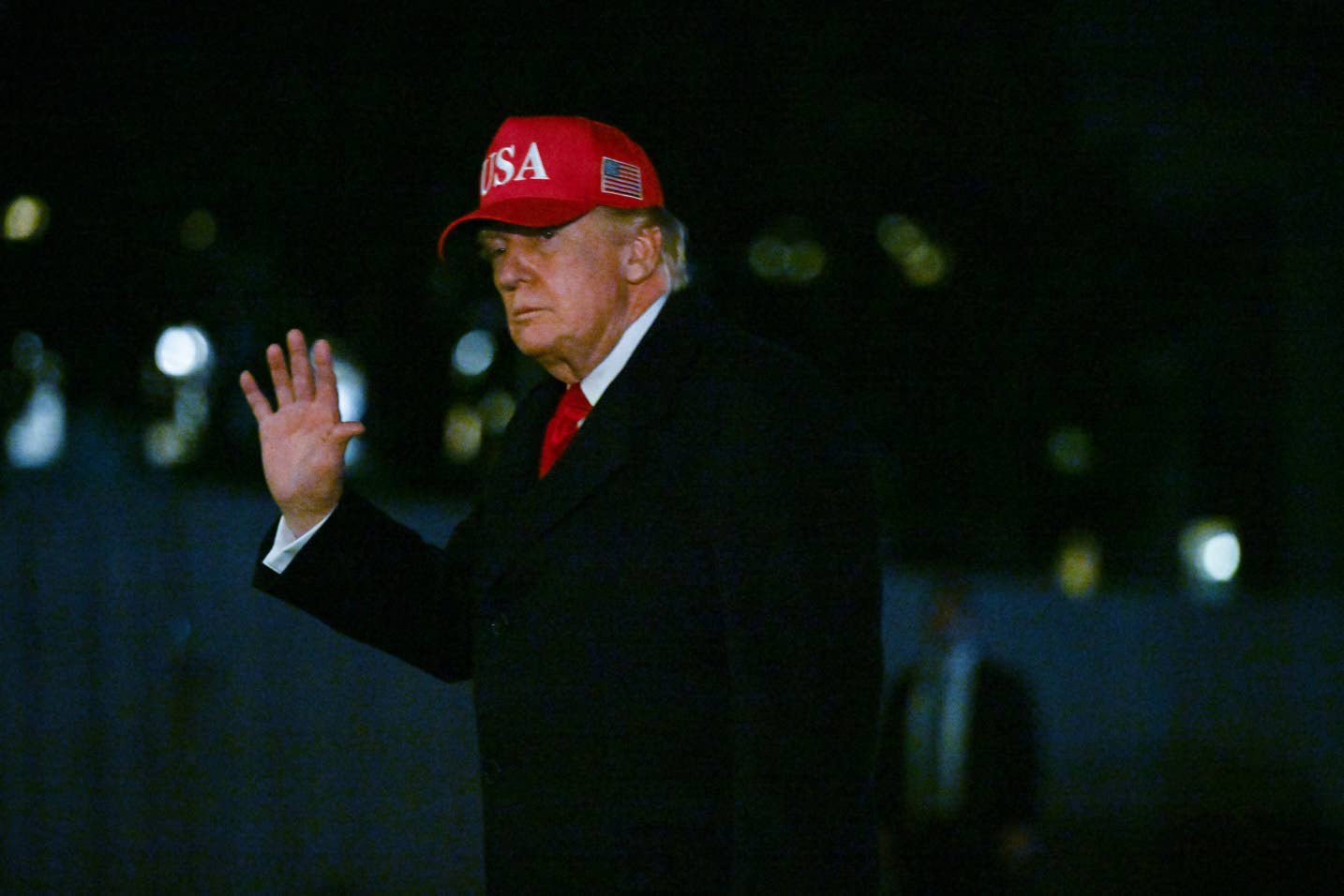
Donald Trump P(hoto: AFP)
Readers of this column could be forgiven for thinking Siegfried’s observations and analysis, which covered the period of the late 19th to early 20th century, sound very much like the America of today. The MAGA (Make America Great Again) movement, which President of the United States Donald Trump promotes but did not invent, incites nativist instincts that are undeniably isolationist, hegemonistic, protectionist, racist, and accommodating of a rising oligarchy.
As of July 1, 2026, Trump had signed a record 269 executive orders in his second term covering foreign policy, diversity and inclusiveness, religion, immigration, and other aspects of American life. Some of the more significant and far-reaching include formally withdrawing the United States from the Paris Climate Agreement and issuing directives to put America first in international climate agreements; eliminating diversity, equity and inclusion (DEI) practices in federal government hiring and ending affirmative action mandates in this area; expunging parts of American history relating to slavery from records of institutions such as the Smithsonian Institute and the curriculum of institutions of higher learning that receive federal funding; ending the issuing of citizenship documentation to children born in the US whose parents were, lawfully or unlawfully, present on a temporary basis.
The birthright citizen executive order, for example, was challenged and subsequently struck down by the US Supreme Court on the grounds that it violates the Citizenship Clause of the 14th Amendment of the Constitution but, taken as a whole, the executive orders expose the malevolent intent of the present Administration in Washington — aided and abetted by sycophantic members of the Republican Party who enjoy a majority in both Houses of Congress — to turn back the hands of time to make America great again in the jaundiced eyes of the secessionists.
American exceptionalism, the idea that the United States is inherently different from and better than other nations, is under threat. Nevertheless, the capacity for unity and constant striving for higher moral ground, even during times of great division, such as exists now, remain a feature of American democratic tradition. At 250, there is the potential for redemption and the dream of a more perfect union.
This, too, shall pass.
Dr Henley Morgan is founder and executive chairman of the Trench Town-based social enterprise, Agency for Inner-city Renewal (AIR), and author of My Trench Town Journey – Lessons in Social Entrepreneurship and Community Transformation for Policy Makers, Development Leaders, and Practitioners. Send comments to the Jamaica Observer or hwardmorgan+articles@gmail.com.
Henley Morgan


