



The conversation we must now have about rural development
I welcome the Jamaica Observer’s editorial of July 2, 2026 which continued the national conversation on rural and community development following my recent sectoral debate presentation. Rural Jamaica has, for too long, occupied the margins of our national discourse and has almost completely disappeared from recent development debates. My presentation was geared towards placing it back under the spotlight.
There is no debate regarding the grave disadvantages facing rural Jamaica. The persistence of rural poverty, unequal access to infrastructure and essential services, the absence of coordinated planning, and the continuing disadvantages in almost every measure of development.
However, the editorial argued that I had said nothing Jamaicans did not already know.
With only 35 minutes for a sectoral presentation, my diagnosis could only scratch the surface. I could have spent another hour discussing landownership, climate resilience, demographic change, rural finance, digital exclusion, governance, and the changing nature of rural economies. But that was never my purpose, and I didn’t want my mic to be cut off.
My purpose was to propose a different philosophy of development.
Indeed, if the editorial is correct — that Jamaicans have known these realities “from the dawn of local government” — then the question is no longer whether we know the problem, the question is why have we failed to fundamentally change the way we pursue rural development?
To know and not act, is itself an injustice.
Knowledge without action becomes acceptance. Acceptance becomes normalisation. Normalisation becomes abandonment.
That was the central proposition of my presentation.
The editorial understandably focused on the diagnosis of rural decline. It did not, however, engage the central framework proposed to address it.
That framework is reparatory development.
Reparatory development is not simply about repairing roads or restoring buildings. Nor is it confined to the important international struggle for reparations arising from slavery and colonialism.
It is a philosophy of development that recognises that many of today’s inequalities are rooted in historical patterns of extraction, underinvestment, and exclusion. More importantly, it argues that repairing those inequalities requires more than projects. It requires deliberate public policy that expands opportunity, strengthens institutions, creates local wealth, and prevents future harm.
Similarly, my presentation argued that Jamaica has spent decades doing projects in rural areas while failing to pursue rural development.
There is a difference: Projects address specific problems. Development transforms communities.
That distinction is fundamental. Jamaica has never lacked projects. What we have lacked is a coherent philosophy that connects those projects to a long-term vision for people, communities and national development. That was the purpose of introducing reparatory development — not as another programme, but as a different way of thinking about development itself.
That is why I proposed a National Rural Development Framework; updated parish development orders; stronger coordination across government agencies; renewed community institutions; and a Rural and Community Renewal Compact built around planning, institutional renewal, connectivity, human development, and local wealth creation.
Whether one agrees with those proposals or not, they represent a fundamentally different approach to development than the fragmented, project-by-project model that has characterised rural policy for generations.
The editorial did not seem to grasp the significance of what is proposed and, instead, appealed for creative thinking.
However, creativity is not measured only by proposing different administrative structures which is not my portfolio. It is better measured by our willingness to rethink the philosophy that guides development itself.
That brings me to the minister’s own contribution.
One of the most striking features of his sectoral presentation was not what it contained, but what it omitted.
In a presentation by the minister responsible for rural development, the word “rural” did not appear once.
Not once.
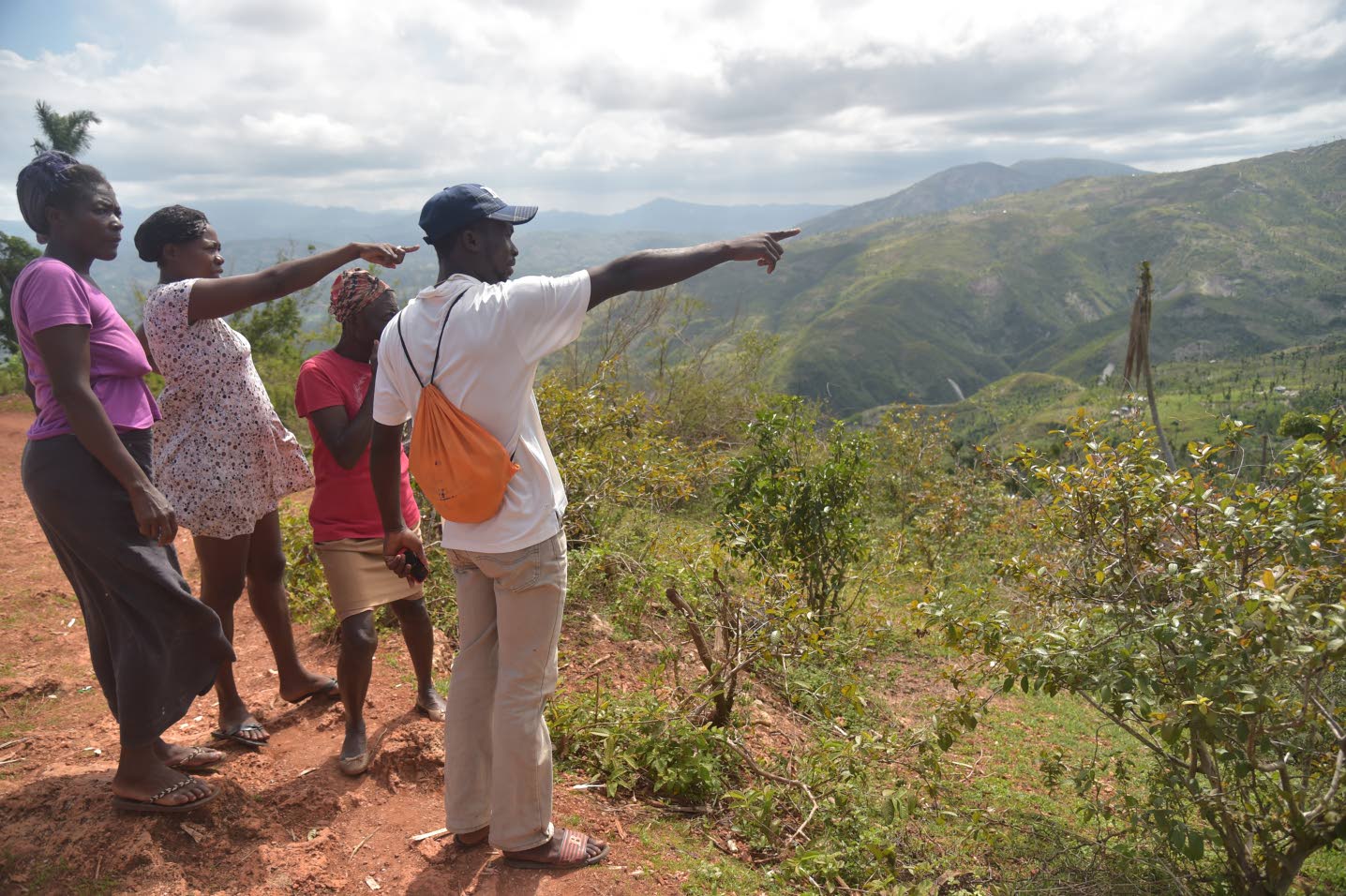
Rural life has not been signiicantly impacted over the years.
That omission confirms what many rural Jamaicans have experienced for years: The gradual commission of neglect.
When rural development disappears from the language of the ministry responsible for rural development, it risks disappearing from the priorities of Government itself. It signifies abandonment.
If rural development is no longer the principal focus of this minister, then the Government should ask itself a simple but important question: Who within its ranks will champion rural development with the urgency, imagination, and determination that the task demands?
The fact that we once again highlight that rural Jamaica is being left behind should not be addressed with another catalogue of projects.
It should begin with a more fundamental question: What philosophy of development should now guide rural Jamaica?
The answer I choose, clearly set out in my presentation, is reparatory development.
This is an approach that moves beyond projects towards planning; beyond fragmentation towards coordination; beyond extraction towards local wealth creation; beyond managing inequality towards intentionally repairing it; and preventing future harm.
Let us have that conversation.
Let us debate whether reparatory development is the right framework for Jamaica. Let us debate how we build flourishing rural communities. Let us debate how we organise Government around outcomes rather than projects. Let us debate how we create wealth that remains in rural communities, rather than simply passing through them.
Essentially, we are being asked whether we have the courage and the political will to pursue a fundamentally different future for Jamaica, especially the rural areas.
That is the conversation my sectoral presentation sought to begin. I welcome the Jamaica Observer’s contribution, but ask for a more complete reflection of my contribution in the future.
Dr Kenneth Russell, Member of Parliament for St Ann South Eastern and Opposition spokesperson on rural and community development.


