



‘We are waiting for the Americans to save us’
In crisis, Cubans have given up on reform from within
When I first visited Cuba, the island was recovering from a severe economic crisis. It was 1996, and the collapse of the Soviet Union had ushered in a prolonged period of deprivation and hardship.
On my latest visit, in early June, I encountered yet another crisis, a slow-motion humanitarian disaster.
The island is coping with severe shortages of fuel and electricity, among other essentials, due in large part to an oil blockade that US President Donald Trump imposed in February.
To a degree, the current emergency mirrors the “Special Period” of 35 years ago. After the end of Soviet subsidies, Cuba plunged into darkness and hunger.
“We had almost no electricity and little food,” one Cuban friend later told me. “If the Government could not provide it, we did not have it, and the Government had no money.”
Yet the current crisis is different in many respects. For one, there are more goods available. In Havana, at least, restaurants are open and stores are well stocked with foodstuffs.
There is also less hope and more despair.
The Cubans I spoke to — on the street, in shops and cafés, and in their homes — told me they no longer believe their Government cares about their suffering. Instead, they are placing their hopes in the United States generally, and the Trump Administration specifically.
“We are waiting for the Americans to save us,” said one of the Cubans I interviewed. “The ones in charge [of the Cuban Government] worry about themselves, not about us.”
Such views were unheard of 30 years ago. Now they are commonplace on the streets of Havana.
Fidel’s ‘Special Period’
Soviet subsidies to Cuba at their height amounted to about US$4 billion per year. During the last six months of 1991, the Soviets gradually stopped supporting Fidel Castro’s revolution.
Food disappeared from Cuban stores and blackouts became the rule. Cuba had no money with which to buy oil to generate electricity. Cars disappeared from the streets, replaced by a few overcrowded buses, bicycles, and horse-drawn wagons.
Between 1991 and 1993, Cuba’s gross domestic product (GDP) declined by at least one-third. The average Cuban lost between five per cent and 25 per cent of his or her body weight.
Castro, Cuba’s long-time communist leader, proclaimed this crisis a “Special Period in Time of Peace”. A Cuban I know refers to it as the “time when we ate cats and dogs”.
Common enemy, common purpose
I first went to Cuba as a graduate student studying history, searching for potential dissertation topics. Arriving in 1996, I was struck by the continued scarcity of electricity, gasolene, and food.
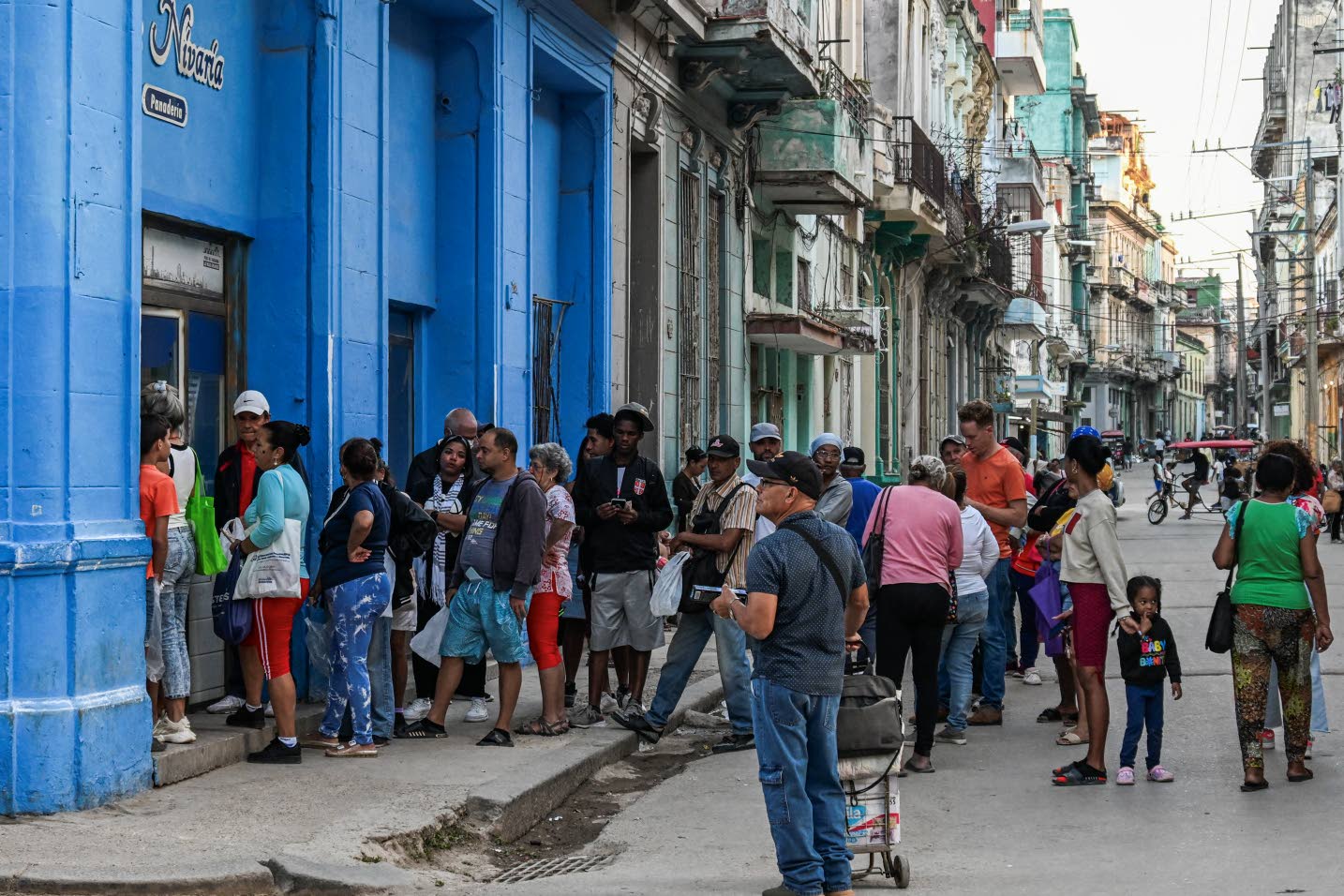
People queue to buy bread on a street in Havana on Monday, May 18, 2026. (Photo: AFP)
But I was also impressed by the Cubans’ solidarity: Almost to a person, Cubans I spoke to blamed the US embargo for their plight.
The Eisenhower and Kennedy administrations imposed the embargo, effectively prohibiting trade and tourism between the US and Cuba in retaliation for Cuban nationalisation of US property.
Cubans directed most of their anger towards Washington. Graffiti criticising Republican Senator Jesse Helms — co-author of the Helms-Burton Act, which enshrined the embargo as an act of Congress — and President Bill Clinton was common.
Just as important, Cubans I met then believed that they all shared the same miseries — even their leaders, to a degree. So far as most of them knew, all Cubans were hungry, relying on kerosene lanterns and riding bicycles thanks to the “Yankee blockade”.
After all, that was what their Government told them.
More food, more cynicism
Today, Cubans appear far less likely to believe such propaganda. Indeed, from what I could see, the old revolutionary slogans are disappearing from public spaces, erased or defaced. Nor could I find a recent copy of Granma, the Communist Party’s newspaper, anywhere.
Instead, Cubans turn to the Internet, reading abroad what their Government obfuscates or denies at home. As one friend told me, “We have the Internet now. We can read for ourselves, and we are much harder to lie to.”
Unlike during the 1990s, food is prevalent in Havana for those who can afford it.
Private individuals import goods, legally and illegally, keeping private stores stocked even with American luxuries, such as whiskey, as well as Cuban staples, including rice and beans.
Purchasing food in private stores, however, remains an expensive proposition. A pound of rice and beans can cost $1 dollar — cheap to Americans but exorbitant relative to the average Cuban monthly wage of US$15-$20.
Inflation is rampant, among the worst in the world. While I was in Havana, the Cuban peso traded at roughly 550-580 to the US dollar. When I last visited, in 2024, it was about 250.
During my latest trip, gasolene cost $40 per gallon, when you could find it. Private entrepreneurs sell gasolene in the streets, along highways and even in once-functioning State-owned petrol stations.
The libreta, the rationing system that used to insure Cubans against hunger, operates only sporadically now.
Less social cohesion
A decade ago, crime was infrequent and petty, now it is common and violent, fuelled by deprivation and drugs. During this visit, friends told me not to walk the streets at night.
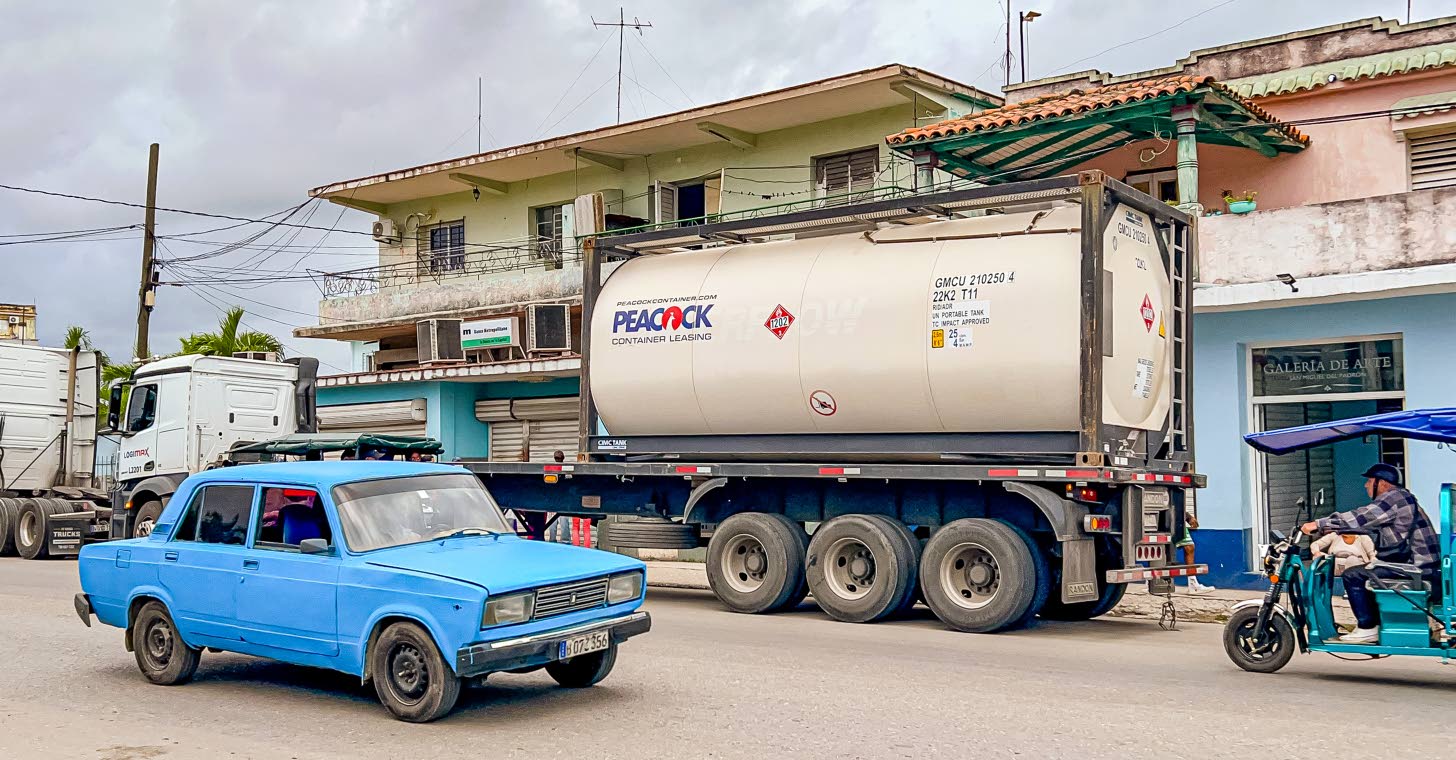
An old Soviet-era Lada car drives past a truck belonging to a private Cuban company parked in front of a gas station with an IsoTank of imported fuel in Havana on March 19, 2026. (Photo: AFP)
Drug abuse is also increasingly a problem. The young use opioids, especially fentanyl, which is cheap and easy to find. As one Cuban observed, “We now enjoy the problems of poor Americans.”
During my trip, I interviewed at least 35 Cubans — from colleagues and friends to people on the street, usually in stores and cafes. No one refused to speak to me, though most would only do so anonymously.
Almost all of them save one, a Communist Party member, said that their leaders do not share their suffering. They have heard of their leaders’ lifestyles and the first lady’s fashions; they see the consumption habits of members of the Castro family on social media.
Thanks to the Internet, Cubans also know of the holdings of GAESA, a conglomerate controlled by the military that touches much of what is profitable in Cuba. Many Cubans say, with reason, that the revenues of GAESA, as well as other quasi-public entities, insulate the elite from the hardships of life in Cuba.
Every Cuban I spoke to, again, save one, told me that their leaders are resisting the Trump Administration in order protect their privileges and positions — not Cuban sovereignty.
“It’s not hard,” a Cuban woman working in a souvenir shop told me. “All they need to do is make a deal with the US. But they won’t, because it would mean giving up their own private Cuba. They are greedy f…ers.”
The Americans are coming
Nonetheless, the Cuban Government is yielding to American pressure, however slowly. Cuban President Miguel Díaz-Canel recently announced a dramatic expansion of private enterprise in Cuba, following measures to promote foreign investment, most notably from Cuban Americans in Florida.
This is welcome news to most Cubans. Having given up on their own leaders, almost all the Cubans I spoke with are waiting for Americans to save them.
Make no mistake, they want the oil embargo to end, and no one wants a US invasion.
“There has already been enough misery,” observed a Santeria priest. “There is no need for death and injury.”
But Cubans I spoke with want US pressure to continue. They believe that their Government will never adopt policies designed to improve the quality of all Cubans’ lives absent pressure from the US.
Target the elite
That said, people said they would like such pressure to be more narrowly targeted at the elites themselves, with less hardship for the average Cuban. The recent termination by Mastercard and Visa of transactions is one such measure, although the vast majority of Cubans do not have credit cards.
“It’s time for them to suffer like we suffer,” concluded one Cuban, speaking of her unelected leaders.
Given such contempt, when coupled with pressure from the Trump Administration, it’s hard to see how what remains of the Cuban Revolution can long endure.
Joseph J Gonzalez is associate professor of Global Studies at Appalachian State University. Alejandro Rodríguez Bidondo, a professional tour director and translator in Havana, assisted with the research necessary for this article. The article was originally published on The Conversation.


