



Turning the corner
Police credit community trust for St Andrew South turnaround
ONCE home to the largest concentration of active gangs in Jamaica and an area that repeatedly topped the country’s murder statistics, the St Andrew South Police Division is recording its lowest levels of deadly violence in decades, with commanding officer SSP Damion Manderson crediting years of community partnership and targeted policing for the transformation.
Manderson said the division has reduced murders every year since 2021, when it ended with 164 killings, culminating in a 50 per cent decline between January 1 and July 12 this year compared with the corresponding period in 2025. During that period, murders fell from 50 to 25, while murder cases cleared increased by 21 per cent.
Speaking on the Jamaica Constabulary Force’s (JCF) Force4Good podcast, Manderson said the turnaround was the result of years of rebuilding trust in communities long plagued by gang violence.
“When I joined [in 2021] the division was treating with a number of gang situations, children being killed, women being killed, and other things. But when we started out we sat down and looked at St Andrew South with the then commanding officer and the team and even upon taking command, looking at St Andrew South as a project…and at that point St Andrew South had the most gangs of all divisions anywhere across the island with in excess of 75 active gangs operating within the space, alongside the proliferation of guns and the use of guns to quell domestic issues and the most basic of issues,” he said.
The St Andrew South Police Division has long been regarded as one of Jamaica’s most violence-plagued policing areas, encompassing more than 20 inner-city communities, including Waterhouse, Olympic Gardens, Seaview Gardens, Payne Land, Whitfield Town, Riverton and Cockburn Pen.
It also historically housed the country’s largest concentration of criminal gangs. In 2020, Minister of National Security Dr Horace Chang told Parliament that 78 of Jamaica’s 389 identified gangs — or 20.1 per cent of the national total — operated within the division, the highest number for any police division.
Area Four, which includes St Andrew South, Kingston Central, Kingston Western, Kingston Eastern and St Andrew Central, accounted for nearly two-thirds of all known gangs islandwide.
The scale of the violence prompted successive States of Public Emergency. In 2019, Prime Minister Dr Andrew Holness described St Andrew South as “one of the most violent regions in the country”, noting that it had recorded the highest numbers of murders and shootings among all police divisions while more than 25 gangs were engaged in deadly conflicts.
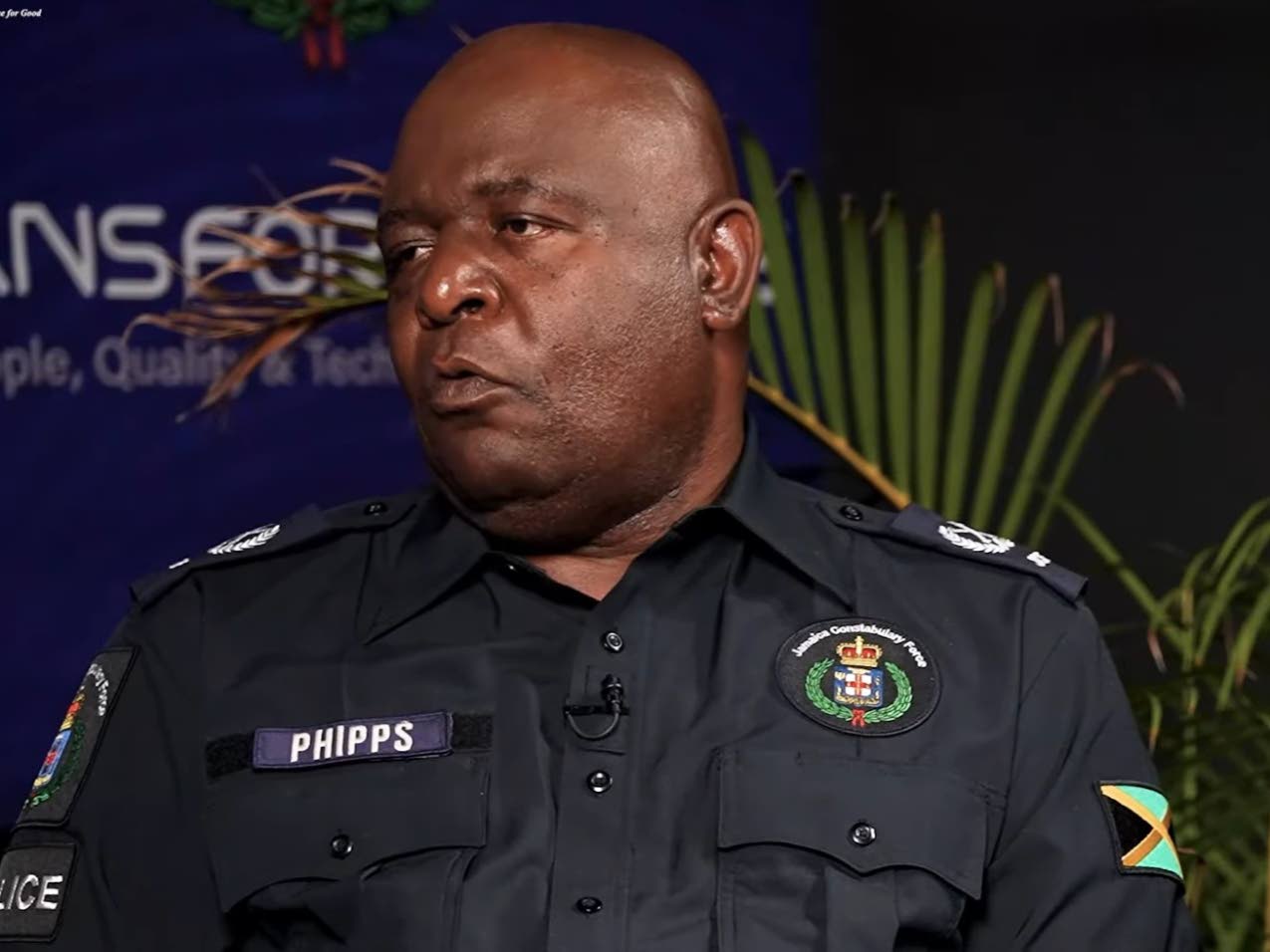
Assistant Commissioner of Police Michael Phipps, commander of the Jamaica Constabulary Force’s Area Four, speaking on the JCF’s Force4Good podcast.
Between January 2017 and July 2019, the division recorded more than 400 murders, cementing its reputation as one of Jamaica’s deadliest policing areas.
Manderson said the division’s recovery began years before Jamaica’s recent national decline in murders. He said the strategy focused on strengthening the police force internally while rebuilding relationships with residents.
“We had to ensure that we build a rapport with the community, that we win the confidence of our residents, and that we seek to find all the gems that are within all of these volatile communities. The very same communities that many may have written off to say mission impossible, get rid of them all if even. But we went on the ground, walking the streets, talking to the people, winning their confidence, and at that point we realise of course that there is hope,” he expressed.
According to Manderson, that approach helped the division end 2025 with 74 murders — the first time in almost two decades that annual killings fell below 100 in the division.
Area Four commander ACP Michael Phipps said St Andrew South’s progress forms part of a wider decline in violent crime across the policing area.
Area Four recorded 342 murders in 2024 before reducing that figure to 181 in 2025, a decrease of 161 killings that Phipps attributed to intelligence-led policing, focused deterrence strategies, technology, and close collaboration with communities.
But despite the gains, Phipps warned against complacency.
“St Andrew South, you are turning the corner but we are not there yet. There’s no place for relaxation in terms of not doing what we ought to be doing, so I would just urge the team to continue to press on because we are very near to the finish line and we have that goal in sight,” he said.


