



In celebration of the underdog
Generally, an underdog may be defined as any person, group, or organisation expected to lose, fail, or suffer serious disadvantage, but is able to strive, keep in the competition, or even go on to win despite the prevailing odds.
It is a concept that can be widely applied across a wide spectrum of human activity, sports not being the least important of them. It can also be applied to individual initiative and endeavour, when the person who may be considered a failure succeeds spectacularly to the surprise of onlookers.
But to zero in on sports for a moment, the 2026 FIFA World Cup, which has just ended, witnessed some tremendous moments of football skills. Despite certain political hiccups in the game, the event lived up to its name of being the premier global sporting event that it has become.
What impressed me the most, and which is the genesis for this piece, are the number of teams that rose to prominence of whom experts and observers of the game had low expectations. They were the typical underdogs who were seen as lacking the experience, resources, and expertise to challenge the traditional formidable teams. Yet, despite their smaller sizes and the economic challenges that confront the nations from which they came, they were able to rise to the occasion and perform creditably, much to the surprise and no doubt chagrin of many.
A brief survey of a few of these underdogs tells the story. Cape Verde come readily to mind. Ranked 64th, they were able to draw 0-0 with Spain, who went on to win the tournament, and 2-2 with Uruguay, considered a traditional powerhouse.
The Democratic Republic of the Congo drew 1-1 with Portugal, one of the front-runners of the tournament. They led England for more than an hour and suffered a narrow 2-1 loss.
Paraguay demonstrated one of the most dramatic upsets, eliminating Germany in the Round of 32. Norway, although not a small nation economically, but nonetheless an underdog in global soccer expectations, defeated the indomitable Brazil and sent them packing from the tournament.
One of the big upsets in the tournament was the 4-1 defeat of the US by Belgium. It is true that America is still new to the football field, but by the time of this tournament they had garnered enough experience to be recognised as a formidable team which, in the view of some analysts, stood a good chance of winning. So in one sense they could be considered an underdog going into the game, but, on the other hand, their size, strength, and power gave them a distinct advantage that most teams did not have. In any event, over time, they proved themselves to be a worthy opponent in this prestigious competition.
That is until US President Donald Trump decided to put his fingers on the scale to get Folarin Balogun, who was suspended and thus could not play in the qualifier with Belgium, to play. Trump certainly did not have any authority to change FIFA’s disciplinary rules, but he had his way with the supplicant president of FIFA, Gianni Infantino, and prevailed. Could this have affected the morale of the American team, given the public outrage against this interference on the part of the American president?
We may not know, but the defeat, 4-1, was spectacular in the circumstances. Lined up against the mighty US, Belgium could have been considered an underdog, though its team was certainly not a walk over from the very beginning.
In celebrating the underdog, there are two other areas that merit attention. First, the ongoing war between Iran and the United States and Israel. Today, the battle seems to have morphed into a chaotic contest between the US and Iran.
Israel and the US engaged the war with the supreme confidence that it would be over in a short time. The conflict is well into its fifth month after intermittent attempts at securing peace. The US and Israel counted on their immense military prowess; the supremacy of their cause, buoyed by belief in the doctrine that might is right and their cause is just; and their disdain for an enemy that has historically shown tenacity in the defence of its territory.
What should have ended in a week has now dragged on for months without any determinative end in sight. Yes, Iran’s military capability has been severely degraded and its economic livelihood virtually destroyed. Yet, despite these disadvantages, they have been able to hold their own against two of the world’s greatest military powers for the better part of six months. Part of the advantage they have been able to exercise is their control of the Straits of Hormuz, the important global waterway through which 20 per cent of oil and petrochemical resources/commodities pass.
They have attacked Arab neighbours friendly to the US whose territories house American military bases. This has complicated the search for peace. What the US and Israel should have realised by now is that belief in a philosophy that might is right is never a good proposition for winning wars. History is littered with lost causes founded on this belief, but we never seem to learn.
You can do a lot of destruction to life and property, as is presently happening, but you will never be able to bomb your way into people’s hearts. In the end, you lose, when a dose of humility coupled with common sense could have determined otherwise.
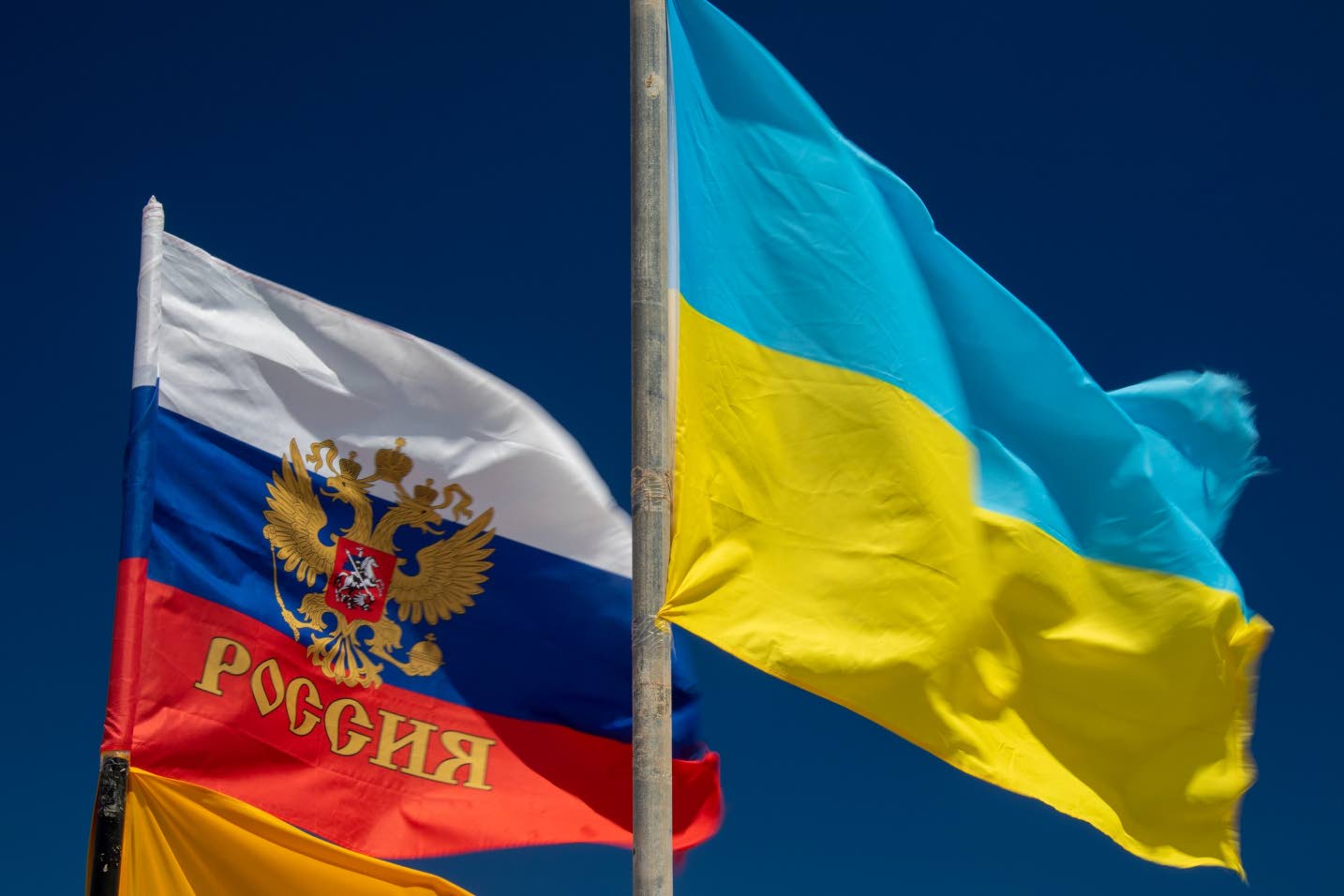
The Russia-Ukraine war is now in its fifth year.
Which brings us to Russian President Vladimir Putin and his ill-fated war against Ukraine. A war that should have taken a year is now in its fifth year. Again, Putin underestimated and misjudged the enemy. Like the US and Israel, he is fully committed to the philosophy that might is right and believes that in the end Russia’s invincibility will prevail.
But he did not reckon for the tenacity and creativity of an enemy that has to defend itself against extinction. Ukraine, the obvious underdog in this struggle, without the air defences for which it has craved from the beginning of the war, has been able in the past two years to develop its drone military technology to the point that it now has strong standing in this war against a formidable enemy.
What seemed impossible two years ago has now turned the tide of war in its favour. With this development, the war has begun to have a crippling effect on Russia’s economy as people begin to see long lines at gas pumps in a country which is one of the leading producers of oil and its derivatives. Putin may eventually be faced with two options: finding some face-saving approach to peace with Ukraine or continuing to press on in the face of mounting losses.
In fact, there is a third option — nuclear — but even if Putin would want to use this, he would be strongly resisted by those around him. This would be the ultimate statement of the insanity into which Russia would have sunk.
In the meantime, the real beneficiary of these two conflicts has been China. Chinese President Xi Jinping has skilfully and studiously avoided any serious involvement in either conflict, seeking, at least in the public eye, to build goodwill rather than foment continued conflict. He is fast emerging as the statesman of the hour, while building the economic resilience of China.
This, while the US and Russia continue to squander theirs on ill-fated wars that will definitely hurt them in the long term. China certainly is no underdog, but it has learnt to walk between raindrops when others see floods as events to be welcomed.
Dr Raulston Nembhard is a priest, social commentator, and author of the books Finding Peace in the Midst of Life’s Storms; Your Self-esteem Guide to a Better Life; and Beyond Petulance: Republican Politics and the Future of America. He also hosts a podcast — Mango Tree Dialogues — on his YouTube channel. Send comments to the Jamaica Observer or stead6655@aol.com.
Raulston Nembhard


