



‘Deliverance will come’
NWC rep turns to Bible to placate residents still without piped water almost nine months after Hurricane Melissa
CALABAR, Trelawny — National Water Commission (NWC) Acting Community Relations Manager for the Western Division Aubyn Green leaned on the Bible as he sought to calm flaring tempers at a tense community meeting in Trelawny, Wednesday night, promising residents of Calabar and Hatfield left without piped water since Hurricane Melissa that “deliverance will come”.
The assurance came during an NWC outreach meeting at the Assemblies of Holiness Church. Irate customers served by the Dornoch Treatment Plant made it clear that months without the commodity had pushed their patience to the limit. Some argued the prolonged outage had even hampered efforts to extinguish a house destroyed by fire Saturday night.
As frustration mounted, Green said, “We have heard your cry, and just like the children of Israel when they were in Egypt in bondage… the Lord heard their cry, and deliverance came.”
He explained that the Category 5 hurricane extensively damaged the Dornoch facility.
“We have suffered significant damage to that facility, to include the access bridge, which was washed away. So it rendered that facility inaccessible,” he said.
Green said with its engineers unable to safely access the damaged treatment plant, the NWC used drones to do an assessment. He explained that the NWC has since designed a replacement bridge with assistance from the National Works Agency, since bridge construction is outside the water company’s expertise.
The bridge design has been approved and is moving to emergency procurement, Green said, underscoring that the structure must be rebuilt before repairs to the treatment plant can begin, as access to the facility depends on it.
He offered an interim solution.
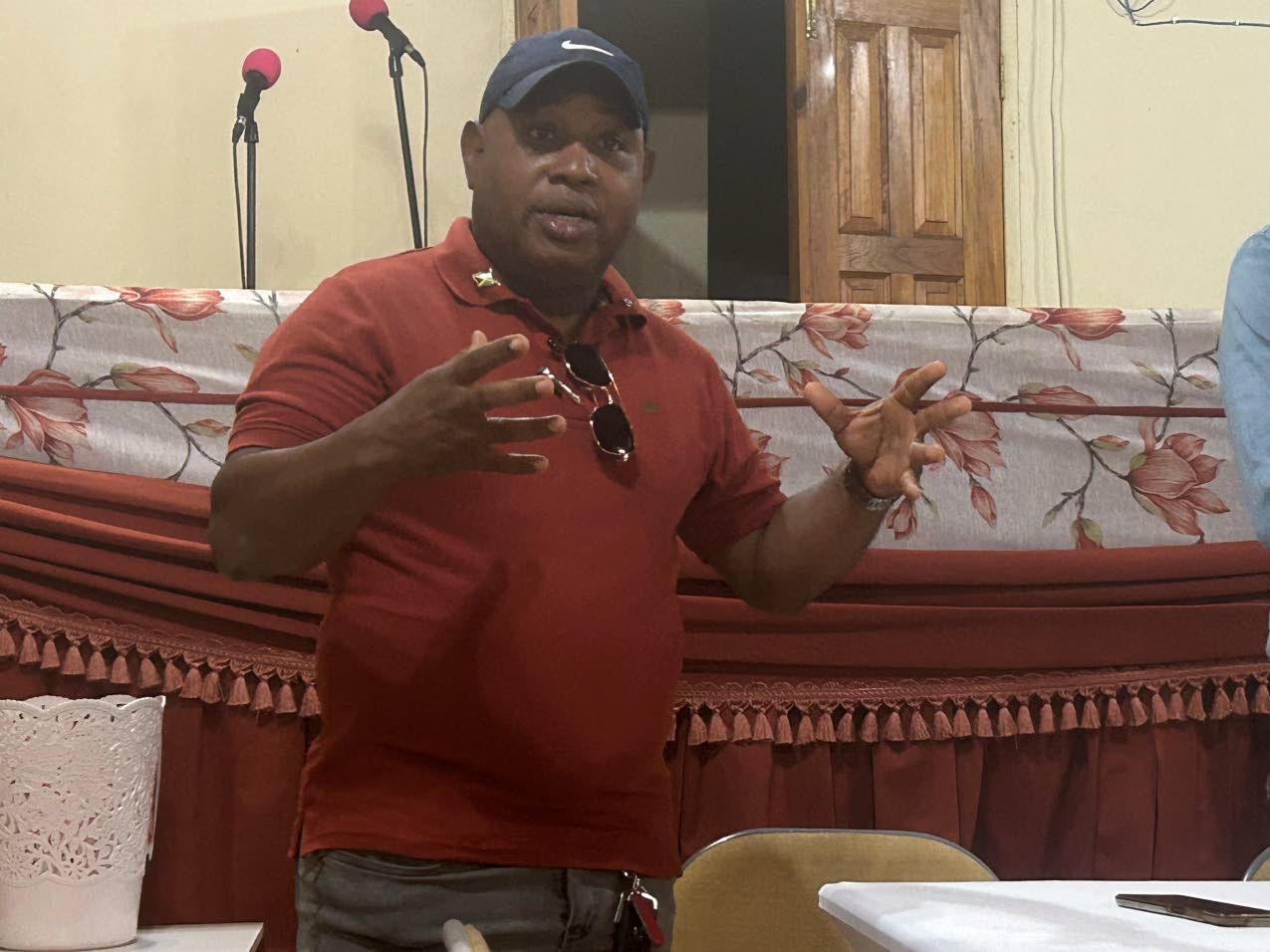
Councillor Fabian “Fabo” Davis (People’s National Party, Duncans Division) addresses residents at the Assemblies of Holiness Church in Calabar, Trelawny, Wednesday night. (Photo: Horace Hines)
“What I’m going to do now is to take all the truck water requests because we’re going to be trucking to you by or before Monday for the first time, after which we are going to develop the trucking schedule so you know when we’re coming,” he said.
Residents were asked to submit their account and contact numbers so they could be notified when trucks were heading into the community.
Councillor Fabian “Fabo” Davis (People’s National Party, Duncans Division), who organised the meeting, pledged to supplement the NWC’s efforts with a truck of his own.
“After Mr Green put in the scheduling for that truck, myself as a councillor will be putting in an extra truck. That’s not a NWC truck. That’s not a parish council truck. But I will put in a truck in the system,” Davis said, explaining that residents would be informed through a community communication group of both the NWC’s delivery schedule and his supplementary service.
Meanwhile, Green also announced that the NWC would establish water stations with black storage tanks at strategic locations for residents who previously relied on standpipes.
“It is a similar process,” he said.
During the meeting angry customers also complained about mounting water bills, despite receiving no piped supply, and paying exorbitant sums to private truck operators.
One resident recounted paying a truck driver directly for water only to later discover there was no official record of the transaction.
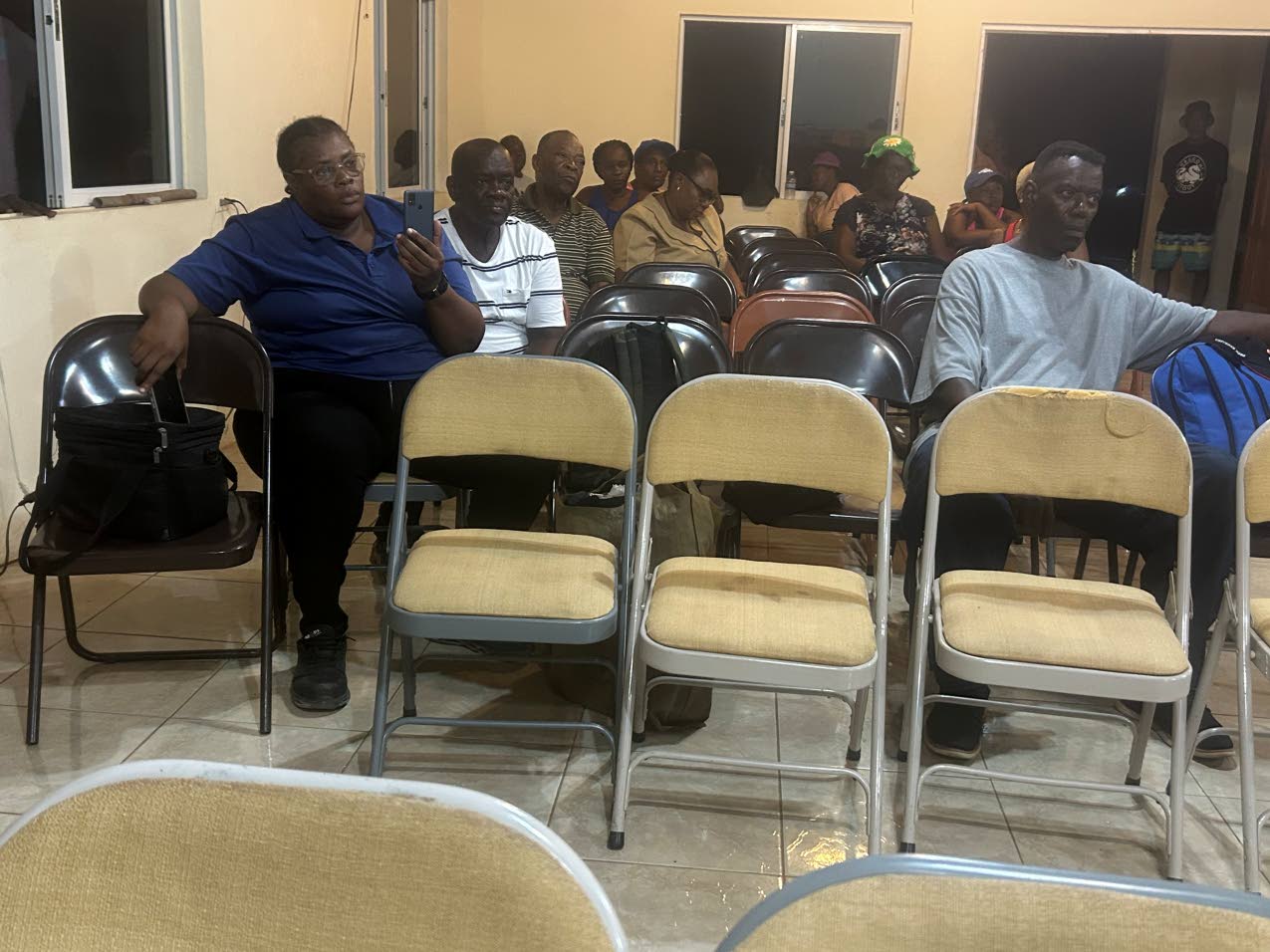
A section of the gathering at the National Water Commission outreach meeting at the Assemblies of Holiness Church in Calabar, Trelawny Wednesday night. (Photo: Horace Hines)
Green apologised but insisted that such payments breach NWC policy.
“We have a zero-tolerance approach for that sort of thing,” he said.
“You must not give any money to any one of our drivers that comes to deliver water to you. It is against the policy of the NWC,” he stressed.
He explained that customers receiving trucked water should only sign the official delivery sheet, after which the charge would appear on their water bill.
Green added that the NWC’s trucking programme had been hampered by a shortage of private contractors with valid sterilisation certificates.
“It is proving very difficult to get a contractor that has a truck that is sterilised… because we have to ensure that the integrity of our water quality is not compromised,” he said.
Residents also appealed for outstanding bills to be written off, arguing they had gone years without a reliable supply.
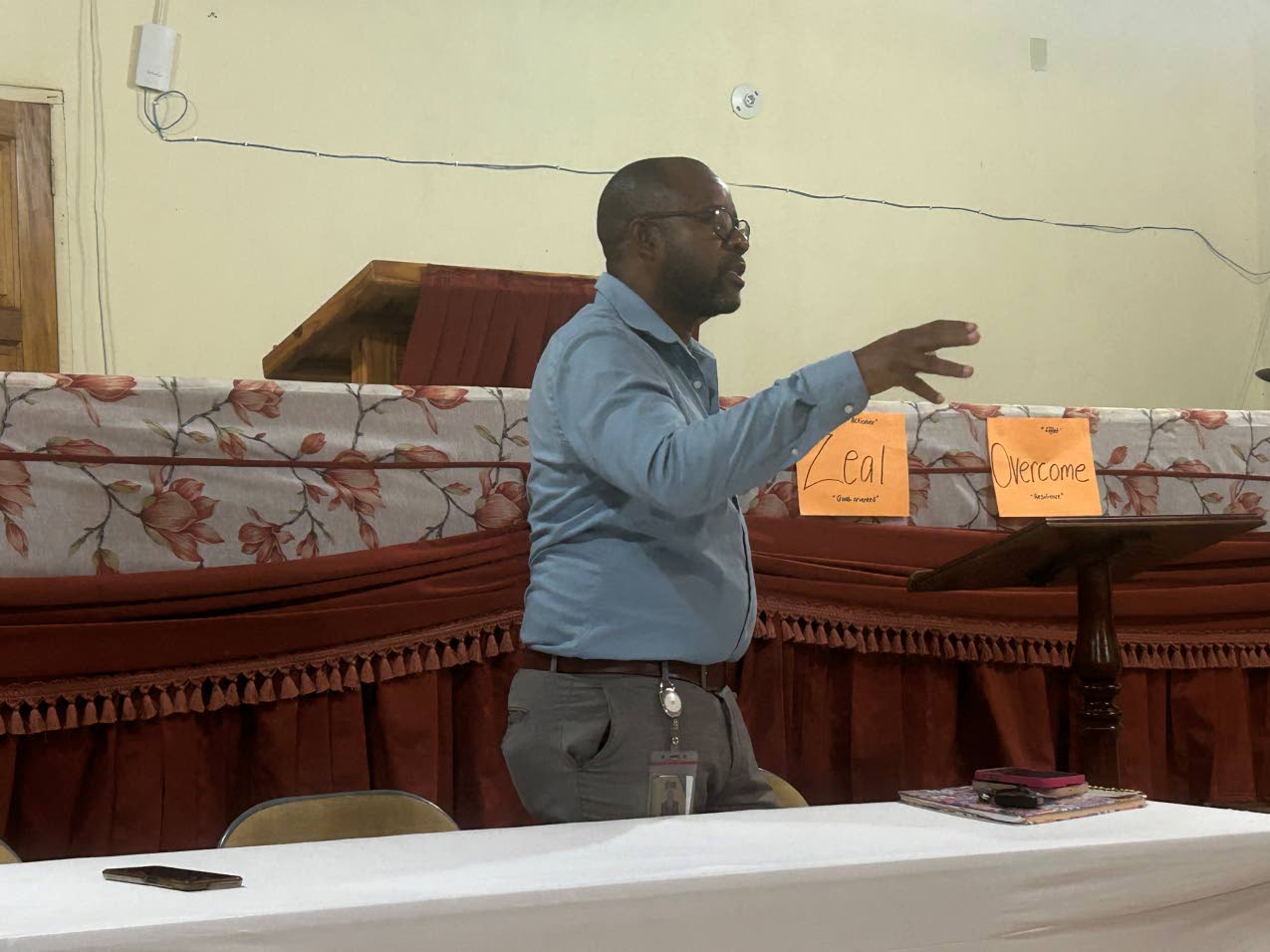
Acting Community Relations Manager for the National Water Commission Western Division, Aubyn Green addressing customers at the Assemblies of Holiness Church in Calabar, Trelawny Wednesday night. (Photo: Horace Hines)
Green said each account would be reviewed individually.
“When an area is without water for a specified period, the NWC on a case-by-case basis will review these accounts. If these accounts merit a write-off, it will be given,” he said, explaining that reviews are normally done after consistent service has been restored.
Among the sceptics was resident Maxine Headlam, who questioned whether the promised improvements would happen.
“A lot of times I come to meetings and I hear grand and glorious plans, but you leave without any hope because nothing seems to ever materialise,” she said.
“Has the money for that project been committed?” she further asked.
Green replied that funding had been secured, pointed to work already completed and outlined pre-existing plans to replace the ageing transmission line from the Dornoch facility to the 100,000-gallon Baron Hill tank — doubling the tank’s capacity to 200,000 gallons — and replace approximately five to six kilometres of pipeline.
“Phase one of that project has already been completed. We are now moving into phase two. It is not something that we are just plucking out of the air. There are tangible evidence there to see that this is something that the NWC is committed to,” assured the NWC’s acting community relations manager.
“The plan we had in place was to replace maybe approximately five to six kilometres of pipeline and upgrade that from a three inches to a four inches network, so that we can better serve the residents of Calabar, Hatfield and its environment,” he added.


