



British Jamaican entrepreneur among world’s top inclusive leaders
... Eyes Jamaica for next chapter
British Jamaican music executive and entrepreneur Ben Wynter has been named to the prestigious 2026 Involve Empower Executive Role Model List, earning global recognition for his work championing diversity, inclusion, and equitable access to opportunities across the music, investment, and business sectors.
The annual list recognises 100 executives from around the world who are driving meaningful change by advancing inclusion within their organisations and industries.
Over more than two decades, Wynter has built a career at the intersection of music, investment, and innovation, supporting talent, creating opportunities, and developing platforms designed to unlock potential. As the co-founder of the POWER UP initiative, he has helped establish one of the United Kingdom’s leading programmes supporting black creatives and music professionals, investing more than £5 million through funding, mentorship, and development opportunities to help individuals build sustainable careers and businesses.
He is also the founder of Unstoppable Ventures, an investment platform focused on backing ambitious founders and businesses shaping the future of culture, consumer markets, and technology, with plans to bring his work to Jamaica and explore the untapped potential of the music and investment industries.
For Wynter, whose mother emigrated from St Catherine to the United Kingdom as a teenager in the 1960s, the recognition reflects a journey rooted in resilience, social justice, and a determination to create opportunities for others. He shared that as a barrister in the UK, his mother fought hard for the rights and empowerment of black people, her work inspiring him to do the same.
“Some of my earliest memories are sitting on her shoulders while she was at a ‘Free Nelson Mandela’ march. She helped establish the Black Sisters Group, which supported black women in London and pushed back against unfair treatment by local authorities,” said Wynter.
“I think subconsciously I picked up from her a social justice gene. I don’t like seeing injustice. It doesn’t matter who it is, if it’s women or black people. I don’t like seeing injustice, so being in a position where I could influence change and make a difference was important to me,” he told the Jamaica Observer.
At just 10 years old, Wynter said he had the opportunity to spend an afternoon with boxing legend Muhammad Ali and his family. He said Ali told him to be unstoppable, never allowing anyone to tell him there is a task he cannot do. It was these words, Wynter said, that shaped his outlook on life and eventually inspired the name of his venture capital firm, Unstoppable Ventures.
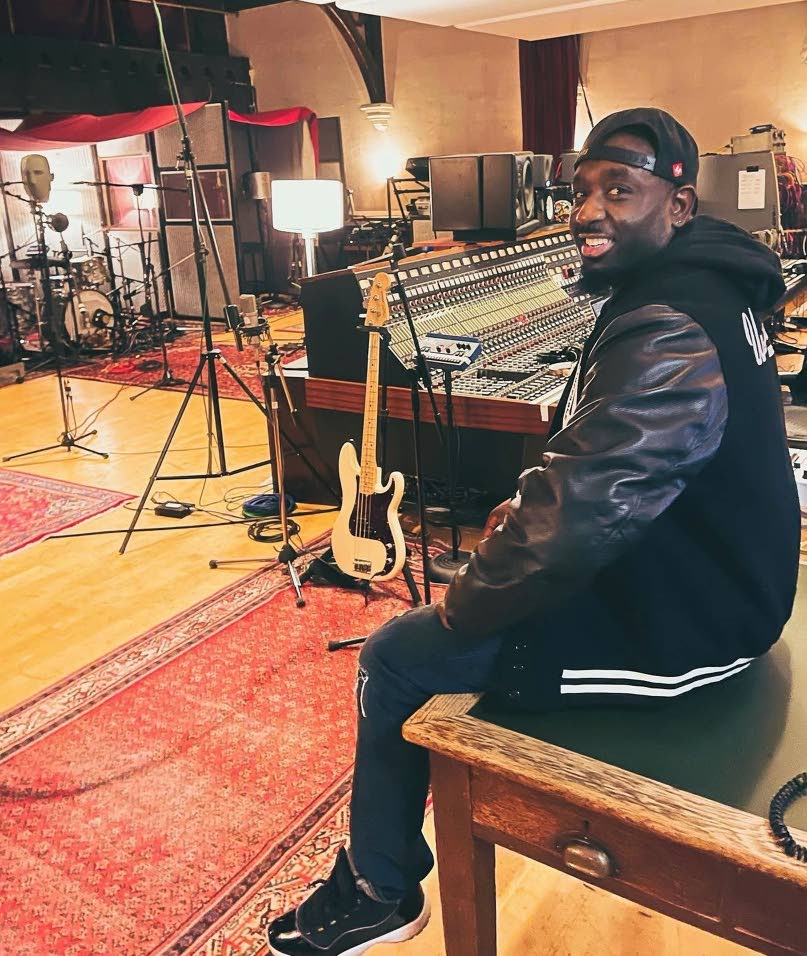
Ben Wynter at the world famous Church studios in London
Beginning his career in the UK music industry at just 18 years old, he’s held roles spanning artiste management, public relations and talent development before turning his attention to addressing systemic barriers faced by under-represented communities in the creative space.
He shared that he co-managed big names such as Grammy-winning producer Jim Johnson, who produced ‘Sweet Dreams’ for American singer Beyoncé and the song ‘Lollipop’ for American rapper Lil Wayne.
“In 2019, I was approached to work with the PRS Foundation, which is the leading charity for emerging talent in the UK, and I agreed to work with them if they allowed me to disrupt the operations because I felt like they weren’t providing enough grants for people from the Black community. I went in and I kind of disrupted everything and more grants went out to not just Black people, but other minorities like women and the LGBTQ community,” said Wynter.
Following the murder of George Floyd in 2020, Wynter said he felt moved to help create POWER UP, a UK initiative designed to address the under-representation of black professionals within the music industry.
“I had seen first-hand the barriers to progression when you’re in the music industry. I started to look at the data, and the data showed us that at entry level, for black talent, it’s very easy for them to enter the music industry, but once they get to middle management level, you see a massive, massive drop-off in talent because there’s no progression routes.
“What happens is you lose all of this brilliant talent because they get fed up with hitting their head against a glass ceiling and they leave the industry. I, myself, had hit my head against that glass ceiling, so what I wanted to do was to give black talent a hammer to smash through the glass ceiling and create a means and a pathway for black talent to move into senior spaces and into boardrooms and into the C-suite and progress their careers,” he told the Sunday Observer.
He said POWER UP did just that, supporting 20 black creatives and 20 black executives/entrepreneurs with a bursary of up to £10,000 pounds to further their education, invest in their brand, or grow their business.
More recently, Wynter said he turned his attention to the investment sector through Unstoppable Ventures, a fund that backs founders who have traditionally been overlooked by mainstream investors. His decision followed research into venture capital funding patterns that, he said, revealed stark inequalities.
“Ninety-two per cent of investment goes to straight white males. Eight per cent goes to everybody else. Two per cent goes to women, and just 0.75 per cent goes to black founders, with only 0.1 per cent going to black women,” he said, adding that the figures were a wake-up call.

Ben Wynter speaking at the 2023 Music Week Women In Music Awards where Power Up was presented with the Diversity & Inclusion (DE&I) Initiative Award.
“Those statistics stopped me in my tracks. How can anything change if we don’t have access to capital? We talk about wanting a seat at the table, but if you don’t have access to capital, you don’t have ownership. And if you don’t have ownership, nothing actually changes,” said Wynter.
Today, Unstoppable Ventures invests in founders from traditionally under-represented groups, including women, black entrepreneurs, and members of the LGBTQ+ community. Wynter expressed a strong interest in working with entrepreneurs from Jamaica and across the Caribbean, expressing the belief that the Diaspora has an important role to play in creating opportunities for businesses on the island, particularly by strengthening investment, collaboration, and knowledge sharing.
He said he sees significant untapped potential within Jamaica’s music industry, arguing that greater attention must be paid to copyright protection, business education, and intellectual property management to ensure creators fully benefit from their work.
“I think now is the time for Jamaica to really get its infrastructure together. We’ve always been able to make music. Now we need to make sure we’re building the business around it in a smart way,” he charged.
Looking ahead, Wynter said he hopes his work will help create a new generation of black entrepreneurs and investors, with Jamaicans among them.
“I want to see more Jamaican names on the list of billionaires. I want to see more Caribbean names. The only way we’re going to do that is through ownership, collaboration, and creating opportunities for one another,” he said.
He noted that he would particularly like to see more Jamaican entrepreneurs access investment and build globally competitive businesses.
“I would love to see a tech company come out of Jamaica, a leading fintech company or an AI company that we can proudly point to and say [it] came from the Caribbean. Ownership is key. We have to stop asking for a seat at the table and start building our own,” he reasoned.


