



The battle is within the PNP
Heritage of bitter leadership challenges will continue
Those who say the looming presidential contest in the People’s National Party (PNP) will be contentious are probably right. Patterns deeply rooted in our political culture and history suggest they are correct.
Leadership transitions within our two major political parties are often very combative. Why? Prime Minister P J Patterson once described our politics as “a fight for scarce benefits and spoils carried on by hostile tribes that seem to be perpetually at war”. Should we believe him? Yes! He served as prime minister for 14 years — Jamaica’s longest-serving. Rural folks often say: “If fish come from the river bottom and tell you that shark down there, believe him.” I totally agree.
Patterson made that statement 32 years ago. The maturing of our national politics since then cannot be denied. The deadly violence that once marred the run-up to, during, and immediately after general elections has all but disappeared. That does not mean men’s raging ambition to attain and keep the choicest jobs in their parties has died. Politics is still a blood sport. In our system, the choicest cherry remains the office of prime minister.
NOT WITHOUT CHALLENGES
The PNP was founded in 1938 by a group of Jamaicans including Osmond Theodore Fairclough, Howard Cook, Ken Hill, Alexander Bustamante, and Noel Nethersole. Fairclough was the principal founder. The PNP’s first president was Norman Washington Manley. He was elected party president in September 1938.
Some political accounts say Manley’s choice as the PNP’s first president was strategic due to his prominence as a lawyer and Jamaican patriot. Manley’s presidency was not without challenges. Prominent among them were ideological differences in the PNP. These boiled over into the public square in the early 1950s.
Richard Hart, the Hill brothers (Frank and Ken), and Arthur Henry were expelled from the PNP in 1952 for allegedly operating a Marxist unit in the party. The expulsion of the “Four Hs” signalled a parting of ways between the PNP and the Trade Union Congress (TUC), which was aligned with the PNP. The National Workers Union (NWU) effectively filled the vacuum left by the TUC.
Michael Manley succeeded his father, Norman, as leader of the PNP in February 1969. Vivian Blake was Michael Manley’s sole rival. Manley received 376 votes to Blake’s 155. At the time, Manley was 44 years old and served as island supervisor of the NWU.
“In his acceptance speech, Mr Manley, the 44-year-old island supervisor of the National Workers Union, spelt out the kind of society he would like to see created in Jamaica. Over and over again he repeated the concepts of equality and social justice. He called upon all men of goodwill to come forward and make these concepts into living realities.
“In his speech, lasting 56 minutes and punctuated 73 times by applause, Manley spoke about the problems of youth, crime, victimisation, unemployment, the ‘scandal of the electoral system’, corruption in high places and the need to have integrity in public life, and ‘the arrogance of the leadership of the Jamaica Labour Party’.
Norman Manley.
“A constant theme running through the speech was, as he put it, the need for national dedication ‘to lift the burden from the backs of the sufferers in this country’. Manley made it quite clear that it was for the ‘sufferers’, the poor, and the dispossessed that he intended to engage his energies.
“Manley also spoke about party unity. In this context, he had great praise for Blake on whose “strength and talent” Manley said he could count. The reference to Blake was greeted with long applause, and the two shook hands warmly, and the audience again responded with more applause.” (The Gleaner, February 11, 2022)
While the transition from father to son was peaceful, the direction in which Michael Manley took the PNP caused a lot of contention, internal disruption, and separation. There was the perennial tug-o-war between those in the PNP’s leadership who felt the party was leaning too far to the left. They feared that the Jamaican people would never support or accept such a strong drift to the left.
Some accounts say the Workers Party of Jamaica (WPJ), a Marxist-Leninist communist party, filled the vacuum left by those who wanted the PNP to shift even further left. The WPJ was founded in December 1978 and was led by Dr Trevor Munroe. Some in the PNP argued that the formation of the WPJ was a fulfilment of the fears expressed about the party moving too far left. I believe their reasoning was sound.
Michael Manley
The excerpts from The Gleaner of December 31, 1976, page 10, help to illustrate real fears:
Headline: ‘Socialism is communism, says Munroe’ The Gleaner reported, among other things: “A public meeting was held recently at the Savanna-la-Mar courthouse in Westmoreland by Dr Trevor Monroe, the communist leader. The meeting was held in support of Pearl McKoy, PNP candidate for Westmoreland Central.
“Dr Munroe said that there was no difference between socialism and communism. He said, ‘Socialism is communism and communism is socialism.’ “
The jockeying for ideological control inside the PNP between those on its left and the far left has been a constant for decades. The many ideological clashes between Michael Manley and PNP’s chief mobiliser Dr D K Duncan, in particular, are well documented.
MANLEY TO PATTERSON
An ailing Michael Manley left the political scene in 1992. Percival James Patterson, a lawyer by training, was appointed prime minister of Jamaica in March 1992 after being elected president of the PNP upon the retirement of former party leader and Prime Minister Michael Manley.
The PNP with Patterson was returned to office in the 1993 General Election. He was later sworn in for a fourth-consecutive term leading the PNP to victory.
The transition from Manley to Patterson was largely uneventful. Patterson was the obvious heir apparent. He had worked in the political vineyard for many years. He first became a legislator in the 1970s and was appointed minister of industry, trade and tourism in 1972. He later served as deputy prime minister and minister of foreign affairs and foreign trade (1978–1980), deputy prime minister and minister of development, planning and production (1989–1990), and deputy prime minister and minister of finance and planning (1990–1991).
P J Patterson
PATTERSON TO PORTIA
Prime Minister P J Patterson resigned on March 30, 2006. A day later (March 31), Patterson also tendered his letter of resignation as Member of Parliament for the Westmoreland Eastern constituency to Speaker of the House of Representatives Michael Peart, stating that it was “an honour and privilege” to have served in the House over the years.
The transition from Patterson to Portia was marked by a particularly divisive descent. Bitter personal attacks, allegations of widespread bribery of delegates, and threats of physical violence were part and parcel of the contentious contest in which Portia Simpson Miller defeated Dr Peter Phillips in February 2006 to become PNP president. She later became prime minister. Recall that Simpson Miller also defeated Dr Phillips in a second, severely acrimonious presidential contest in July 2008. The Rubicon had been crossed. The PNP has yet to fully recover from the lacerations of those 2006 and 2008 presidential battles. The political daggers drawn in those contests are still in circulation, and the bayonets are still being sharpened.
Portia Simpson Miller
PORTIA AND THE PETERs
The conspicuous failure of the PNP to definitively distance itself from the political mercenaries of 2006 and 2008, and to bury the leftover armaments, has massively stifled progress at 89 Old Hope Road. Today, newer and more dangerous political weaponry has been introduced into the political arena by acolytes of this frightening dictum: “We believe that it is best for the PNP to form the Government; therefore, anything that will lead or cause us to be in power is best for the PNP and best for the country.”
PNP Chairman Robert Pickersgill, now chairman emeritus, made this statement on radio in the 1990s. Years later, it remains an extremely shocking utterance. The PNP has never distanced itself from this severely backward mindset, which is antithetical to democratic practice. This danger should concern all well-thinking Jamaicans. There is overwhelming evidence that this rancid mindset has seeped deep into especially the PNP’s internal presidential battles, particularly since the departure of Patterson. The politics that dominate the PNP today are typical of this mindset.
Simpson Miller was hounded out of the presidency after the PNP’s defeat in the February 2016 General Election. Recall the explosive National Executive Council (NEC) meeting held in Hatfield, Manchester, in February 2017. At that meeting, Simpson Miller said, among other things: “Like how you glad fi si mi out, don’t be glad to call mi when you need mi to win election.”
She also told the NEC that she was pushed and that nobody had to tell her to leave. Simpson Miller castigated some Comrades at the Hatfield meeting, saying, “I worked like a donkey for this movement.” She fumed that some in the PNP were responsible for leaking internal information. The former prime minister also fired salvos at men who, she said, “don’t like female leadership”.
Peter Bunting officially launched his challenge against incumbent Dr Peter Phillips for the PNP presidency in June 2019. The internal election was held in September 2019, with Dr Phillips narrowly retaining his position by 1,427 votes to Bunting’s 1,351. The bitter 90-day leadership battle mounted by the Manchester Central Member of Parliament created further divisions within the PNP. Bunting and others publicly stated that they did not believe Dr Phillips could lead the PNP back to Jamaica House. They were proved right. The PNP lost its second-straight general election in September 2020. Phillips had promised before the election that he would resign as leader of the Opposition and PNP president if he lost. He kept his promise. Phillips clearly did not want to suffer the same ignominy that had been meted out to Simpson Miller.
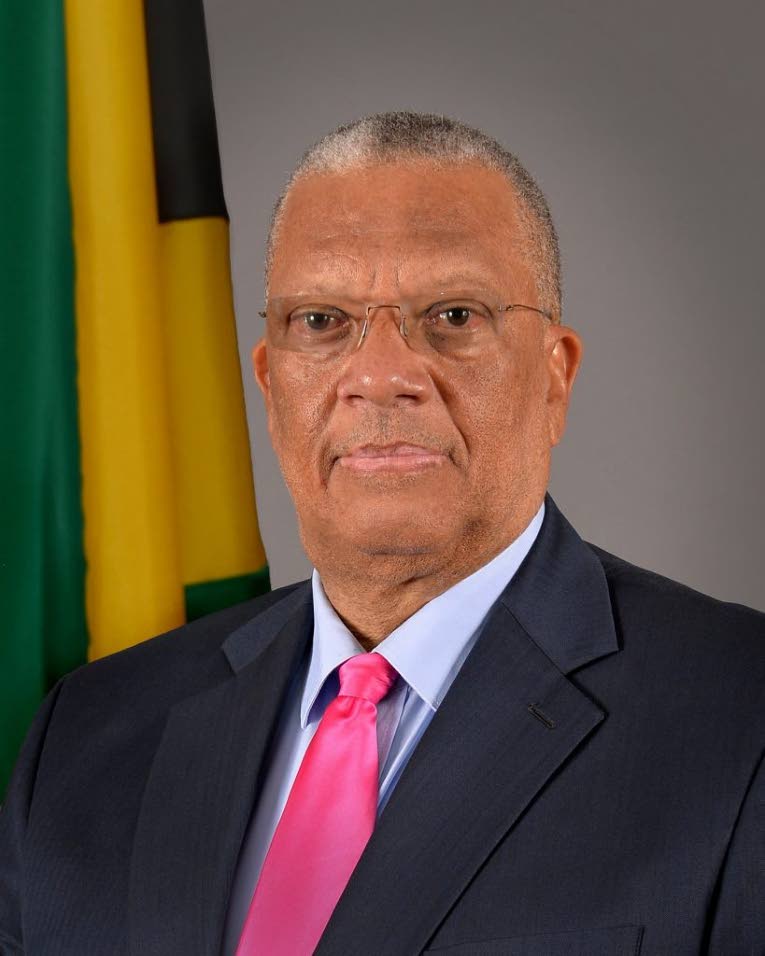
Peter Phillips.
PHILLIPS TO GOLDING
The transition from Phillips to Mark Golding was also very contentious. Mark Golding defeated Lisa Hanna to become the sixth president of the PNP in a bitter leadership election in November 2020. He won 1,740 delegate votes compared to Lisa Hanna’s 1,440. The bitter seeds — particularly those from 2006 and 2008 — had grown into big trees. Their fruits are acidic.
BIG OPEN WOUNDS
It is an open secret that a presidential contest in the PNP is coming. Recall that in my
The Agenda column of January 4, 2026, titled ‘Forecasts for 2026’, I noted, among other things: “Following its third-straight general election defeat, the People’s National Party (PNP) is desperately looking for an event, local or overseas, that will massively shift the political tide in its favour.
“I don’t believe 2026 will be a better year for the PNP than 2025. I don’t believe that the PNP will benefit from a plunge in support for the ruling JLP, which I forecast for this year. The person(s) who will challenge Mark Golding this year, or in 2027, for the leadership of the PNP will become more certain before 2026 ends, I believe.”
It is evident I am spot on. Given the corrosive seeds and patterns of leadership contests in the PNP, particularly since 2006, I am forecasting yet another bitter leadership battle. Those who have divided the PNP cannot reunite it. More anon!
Garfield Higgins is an educator and journalist. Send comments to the Jamaica Observer or higgins160@yahoo.com.
Garfield Higgins


