



Fooling the innocent that there should be no private beaches — Pt 2
Among Jamaica’s most prized natural assets are, by credible accounts, an estimated 86 designated public bathing beaches and a number of hotel-affiliated ones, with some beaches being operated by the Government and others by private owners.
In addition, there are designated fishing beaches used mostly by fishermen for their livelihood.
From as far back as memory serves, certainly in the early days of self-government, there have been competing claims by Jamaicans about access to beaches. The difference between those claims and the current ones now going through the courts — and the media — seem to be motive.
There are persons using their platforms to manipulate the innocent into believing that they are entitled to free, unencumbered use of privately owned beaches, no doubt because they are usually better developed and maintained.
One current hot spot in the beach access debate is the cherished Blue Lagoon in Portland. To false claims that public access was being hindered, minister with responsibility Olivia “Babsy” Grange was forced into the debate, noting that managing the area had proven challenging as the lands surrounding the attraction are privately owned.
Grange explained that previous unregulated activities in the area necessitated intervention and oversight by the State-run Jamaica National Heritage Trust, in order to restore order and safeguard the site.
“We will have to find a balance between the people having access and the people enjoying and earning from the Blue Lagoon,” Grange said.
The umbrella Jamaica Hotel and Tourist Association (JHTA) called on all stakeholders to unite behind a framework that ensures safe, equitable, and well-managed access to Jamaica’s most treasured natural asset.
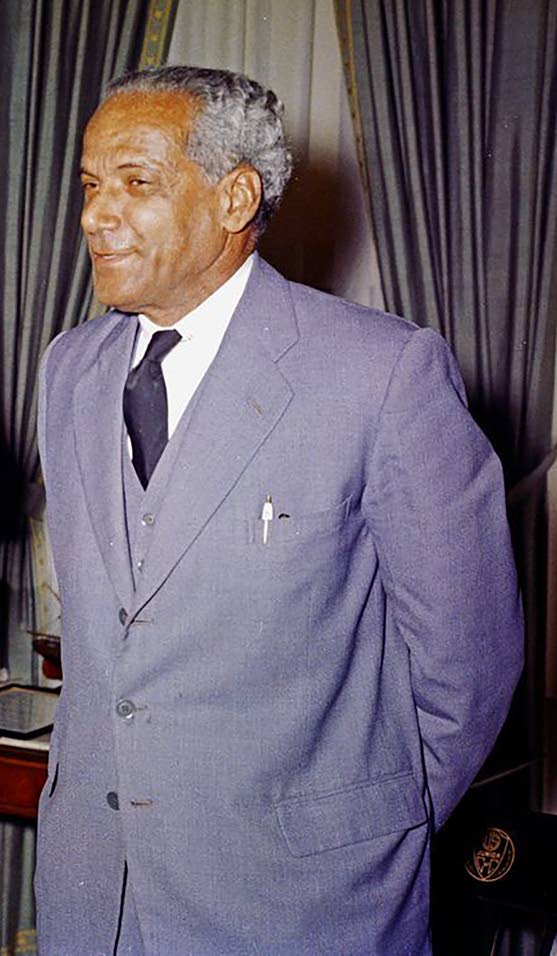
Late National Hero Norman Washington Manley.
“The question before Jamaica is not whether Jamaicans and visitors alike should access our beaches — they absolutely should,” said Christopher Jarrett, then president of the JHTA. “The question is how we enable access in a manner that protects our people, our visitors, and our coastlines.”
In seeking to resolve legitimate competing interests, from back in the 1950s, late National Hero Norman Washington Manley, as then chief minister, piloted the Beach Control Act which has turned out to be an effective tool for such a purpose even today. The Act sought to place legal control of the foreshore and the
floor of the sea in the Crown or State. That declaration was subject to the preservation of rights already derived from registered title, an express Crown grant or licence, and specified fishing rights existing before commencement. It did not vest all coastal land in the Crown, distinguishing the
foreshore and seabed from privately owned beach or adjoining land. Private ownership of coastal land therefore continued, but ownership of adjoining land did not by itself confer unrestricted rights over the foreshore.
The Act preserved ordinary private domestic use so that an owner or occupier of adjoining land, together with family members and private guests, could use the adjoining foreshore for bathing, fishing, similar recreation and access to the sea.
Uses going beyond private domestic enjoyment were brought within a licensing regime. From commencement, the foreshore or floor of the sea could not lawfully be used for a public purpose, trade, business or commercial enterprise without a licence, except where the Act expressly preserved or authorised that use.
The authority could grant licences that were exclusive or non-exclusive and could impose conditions, including annual fees. In deciding applications, it was required to consider public interests in fishing, bathing and recreation, as well as future development of adjoining land.

JARRETT…the question is how we enable access in a manner that protects our people, our visitors, and our coastlines.
Importantly, a separate licensing regime applied to docks, wharves, piers, jetties, and related encroachments. Existing Crown grants and permits were preserved, while future structures required ministerial authorisation.
The Act imposed a positive duty on the Beach Control Authority to determine, from time to time, the needs of the public in relation to bathing, recreation, fishing and the economic development of beaches.
To meet those needs, the authority could acquire land, leases or rights of user by agreement, whether or not the land directly adjoined the foreshore. This enabled it to secure not only beach areas, but also the access routes and ancillary land needed to make public use effective.
The authority could maintain, use and develop beaches or other land vested in it, or arrange for another person or public body to do so. The statutory scheme therefore contemplated the active provision and management of public beach facilities, not merely the regulation of existing private uses. The Act also empowered the authority to assist in establishing public or customary rights over beaches and access routes.
Where the public or a class of the public had used a beach or access route for the prescribed period and the use was not disputed, the authority could apply to the Supreme Court for a declaration of that right.
For those who contend they have a right to use privately owned beaches, the Act did not depend on a single general right of entry to every privately owned beach. It recognised the importance of commercial development. Hotels, proprietary clubs, fee-paying bathing beaches, wharves, and similar enterprises were expressly contemplated within the statutory definition of “commercial enterprise”.
During the debate, Manley illustrated how the intended balance could work, giving the example of a proposed hotel development in which part of the beach would be reserved for fishermen, another part for public bathing and the remainder for the hotel.
He described that form of allocation as the “model of orderly development the legislation was intended to support”.


