



CLA weeds out high fees
Licensing authority provides easier pathway for traditional ganja farmers to join formal system
A craving for traditional marijuana farmers to be included in the regulated industry locally has prompted the Cannabis Licensing Authority (CLA) to relax and reduce some entry requirements, including the cost of registration, for easier access to the system.
The registration fee for ganja farmers, which was US$3,000, has been slashed to US$150 under a Cultivator’s Transitional Special Permit Programme introduced by the CLA.
This provides a phased pathway for traditional cannabis farmers to transition into the regulated industry while working toward full licensing compliance.
Addressing this week’s Jamaica Observer Monday Exchange at the newspaper’s head office in St Andrew, senior members of the CLA, including board chair Dr Nadeen Spence and Chief Executive Officer Farrah Blake, were adamant that the new moves are intended to open the doors to the regulated industry for traditional ganja farmers, and were in no way an attempt to shut them down.
Spence told Observer editors and reporters that there are many traditional ganja farmers who yearn to be a part of the regulated industry and the CLA is ready and willing to assist them in doing so.
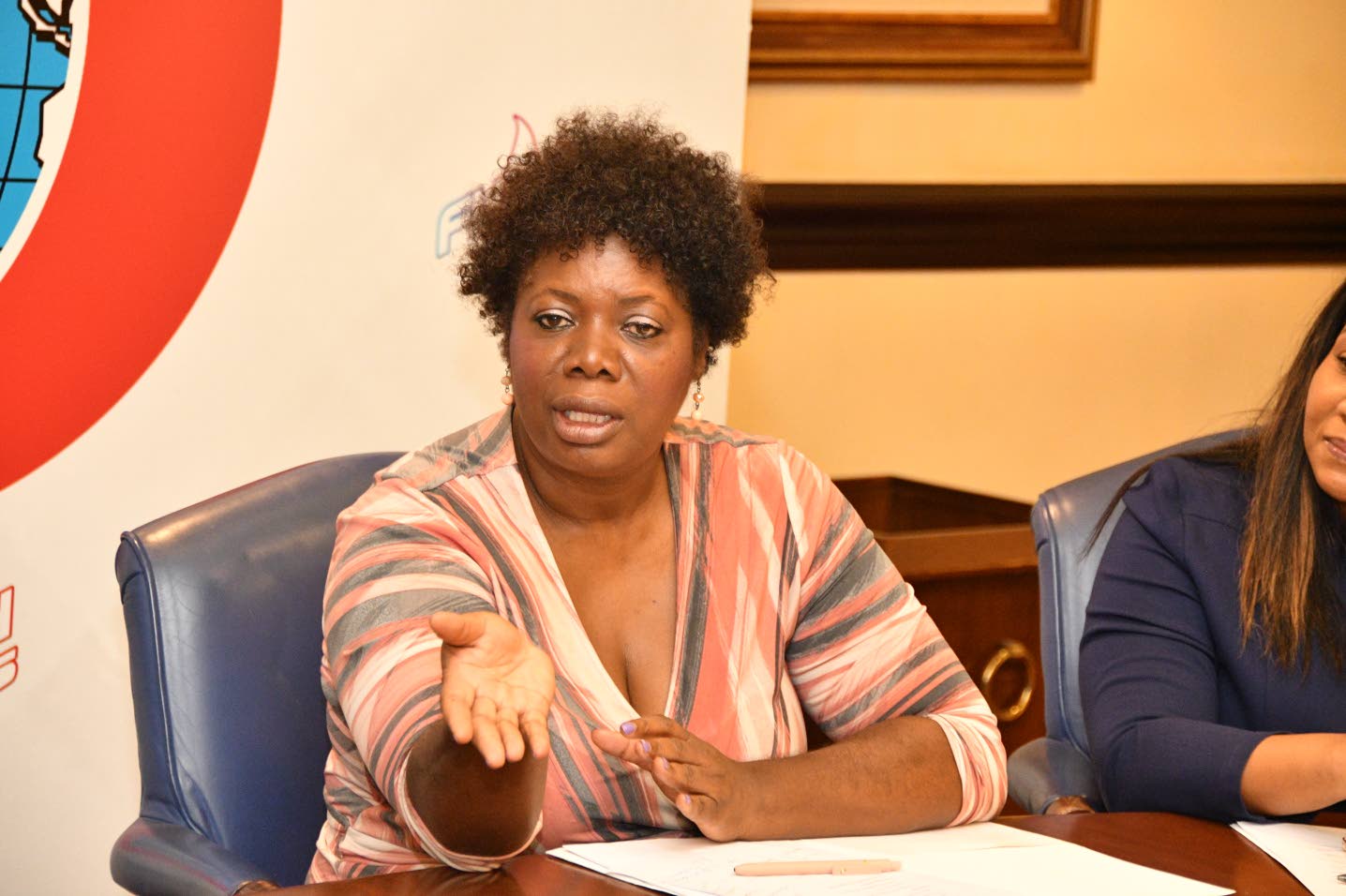
Dr Nadeen Spence, chairwoman of the Cannabis Licensing Authority, on Monday. (Photo: Joseph Wellington)
“Those who want to do business in the medical cannabis industry, we will give them the information to do so if they want,” Spence said.
“The CLA processes licences for those who would like to conduct business, conduct operations [under the Dangerous Drugs Act]. For those who want to be involved, we want to provide as much information and guidance as possible,” added Spence.
She pointed to an ongoing roadshow which forms part of the initiatives that the CLA has embarked on to attract small farmers.
This is designed to expand participation in the sector as well as to guide applicants and promote the medical cannabis special permit programmes, such as the community and transitional cultivators’ permit.
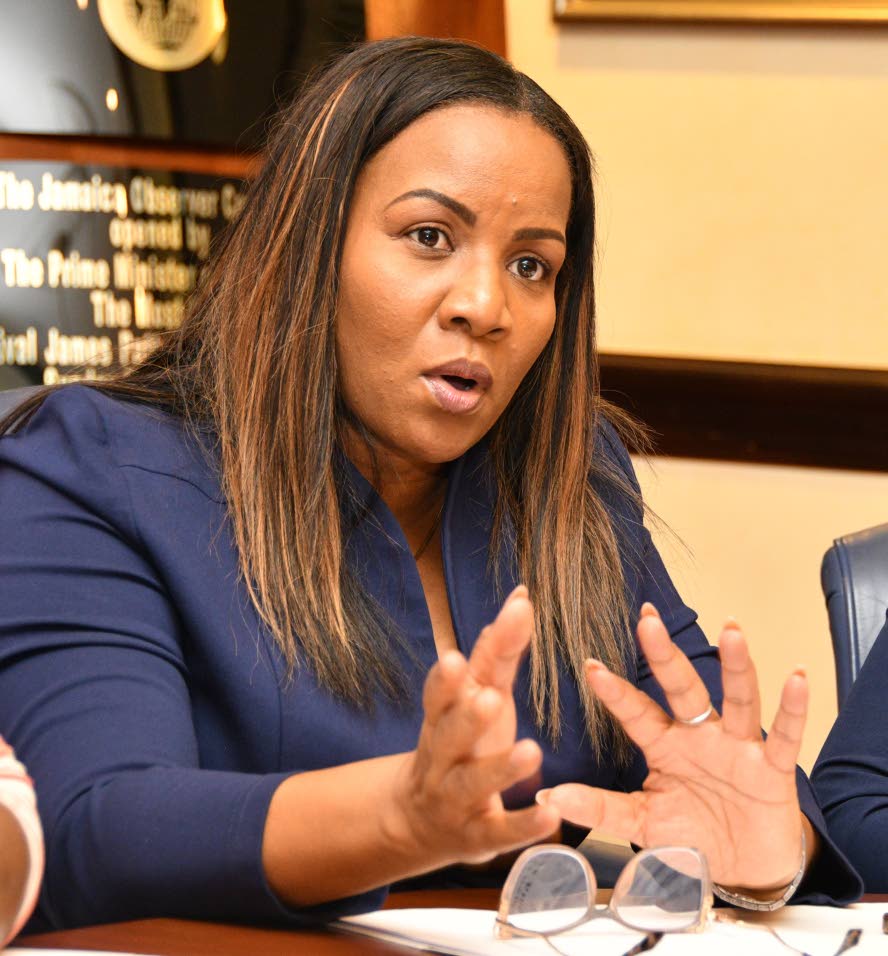
Chief executive officer of the Cannabis Licensing Authority Farrah Blake (Photo: Joseph Wellington)
Meanwhile, Blake said the roadshows are a source of education for the public and an opportunity for officials of the CLA to meet face-to-face with people who want to enter the regulated industry.
“There is going to be, maybe, some apprehension about engaging us through these programmes. The islandwide road tour is to ensure that we have that face-to-face interaction. If there’s assistance needed to complete the forms, we’re there to do that. If there’s assistance needed to determine whether or not these farming programmes are for you, we can give that advice. We can also give advice about the existing licensing products that we have,” said Blake as she underscored that farmers who are not currently regulated will not be reported to law enforcement agencies.
“You have to understand that me asking you to come into the legal space is not to try to burn down your farms or anything like that. The law of the amended Dangerous Drugs Act provides for the religious side and it provides for the commercial side. That is where the CLA operates, within the commercial space. So we try to encourage the public to stay on the right side of the law, come into the legal framework, and operate there. These farming programmes are created to further engage traditional farmers who might not have wanted to participate as of 2015 to now. We’re not planning to report you. We’re not calling the police on you,” insisted Blake.
She was supported by Walter Melbourne, the CLA’s director of licensing and applications, who scoffed at claims that there is no room for small ganja farmers in the regulated industry.
“That is why we have the cultivators’ permit. Those persons who would not have the necessary skills and requirements, moneywise as well, you could come in, and we’ll accept you into the programme. There’s a US$150 application fee and there are no more [fees] once you’re qualified,” said Melbourne.
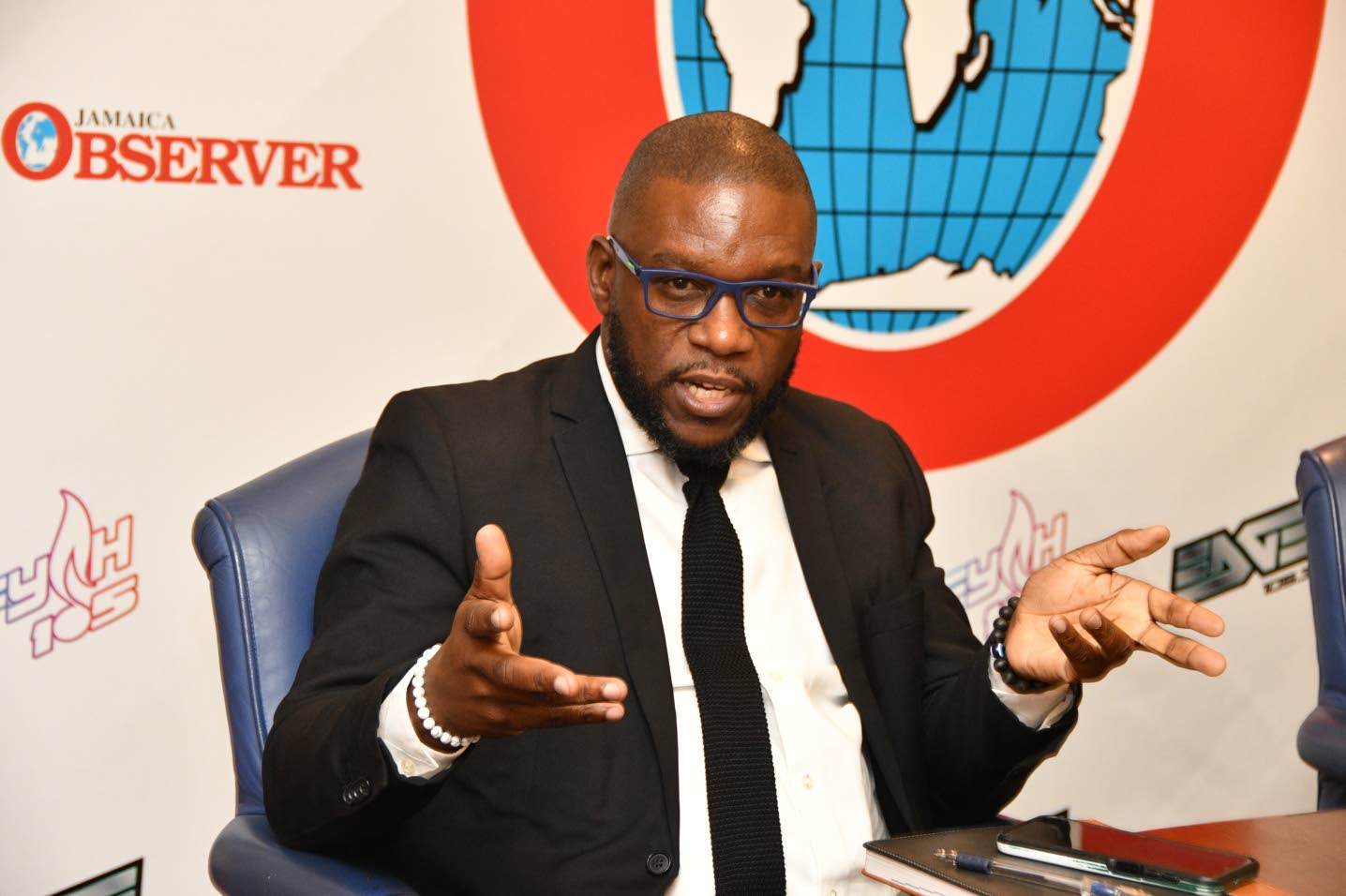
Walter Melbourne, director of Licensing and Applications (Photo: Joseph Wellington)
“It is actually creating a pathway for the small man,” added Melbourne as he indicated that the CLA is prepared to hold the hands of people who want to enter the formal system and guide them through the entire process.
For the people concerned about whether they will be able to continue to operate their farms while they transition through the programme, Melbourne said they would be given special permits once they meet the requirements, which, he pointed out, are no longer very strict.
“You would have to make an application to come into the system and [the programme] is for two years. It is meant to allow you to transition. We’ll hold your hand, show you what to do. We have a Cannabis Specialisation Unit within the CLA that will assist you in terms of growing techniques, everything that you need to assist you to ensure that it’s viable. We have the requisite resources within the authority to assist you. You just have to make the application. We will assist you in guiding you in setting up your home, to set up your farm, and all of that, and you make the transition.
“We’ll go through line by line with you. I’ve seen situations in which a person cannot read or write, and I’m not mentioning this to be discriminatory or anything, but to show that we are very inclusive, in the sense that if persons cannot read or write, we’ll hold your hand. People will actually fill out the form and show you where to sign. So you take in stuff to us, like what area of land are you going to use… do you have a lease agreement? Do you have a title? Land is not a sore issue, in the sense that if you don’t even have title to it, we will say, if you have been farming the land for some time, occupying the land, we’ll take declarations from persons who have known the land for several years, just to verify and just to authenticate the fact that you have been occupying the land,” added Melbourne, as he explained that the process to become registered could take up to five months.


