



Carib Cement eyes regional exports after supply crunch
CARIBBEAN Cement Company Limited could resume regional exports as early as September, targeting the Cayman Islands and The Bahamas as increased production restores surplus capacity—provided Jamaica’s growing demand is met first.
The company restarted exports to regional markets in January but later suspended planned shipments as supplies tightened in Jamaica. It is now eyeing the Cayman Islands and The Bahamas, where Cemex already operates. Managing Director Jorge Martinez said any restart would depend on local demand.
“With our new enhanced capacity, we are willing; we have the capacity not only to serve the entire local market but also to export some surpluses,” Martinez said during the company’s annual general meeting on Thursday.
The potential regional push follows $4.6 billion of investment across 44 capital projects during 2025. Of that amount, $2.7 billion went towards the kiln expansion and $640 million towards replacing the K5 stack. Other projects included a new tyre shredder and additional machinery. Even with the added capacity, Martinez placed a clear limit on any expansion.
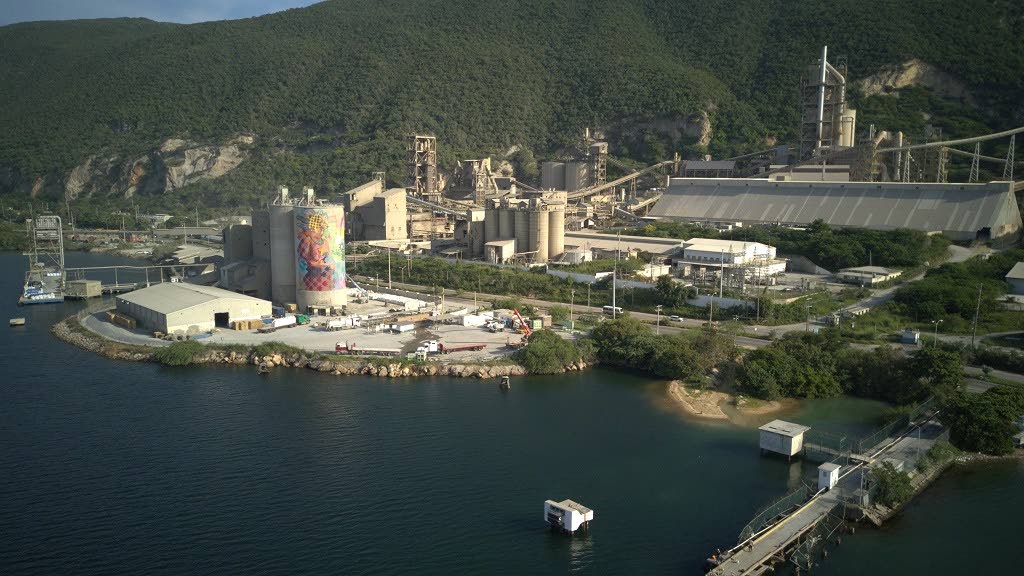
Caribbean Cement’s Rockfort plant in Kingston. The company has invested billions of dollars in expanding production capacity as it looks to meet growing domestic demand and pursue regional export opportunities.
“We are being responsible about attending and handling the local market as our first priority,” he said.
That commitment was tested by supply constraints in Jamaica earlier this year. Caribbean Cement faced challenges meeting local demand during April and May. Martinez told shareholders that the company had begun responding to the emerging difficulties as early as March, when it requested supplementary cement to bolster local availability.
The additional supply, including cement sourced through Cemex Bahamas, took weeks to arrive. While awaiting those supplies, Caribbean Cement halted its planned exports and redirected available cement to the domestic market. The experience prompted the company to strengthen its contingency planning.
“What we are doing is significantly increasing our safety inventories of finished products, higher warehousing capacity and getting supplementary cement if needed,” Martinez said.
Caribbean Cement is seeing continued growth in domestic cement demand and revenue, with domestic sales rising 6.9 per cent between 2024 and 2025 while revenue increased 13 per cent to $31.5 billion.
That focus on supply security is particularly important as Jamaica’s cement market continues to grow.
Despite the short-term supply challenges, domestic demand remained strong, with May 2026 recording the company’s highest monthly sales on record. Overall, domestic cement sales increased 6.9 per cent between 2024 and 2025, rising from 0.95 million tonnes to 1.02 million tonnes. Domestic bagged cement sales grew 6.3 per cent, while bulk cement sales increased 9.7 per cent over the same period. The growth in local consumption has also been reflected in Caribbean Cement’s financial performance. Revenue increased 13 per cent from $27.9 billion in 2024 to $31.5 billion in 2025.
“Even after Hurricane Melissa, the last quarter of 2025 was challenging,” Martinez pointed out.
EBITDA — earnings before interest, taxes, depreciation and amortisation — increased 4 per cent, from $9.4 billion to $9.8 billion. Net profit, however, remained broadly flat at $5.92 billion, compared with $5.95 billion in 2024.
Production also reached record levels of 1.097 million tonnes in 2025, while first-half production in 2026 reached 538,500 tonnes, compared with 376,300 tonnes in the corresponding period of 2025. Clinker production also reached a record 953,000 tonnes in 2025, while first-half 2026 production increased by roughly 50 per cent to 402,000 tonnes, compared with 260,200 tonnes in the first half of 2025.


