



Cut in half
Dwindling student population worries Roger Clarke High principal
BALACLAVA, St Elizabeth — The drastic decline in student enrolment at Roger Clarke High School here to just under half its previous population of 700 has Principal George Lewis worried that some students won’t return at the start of new academic year in September.
Lewis is calling on parents and guardians to ensure their children return to the classroom next month.
“Parents need to be held accountable that their child must be in school because education is guaranteed under the Child Care and Protection Act, and there are so many other Acts that demand that students be in school. Enforcement is important but too many children are on the road during school time. And it is not that [they are on] shift; they are just not coming to school,” he said.
The decline in the school’s population has been compounded by existing structural damage, particularly leaking roofs and blown-out windows, which shuttered the school for just over two weeks last October following the passage of Hurricane Melissa and placed it in the Ministry of Education’s tier two for restoration.
“[The drop] in our enrolment [started] from the advent of COVID-19 and it has continued. Hurricane Beryl [in July 2024] caused further decline in our enrolment and Hurricane Melissa has caused us to lose some students in the middle of the school year. Students who were previously here in October didn’t return when we reopened on the 18th of November,” Lewis told the
Jamaica Observer last Wednesday.
He said although guidance counsellors have located students, some are reluctant to return to school and have instead opted to work at establishments including bars.
“We visited them and met with their parents. Whether it is that they moved out because their homes were destroyed or they become engaged in income-earning activities, some opted not to come back to formal school. Whatever the reason, that contributed to the continued decline and, of course, [there are also] the [students] who we get from the Ministry [of Education],” Lewis explained.
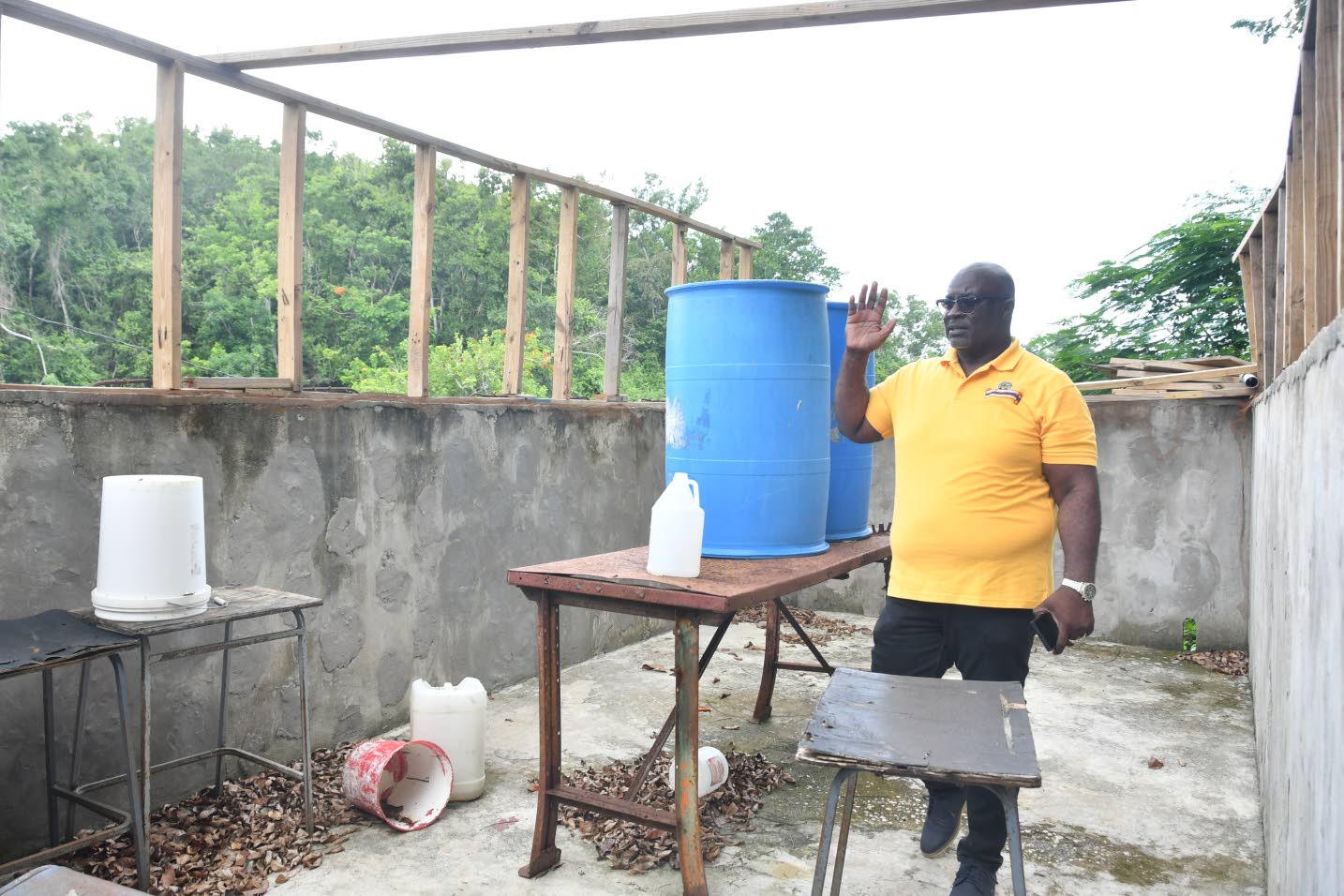
Roger Clarke High School Principal George Lewis shows the slaughterhouse and poultry area damaged by Hurricane Melissa last October.
He said that getting those students back in school will require a collective effort.
“… If you drive around St Elizabeth during the school day — and not many schools are on shift — you will see an unacceptably high number of students on the road during school time. Who is it that is ensuring that these students are not on the road idling?” he asked.
“Whether they are at a garage working, or they are at a bar working, or just on the corner or gone to a river. [They are] doing things other than coming to school. It has affected Roger Clarke High School, but it is not just [here],” added Lewis.
In January, school leaders at Maggotty High, Black River High, and Newell High said they were seeing a fluctuation in the turnout of students. They attributed it to teenagers having taken jobs, including construction, while others have relocated to other parishes.
Lewis said in June the school had a graduating class of just 26 students, and efforts have been doubled by teachers and students to do well in external exams, including the Caribbean Secondary Education Certificate (CSEC).
“Our math CSEC passes were exceptionally high. We moved from 14 per cent in the school year 2023/2024 to 60 per cent in 2024/2025. We were particularly proud of that… Hurricane Melissa brought us down but we are expectant and hopeful that the results this year will continue on that trajectory. We have approximately 320 students, given that we just graduated 26 in June, and then we have received 45 students via PEP for this coming school year,” he said while explaining that only 30 of the 45 students have registered for the upcoming academic year, while the school has also accepted transfer students.
Despite no remedial work to the school plant Lewis said he is prepared to accommodate students in September.
“Nothing has been done in terms of the roof except just to put tarpaulin there, but if it rains and it is windy then those tarpaulins will lift. In terms of preparation for school, we are well under way there. One of the benefits to my school is that we do not have a shortage of furniture for students; because of the reduction in the numbers I have enough to seat all students… Any shortage of furniture is for teachers,” he explained.
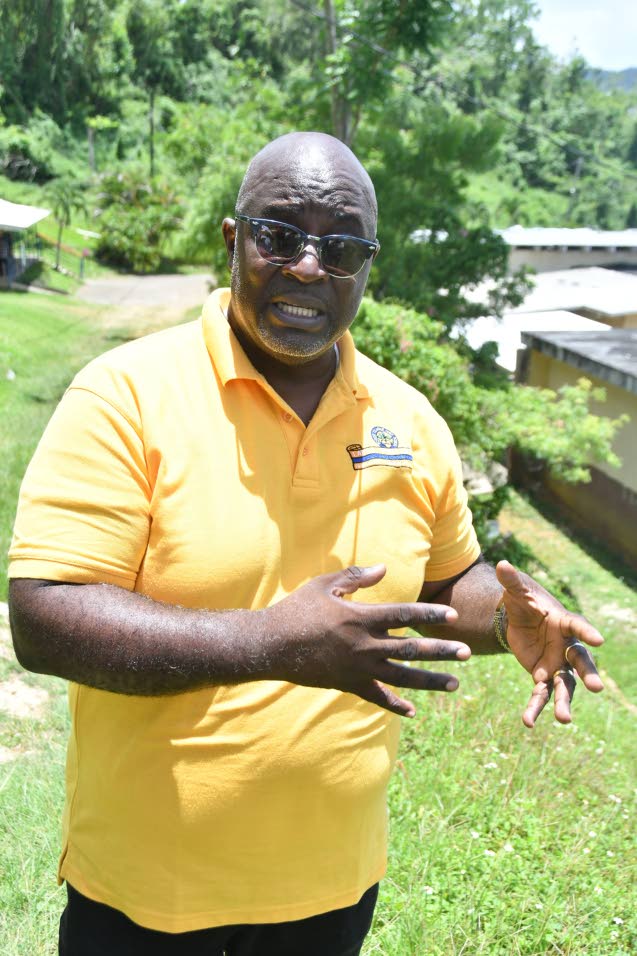
Roger Clarke High School Principal George Lewis speaking with the Jamaica Observer last Wednesday.
But a lack of reliable water supply and spotty Internet service are among the woes facing the school.
“Water remains a problem in Balaclava so we had occasions when there was no water in the area and so we had to close school midday… We have a lot of rainfall and we do have catchment tanks but then, if we have no water from [the National Water Commission] in excess of three days then our storage capacity will be depleted and [we will] have to close school. We call NWC and they will respond to us, but sometimes it is not fast enough,” he said while pointing out that three times in the last academic year the school was shuttered due to water issues.
“We don’t have reliable Internet access here so we have to invest in two Starlink [devices],” he added.
The school, which was originally Balaclava High until it was renamed in honour of late former agriculture minister and St Elizabeth North Eastern Member of Parliament Roger Clarke in 2015, also suffered significant damage to its poultry and greenhouse programmes.
Lewis is however determined to rebuild those programmes and have the school expand into fish farming for its 50th anniversary.
“One of the things that we want to engage in for the new school year as our legacy project is aquaculture… and solar to help build our resilience. After the hurricane we were without electricity for a long time, so we became a generator city,” he said while thanking the American Friends of Jamaica for starting a solar system project at the school.
— Jonn Stewart


