



How Dis Mek: RIVER RAFTS
RIVER rafting is one of Jamaica’s popular vacation activities for locals and visitors alike but have you ever considered the mechanics behind the making of the rafts?
Claude Johnson, raft captain #102 at Rafting on the Martha Brae, explained to the Jamaica Observer’s How Dis Mek the process behind the making of rafts during an interview on the banks of the Martha Brae river in the hills of Trelawny, where dozens of his coworkers’ rafts were docked.
Bamboo, Johnson explained, is ideal for raft creation because each joint on a stalk is essentially an air-filled sealed vacuum, allowing the stalks to float extremely well.
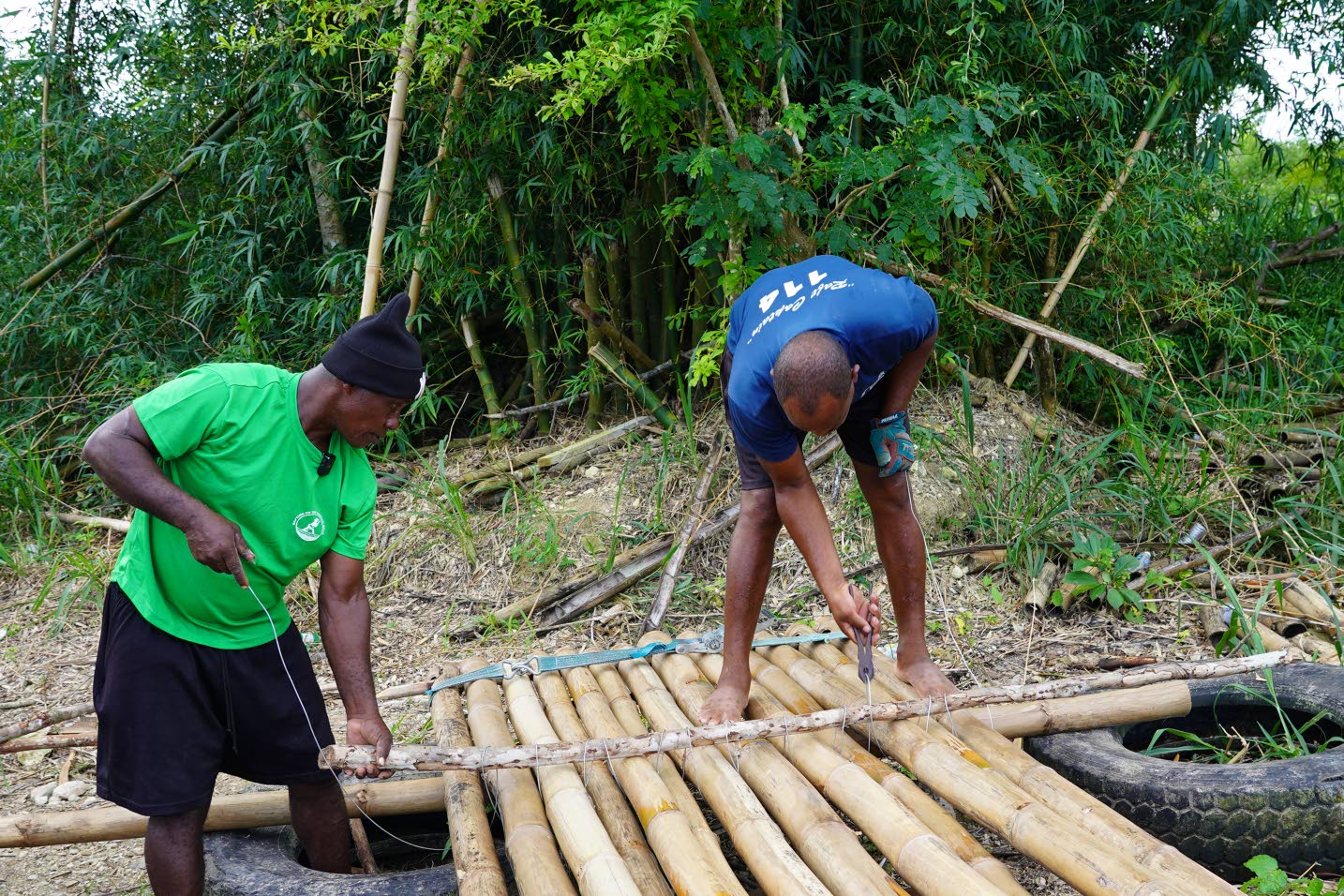
Raft captains Claude Johnson (right) and Richardo Geinues work with a ratcheting strap to secure bamboo during the making of a raft. Gavin Jones
“The reason why we choose bamboo is because it’s air-packed, so as the joints don’t burst, everything is okay. The bamboo can take [withstand] up to a thousand [pounds] on it. You see the more length you have, the more weight you can take on top of it. You can build it 28 feet, 29 feet — those lengths are the good lengths,” said Johnson.
He explained that even if some of the bamboo joints pop open, due to age or sun damage, as long as the others remain sealed the integrity of the raft is maintained.
The use of rafts in Trelawny is well documented. Initially, rafts were used to ferry goods from rural Trelawny to the parish capital of Falmouth. Recreational rafting began in the 1970s under the Jamaica Tourist Board and has been operated by River Raft Limited since 1985.
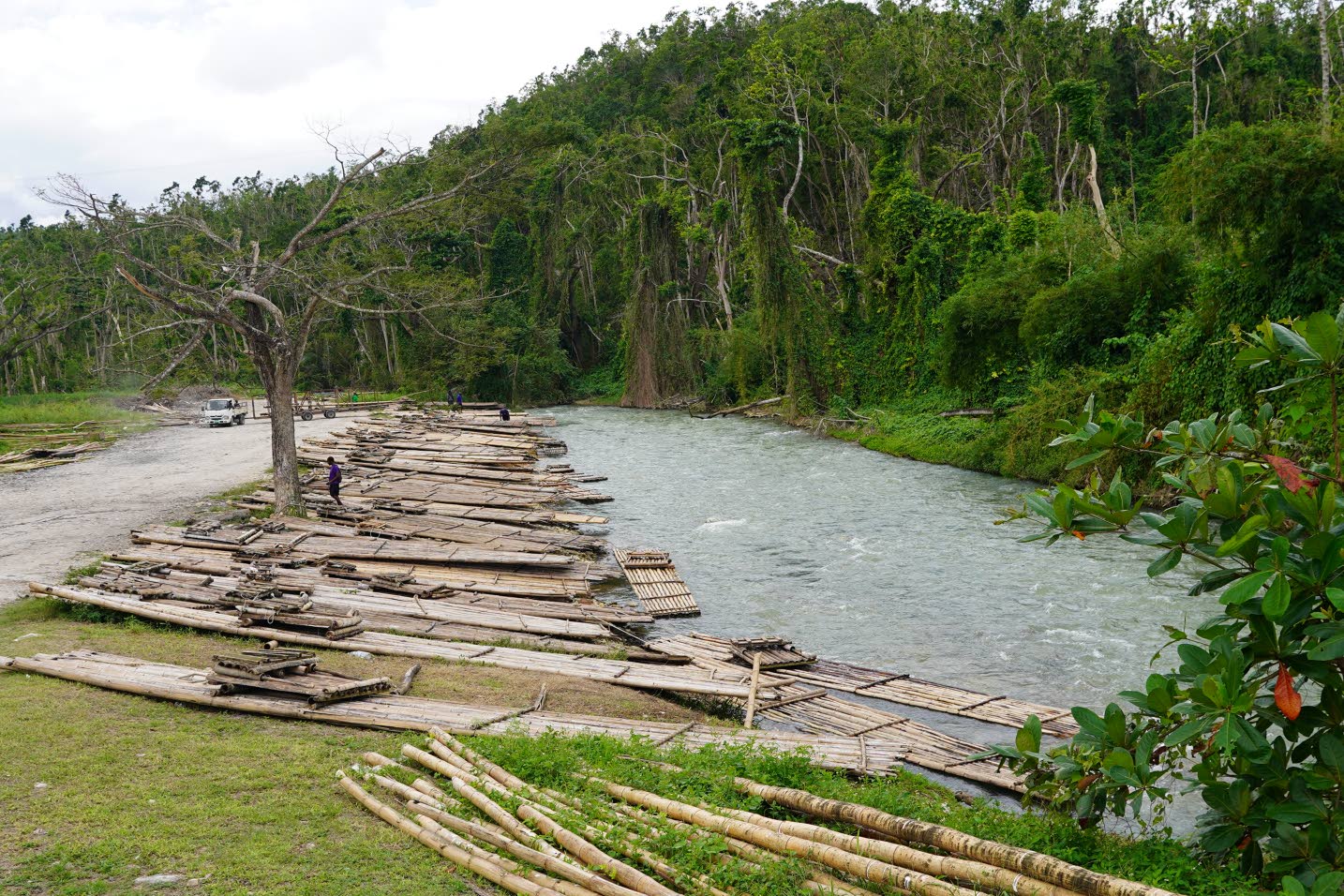
Dozens of bamboo rafts lie on the banks of the Martha Brae river for ease of access by captains. Gavin Jones
Raft captains must be fully trained and certified before they can operate, with lessons in controlling the raft and cardiopulmonary resuscitation (CPR) certification compulsory.
Once licensed, the captains are responsible for the creation of their own rafts. To create the raft, captains need what they refer to as a “dozen stalks of bamboo”.
“If you don’t have any and you can’t go into the field to cut it, you have some people cut it and sell it for $10,000 for a dozen, [but] when we say dozen we mean 14 bamboo to make a raft,” Johnson explained.
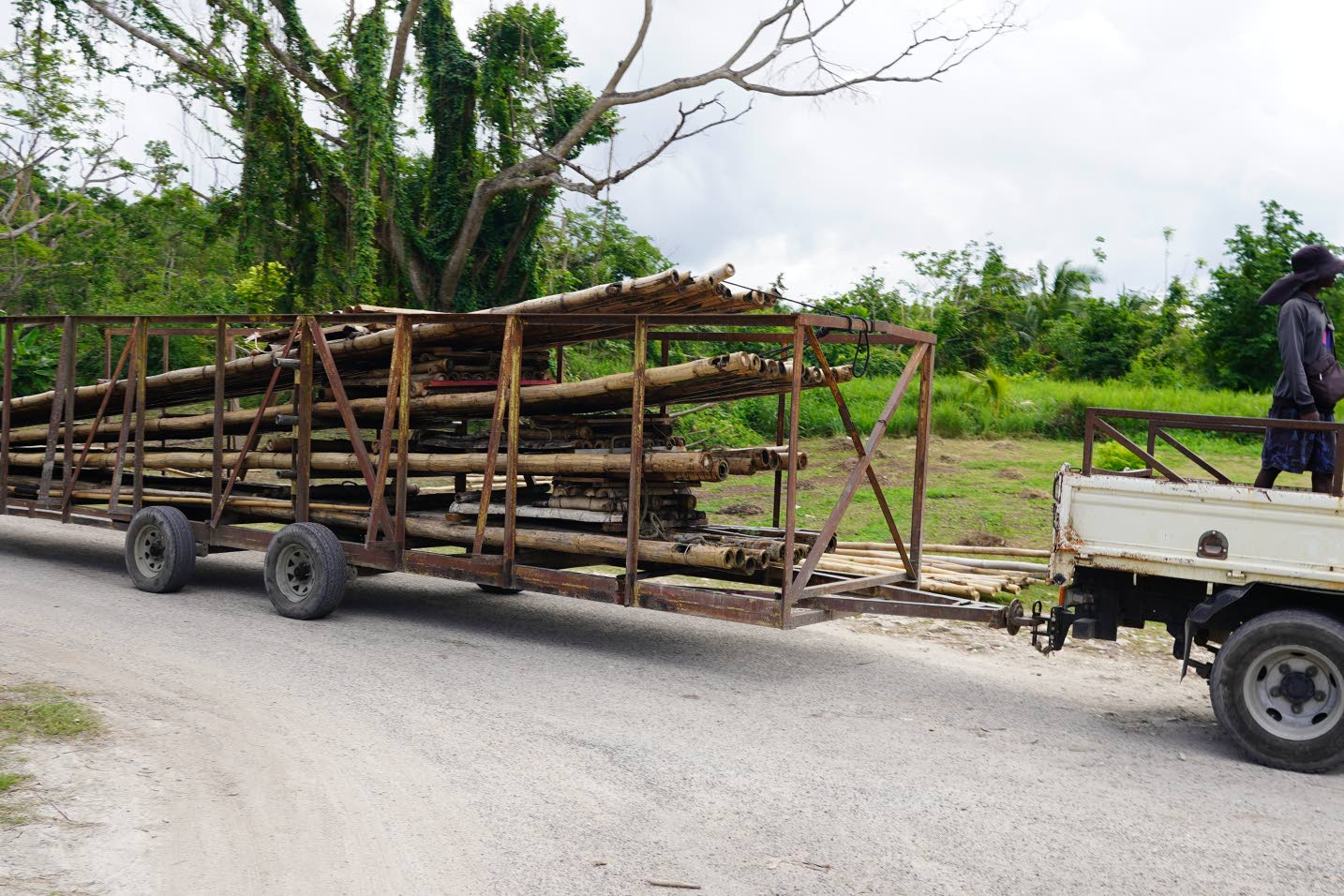
Rafts being transported by a specialised vehicle from the end of the tour — a landing point on the banks of the Martha Brae — back to the start of the tour at the Rafting on the Martha Brae headquarters. Gavin Jones
Then to move forward, captains need a partner, because raft building is a two-person job.
Working alongside Richardo Geinues, Captain #114, Johnson demonstrated that the stalks must first be cut to the same length, placed exactly next to each other, and bound tightly to create a flat surface.
Captains use ratcheting straps to tightly bind the stalks and prevent any chance of movement. Before the binding, the stalks are pierced at one end, at the same spot, to allow for a stick to be threaded through them and bound with metal wire and pliers.
The tension from the metal wire keeps the stalks together, forming the flat bed of the raft. Then another stalk is cut into five pieces and threaded in a similar manner on top of the raft.
This sign promises rafting fun on the Martha Brae in Trelawny. Gavin Jones
These small pieces work as supports for the seats for guests and for the captain who operates the raft while standing.
Seats are also made out of bamboo and wood, with eight pieces of bamboo halved and similarly lashed together.
“To be careful, we tie them so it can’t rock back — it can’t tip over,” said Johnson.
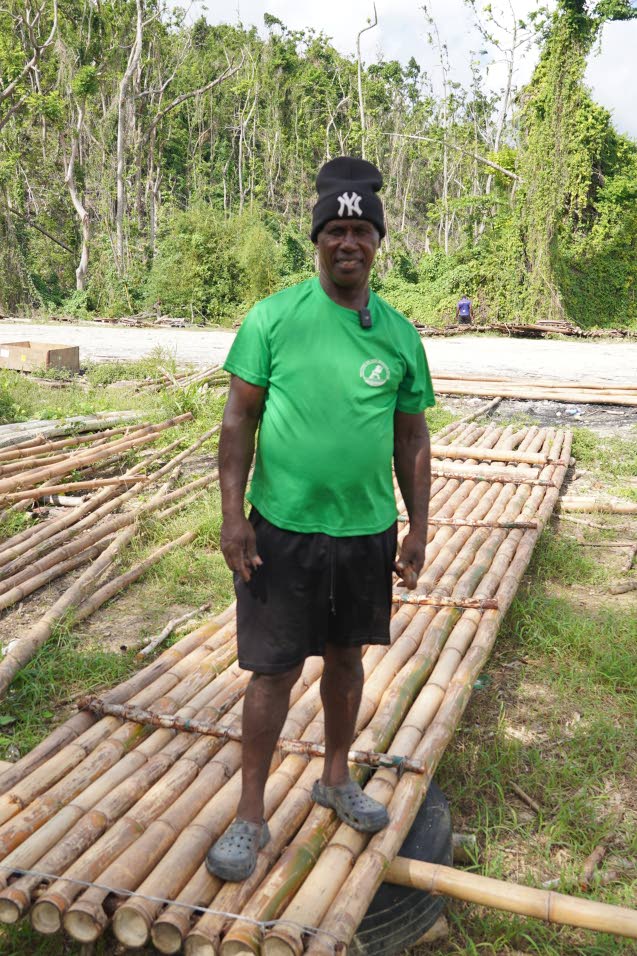
Long-time Raft Captain Claude Johnson was willing to share with the Observer ‘How Dis Mek’. Gavin Jones
The captains use poles to guide the raft throughout rides, which usually last around 75 minutes.
“This is our steering. So you see my hand can go [around], you have to [be able to] span it to manoeuvre in case you’re going down [and there is] danger ahead. Just like you have a car [and] you have a brake, this is my brake,” Johnson said, smiling.
If you have not yet been rafting on the Martha Brae maybe it’s time you give it a try.

How Dis Mek logox
Have something interesting you think could feature on How Dis Mek? Contact the Jamaica Observer at 876-570-3163
Have something interesting you think could feature on How Dis Mek? Contact the Jamaica Observer at 876-570-3163


