



We are not just reopening schools
As schools reopen across Jamaica, thousands of students, teachers, administrators, and parents are beginning another important academic year. This reopening represents far more than a return to classrooms, it is a powerful demonstration of the resilience of our education system and our collective determination to secure a brighter future for Jamaica’s children.
The reopening process comes at a time when several school communities are still recovering from the significant damage caused by the hurricane. The scale of the destruction has made the school repair programme one of the most substantial undertakings within the education sector.
It is important to acknowledge that not every repair could have been completed at the same time or before the official reopening of school. This is not due to a lack of commitment or urgency, but reflects the magnitude and complexity of the work required, as well as the limited number of contractors available and the national shortage of skilled construction workers.
The objective must not simply be to complete repairs quickly, it must be to complete them properly.
Building Back Better
The Government has committed to building back our schools better than they were before the hurricane. This means moving beyond temporary repairs and simply replacing what was damaged. Wherever possible, the rebuilding programme addresses long-standing structural, electrical, and safety deficiencies so that our students and teachers can return to facilities that are safer, stronger, and more suitable for modern education.
Schools such as Parotee Primary, Beaufort Primary, Unity Primary, and Ferris Primary are examples of this approach. When the work is completed, these institutions will not merely be restored to their condition before the hurricane, they will be in a better physical state than they were before the disaster.
This is the standard that must guide the national recovery programme. The hurricane caused significant disruption, but it also created an opportunity to correct inherited weaknesses and make lasting improvements to our educational infrastructure.
Protecting Students and Teachers
Black River Primary School provides a clear example of why this comprehensive approach is necessary.
The work at Black River Primary goes far beyond replacing a damaged roof. Significant re-engineering of sections of the school is being undertaken to strengthen the structures and improve their long-term safety. The entire electrical system is also being overhauled.
This electrical work is particularly important because the school previously experienced two fires associated with faulty wiring. Simply replacing the roof while leaving a defective electrical system in place would not represent responsible reconstruction. The safer and more sustainable approach is to address the underlying problems comprehensively.
This may require additional time, but the safety of students, teachers, and other members of staff cannot be sacrificed for the sake of announcing that work has been completed quickly.
The true measure of success is not how rapidly a damaged building is reopened, it is whether the work has been completed properly and whether the school is safer and better equipped to serve future generations.
A Major National Undertaking
Rehabilitating multiple schools simultaneously requires contractors, electricians, engineers, carpenters, masons, roofing specialists, and other skilled workers. These resources are not unlimited. Jamaica is experiencing a genuine shortage of skilled labour, while the available contractors are managing several urgent projects at the same time.
Some schools also require far more extensive work than was initially visible. Once roofs, ceilings, or damaged sections are removed, engineers may uncover structural or electrical deficiencies that must be corrected before the buildings can be safely occupied.
These realities can affect construction timelines; however, they should never lead to lower standards, unsafe shortcuts, or superficial repairs.
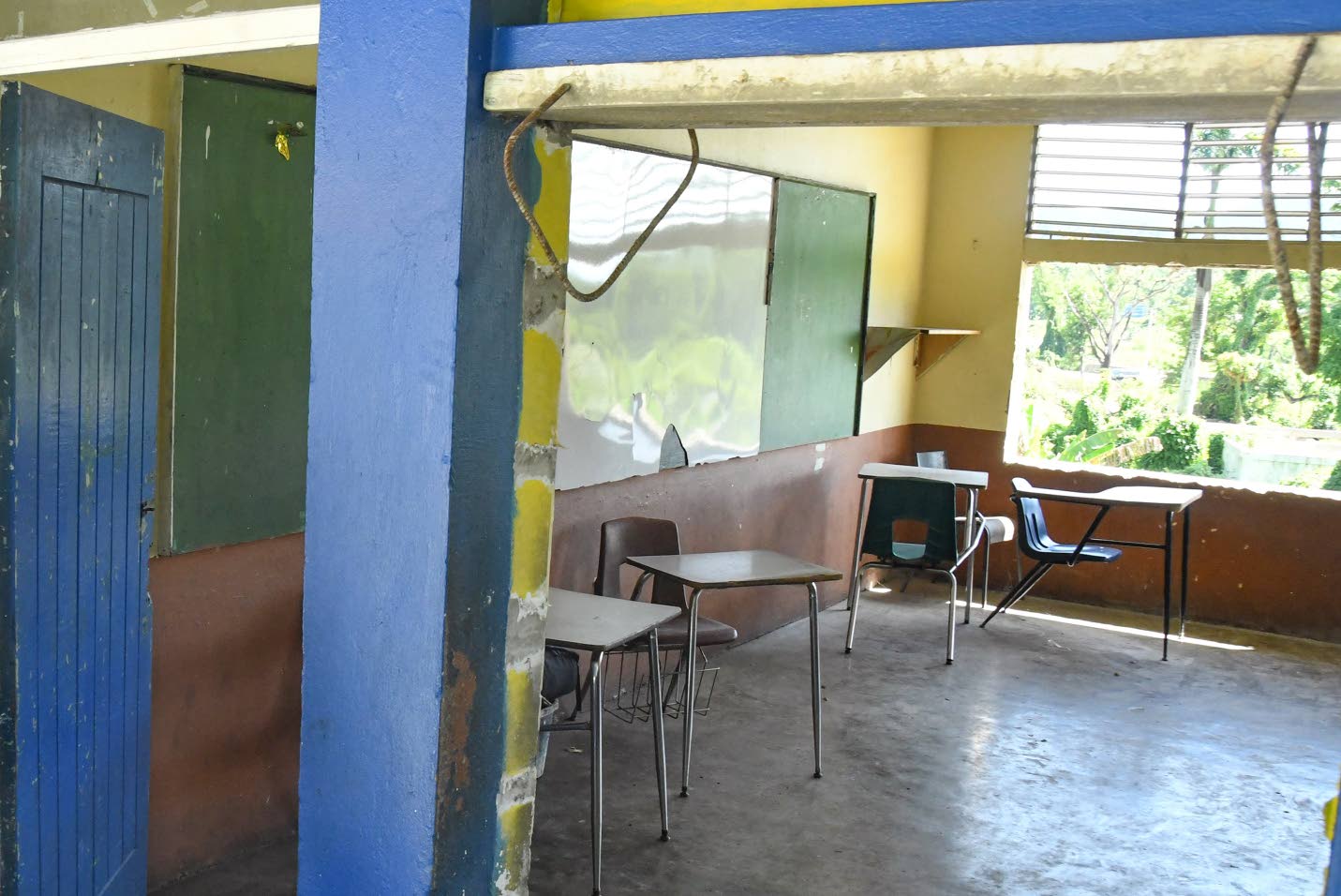
One of the classrooms at Glen Stuart Primary, Infant and Special Education School in St Elizabeth remains without windows as rehabilitation work continues while the school reopens for the new academic year. (Photo: Naphtali Junior)
The public deserves clear and timely information about the progress of the programme. Where work is continuing, parents, teachers, and school administrators should be informed about the scope of the repairs, the arrangements being made for students, and the anticipated schedule for completion.
Keeping Education Moving
Despite the challenges, the reopening of school remains a national priority. Every effort must be made to minimise disruption to teaching and learning, especially for students preparing for critical examinations and those who require additional educational support.
Where repairs remain incomplete, appropriate temporary arrangements must be implemented in consultation with school administrators, boards, teachers, and parents. These arrangements may differ from one school to another because the circumstances and level of damage will not be the same in every community.
The guiding principle must always be that education continues in an environment that protects the safety, dignity, and well-being of every child.
Parents and educators also have an important role to play. Concerns should be raised promptly, but the public should remain cautious about information that may not accurately reflect the scope or complexity of the work taking place. Constructive dialogue and reliable updates will help school communities navigate this recovery period.
A Shared National Responsibility
Reopening and rebuilding our schools cannot be viewed only as the responsibility of the Ministry of Education. It requires cooperation among government agencies, school boards, principals, teachers, contractors, parents, community organisations, elected representatives, and private sector partners.
Our teachers, administrators, and school support staff deserve special recognition. Many have worked under difficult circumstances to prepare classrooms, organise temporary arrangements, and welcome students back. Contractors and skilled workers are also carrying out demanding work across several locations, often under considerable pressure.
Most importantly, our students continue to demonstrate remarkable resilience. They have endured disruption and uncertainty, yet they remain ready to learn, grow, and pursue their ambitions.
Stronger Schools for the Future
The reopening of school should, therefore, be approached with realism, patience, and confidence.
There will be challenges as some projects will require more time than initially anticipated, and temporary arrangements may be necessary in certain communities. However, the national objective is clear: We must restore access to education while ensuring that damaged schools are rebuilt to a higher and safer standard.
Parotee Primary School, Beaufort Primary School, Unity Primary School, Ferris Primary School, and Black River Primary School represent more than construction projects. They represent an investment in the future of Jamaica’s children and in the communities these institutions have served for generations.
When this work is completed, the legacy of the rebuilding programme should not simply be that schools reopened after a hurricane. It should be that Jamaica used a difficult moment to create safer facilities, stronger infrastructure, and better learning environments.
We are not merely replacing damaged roofs, walls, and electrical systems, we are rebuilding confidence, restoring opportunity, and strengthening the foundation upon which the future of our country will be built.
As the new school year gets underway, our message to students, parents, teachers, and school communities across Jamaica must be one of reassurance and resolve. The work is continuing, the challenges are being addressed, and our schools will be built back safer, stronger, and better than they were before.
Christopher McCurdy is chairman, board of management, St James High School.


