



New study calls for faster deployment of renewables
Global capacity climbed to record 5.15 TW, but investment in grids, storage and electrification must accelerate
Global clean-energy transition has been gaining momentum, but the pace of deployment must increase sharply if countries are to meet their commitment to triple power capacity from these sources by 2030, a new assessment by the International Renewable Energy Agency (IRENA) has found.
The report, titled Delivering on the UAE Consensus and prepared in partnership with the COP31 Presidency of Türkiye and the Global Renewables Alliance (GRA), indicated that despite record growth in renewable capacity, the world must significantly increase the pace of deployment over the remainder of the decade.
Global renewable power capacity reached 5.15 terawatts (TW) at the end of 2025, after a record 693 gigawatts (GW) of new capacity was added during the year. However, to reach the 2030 target of 11.2 TW, renewable capacity additions will have to average about 1.2 TW annually between 2026 and 2030.
“Renewables can still close the gap towards 2030,” IRENA Director-General Francesco La Camera said, as he warned that energy efficiency is falling behind, electricity demand is rising faster than expected, and grid infrastructure has failed to keep pace with renewable deployment.
“We need to move faster, electrify faster and build the systems to support it,” he added.
In IRENA’s latest assessment, presented as its third tracking report on progress towards the landmark energy goals agreed at COP28, the entity also warned that the challenge is no longer simply about deploying renewable generation. Instead, it will require increased investment in grids, energy storage, system flexibility and electrification to ensure electricity systems can absorb and distribute growing volumes of renewable power.
The report, which also calls for nearly US$1 trillion in annual grid investment between 2026 and 2030, said this will be needed to more than double levels recorded in 2025. The increase is needed to address the growing mismatch between the rapid development of renewable projects and the ability of electricity networks to accommodate and distribute their output.
The challenge is particularly relevant to countries such as Jamaica, which has been seeking to increase renewable energy in its electricity system while remaining heavily dependent on fossil fuels. Since 2018, the country has set a target to reach 50 per cent renewable energy in its energy mix by 2030. However, renewable sources currently account for only about 12 per cent of electricity generation, highlighting the scale of the remaining gap.
A United Nations Development Programme (UNDP) report has said that while the country continues to expanded wind generation, develop solar farms and introduce electric buses as part of efforts to reduce fossil-fuel dependence, the relatively modest contribution of renewables underscores the challenge faced with accelerating deployment and integrating more renewable power into the energy system.
Globally, IRENA said faster deployment will require a more aggressive build-out of supporting infrastructure alongside new renewable generation. Energy storage is expected to become increasingly important as solar and wind account for a larger share of electricity generation.
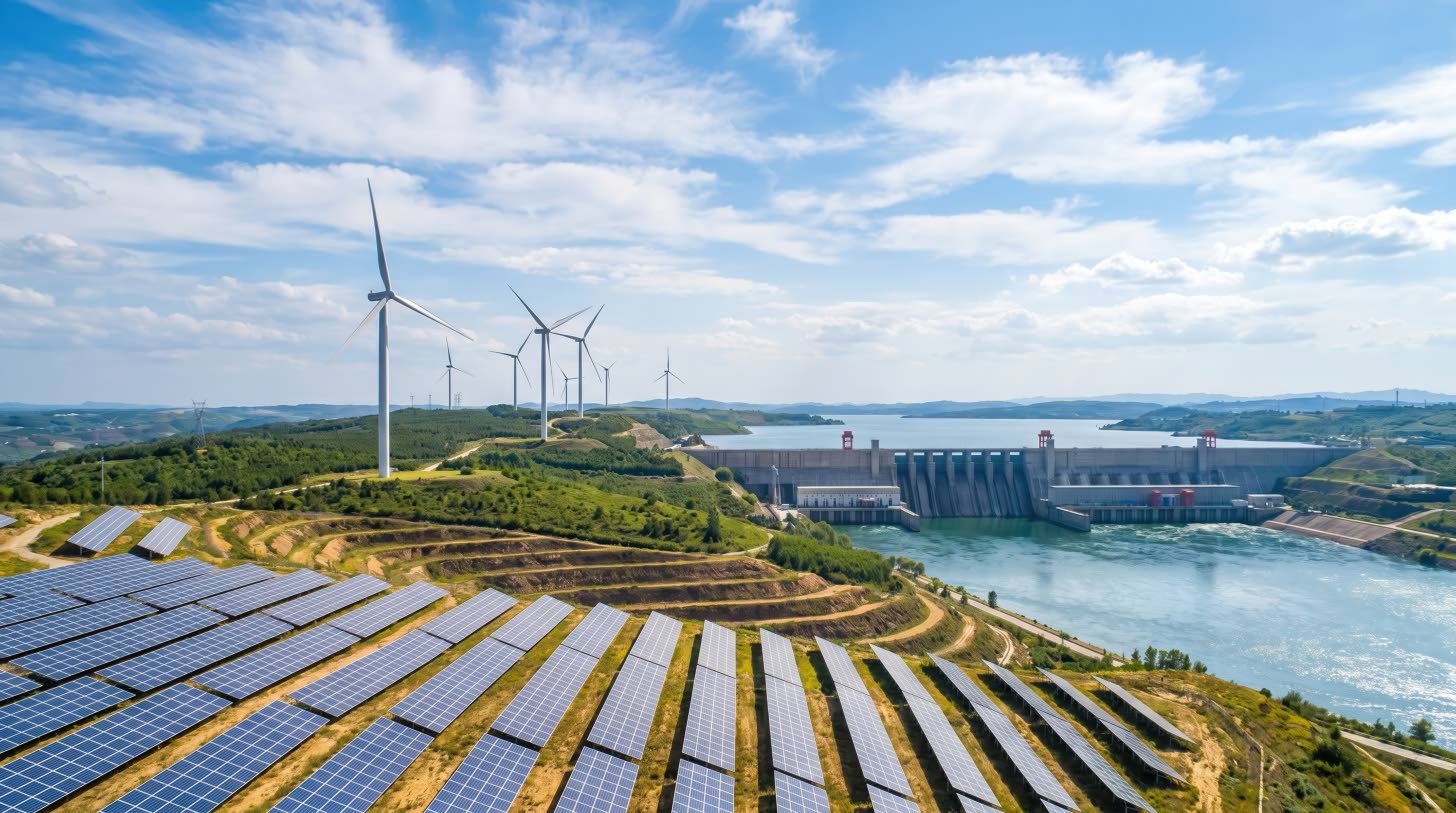
Global renewable power capacity reached 5.15 terawatts (TW) at the end of 2025, after a record 693 gigawatts (GW) of new capacity was added during the year. However, to reach the 2030 target of 11.2 TW, renewable capacity additions will have to average about 1.2 TW annually between 2026 and 2030.
The report further highlights the growing role of digitalisation and artificial intelligence in managing increasingly complex electricity systems and argued that these tools should be used to improve renewable energy forecasting, congestion management and system operations — helping grid operators to better match variable renewable generation with demand.
The technologies, it said, will also help countries get greater value from existing infrastructure while improving reliability and responsiveness as renewable penetration increases.
Indicating that technology alone will not close the current gap, the report however, called for increased investment in renewable energy, energy efficiency, grids and system flexibility, as well as measures to reduce financing costs in emerging markets and developing economies through guarantees, concessional finance and other risk-reduction mechanisms.
It also stresses the need to expand education and training to address skills shortages across the renewable energy value chain.
The findings come as renewable energy becomes increasingly competitive globally. IRENA said renewables were the most cost-competitive source of new electricity generation in most markets in 2025, with solar continuing to post record installation rates and emerging as a backbone of the global energy transition.
By 2030, variable renewables such as solar and wind are projected to account for about 62 per cent of total installed power capacity, up from approximately 35 per cent in 2025.
For Jamaica and other countries pursuing ambitious renewable energy targets, the findings underscore the need to move beyond individual solar and wind projects and invest in the wider systems required to integrate them at scale.
This means advancing investment in grids, storage, electrification, financing, skills and smarter system management alongside renewable generation.
United Nations Secretary General António Guterres said that while renewable energy records were being broken year after year, faster action was needed to remove bottlenecks, increase investment in developing countries and reduce dependence on volatile fossil fuels.
“The task now is to scale up and speed up — turning pledges into greater real-world results. Many countries and communities need support to do this, so delivery of all finance commitments is essential, as are parallel efforts to build climate resilience,” said Simon Stiell, executive secretary for the UN Framework Convention on Climate Change.


