



Massive revenue hole
Opposition warns $1.6 billion at risk from delayed environmental levy
AFTER Opposition Leader Mark Golding warned in the House of Representatives last Tuesday that the delayed implementation of the Environmental Protection Levy is depriving the Government of revenue it was counting on in this year’s fiscal plans, Opposition Senator Ramon Small-Ferguson last Friday estimated that about $1.6 billion of the projected $3.6 billion has been placed at risk.
Small-Ferguson said the figure is a straight-line estimate based on the five-month delay in implementing the levy, while acknowledging that the actual amount would depend on the volume of imports and domestic sales during the period.
The Barita Investments chief executive officer made the calculation as he questioned the Government’s handling of the revenue measure, which was announced in February and initially scheduled to take effect on May 1.
He told the Senate that the delay is particularly concerning because the Government’s revenue performance was already under pressure.
“The Government has had more than seven months to prepare the legislation and Parliament is only being given days to consider it. It doesn’t seem like good governance to me,” Small-Ferguson said.
The revised levy was projected to generate about $3.6 billion between May 2026 and March 2027. The Government had initially proposed increasing the rate from 0.5 per cent to 0.8 per cent and raising the taxable base for locally manufactured goods from 75 per cent to 100 per cent of sales.
Following concerns from manufacturers about the effect on local producers, the Government retained the 75 per cent base and increased the rate to 0.85 per cent instead. The measure was still expected to generate approximately $3.6 billion.
Small-Ferguson said the delay, therefore, had direct implications for the revenue target.
“On a straight line basis, the five-month delay places approximately $1.6 billion of that projection at risk. Now the final amount will, of course, be dependent on more complex factors than what a straight-line basis would take into account, the amount of imports and domestic sales that have happened over the period,” he said.
He argued that the issue should not be viewed simply as a delay in passing legislation, but against the Government’s broader fiscal position.
“It’s a substantial sum that has been placed at risk that would not have been collected because of this delay, in the context of government revenues being well behind budget. That’s unacceptable. The Government should, therefore, tell the country how much of the original projection is now expected to be collected and how the Government intends to close the resulting gap,” Small-Ferguson said.
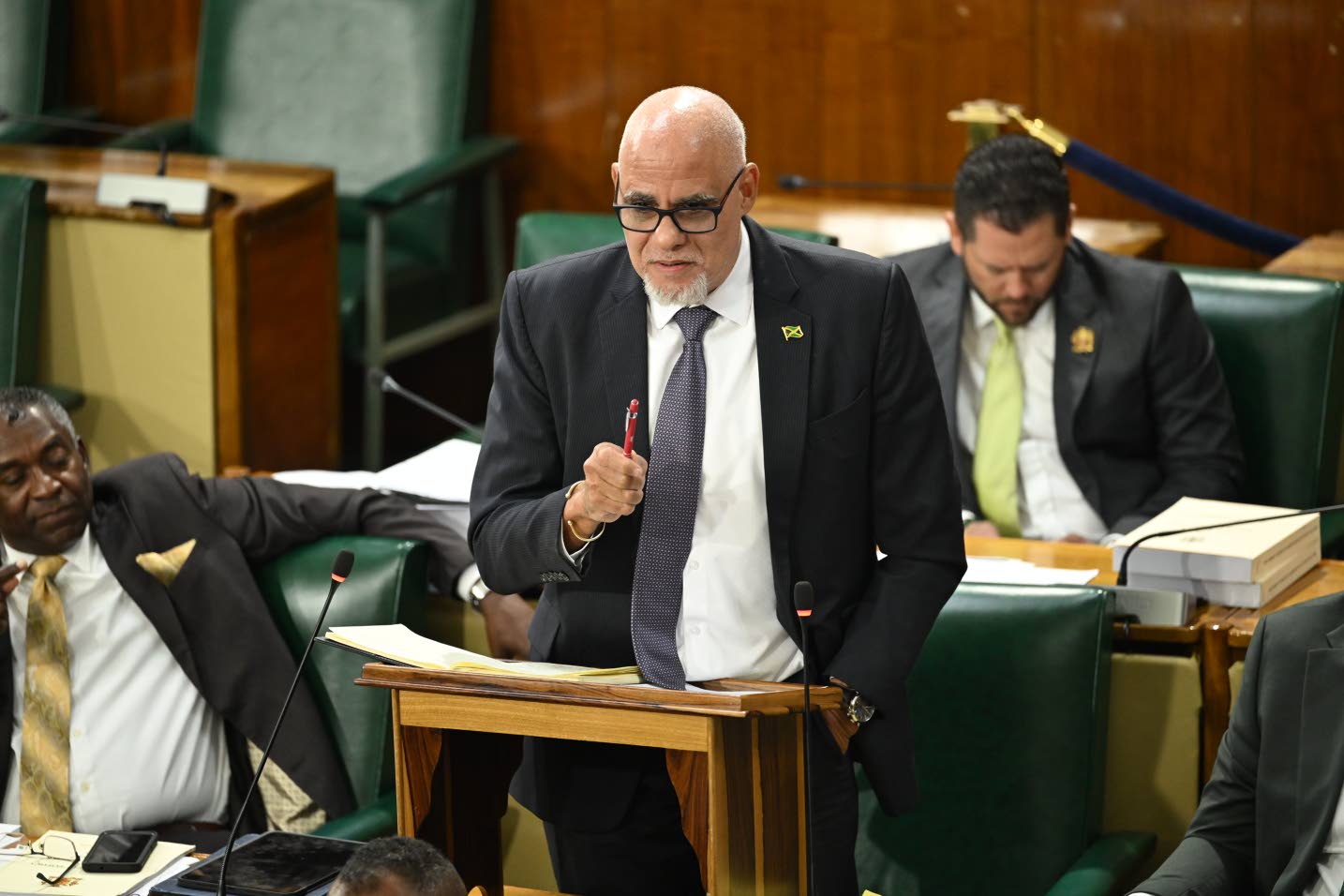
DUNCAN…cited the independent fiscal commissioner as estimating that the five-month delay had resulted in a $646-million revenue shortfall (Photo: JIS News)
The Government’s own assessment of the revenue impact was lower.
Government Senator Keith Duncan, who supported the Bill, cited the independent fiscal commissioner as estimating that the five-month delay had resulted in a $646-million revenue shortfall. He said the commissioner had previously estimated that the delay would cost about $335 million per month when the levy was scheduled to begin in May.
He warned that further delays could place other Government programmes at risk.
“It is important that we implement these required legislative changes in a timely manner to minimise any further revenue loss, which puts critical projects and programmes in the budget at risk,” Duncan said.
Small-Ferguson, however, said the delay raised questions about the Government’s ability to implement other revenue measures announced in the 2026/27 Budget, particularly the planned application of general consumption tax to imported digital services.
He noted that the digital services measure is expected to begin in the final quarter of the financial year and would require the Government to establish mechanisms for identifying and registering overseas providers, processing returns and payments, and enforcing the tax across borders.
“The environmental protection levy only involved adjusting an existing tax, a short bill. The rate of the tax, the taxpayers and the collection system were already known, it was already happening. Even so, the Government failed to finalise the legislation within the deadline that they set. In the wake of this failure, Mr President, I believe the Government should now tell the country what, if anything, has been done towards implementing the digital services tax,” Small-Ferguson said.
As the debate drew to a close, Government Senator Dr Dana Morris Dixon defended the time taken to bring the levy legislation to Parliament, pointing to consultations with industry players following the initial proposal.
Morris Dixon said the consultations resulted in changes to the original proposal and argued that this was an important part of understanding why the legislation did not reach Parliament earlier.
“So what would have been presented in the beginning, in terms of the environment protection levy, was put on the table, industry had some concerns in relation to it, industry was listened to and adjustments were made to it. So that’s one of the key things that we have to keep in mind, that there were some consultations in relation to this,” she said.


