



Top 8 performing Cabinet members — Part 1
‘Deliver or perish’ was the title of my The Agenda column, on July 12, 2026. It was a warning and a reminder to the governing Jamaica Labour Party (JLP) that continued, meaningful, and timely delivery of tangible social and economic goods and services was the primary measure by which ordinary citizens, in particular, would decide whether the Andrew Holness-led Administration, now in its third term, which is unprecedented for the JLP, was improving the lives and livelihoods of Jamaica’s toiling majority.
The JLP has been at the wheel for 10 straight years. During that time the ruling JLP has had to surmount the Herculean economic and social problems that were dumped on our shores by the novel coronavirus, the worst pandemic in a century. Jamaica recorded approximately 3,756 deaths from COVID-19. Over 7.1 million people have died globally from COVID-19, according to the World Health Organization (WHO). Jamaica is still recovering from the global economic and social devastation of the COVID-19 pandemic. Its severe emotional cost is extremely difficult to calculate.
Still, Jamaica fared better than many other developing nations. This was not a happy accident. By any objective measurement, Jamaica’s commendable management of the near-catastrophic impact of the COVID-19 pandemic was due mostly to the gumption of her people in general, our health workers more specifically, and the undergirding of the forthright, compassionate and skilful leadership of the governing JLP.
Jamaica has saved up resources for the lean years. Jamaica, therefore, had the financial resources to afford the timely importation of necessary medical and related supplies, give targeted support to hundreds of our most vulnerable, and at the same time, unlike some of our Caribbean neighbours, was able to promptly pay government workers for the two-year duration of the pandemic. No government workers lost their jobs.
Today we are facing the hammer blows of a global energy crisis. Gas prices have skyrocketed since Israel and the United States struck Iran 211 days ago. I already discussed the severe impact of higher oil prices on Jamaica. Our condition would have been worse if we had not saved for a rainy day. This is not an accident. It is raining heavily now. It is pouring.
IRRITATING HIGHER INFLATION
Rising and biting inflation — a direct and debilitating consequence of the international energy crisis — is raining price increases. Jamaicans know that increases in gasoline cause increases in everything which is bought or sold. Ordinary Jamaicans, the majority, are feeling the pinch. The sting of higher oil prices would have been dozens of times more harsh if the country’s fiscal accounts had been mismanaged. Ponder this, “State-owned refinery Petrojam has spent about US$18 million subsidising fuel costs to shield consumers from steeper price increases, with Chairman Metry Seaga saying the Government will eventually reimburse the company.” (Jamaica Observer, July 22, 2026)
Despite this and related interventions by the State, there are sizeable price increases in food, rent, transportation, utilities, and I could go on. Higher inflation to the majority means price increases are piling up on top of accumulated increases.
Long ago I said here that rising inflation is instantly felt in the pockets and minds of people. The figures put out by the Bank of Jamaica (BOJ) always play catch-up with our reality. Here are two other realities which must be understood, especially by elected and selected officials.
First, folks remember what goods and services cost a year ago. Second, targeted support from the Government must be very accessible to those who need it. For years our governments have implemented programmes involving billions of dollars, while the intended households have struggled to identify any improvements in daily life.
Five Sundays ago I said here that, notwithstanding the irritation of higher and biting inflation, there is no suspension of reality among the men and women on the streets. Folks are still expecting that the elected Administration will continue to provide umbrellas to protect against the rain. Those umbrellas that were provided during the COVID-19 pandemic have been used and forgotten. The many umbrellas which the Administration provided, especially to the most vulnerable post-hurricanes Beryl and Melissa, are largely consigned to the far reaches of many people’s memories. For this and related reasons, continued and prompt delivery of real results is the lifeblood of this Administration.
8 TOP PERFORMERS
It is in this context that I have selected the eight top-performing Cabinet Ministers. The selection is based on definite evidence. These eight are leading and inspiring the production and realisation of the most visible results, which are tangibly improving the pockets and dinner tables of the majority.
Why do I always use the pocket and dinner table metric vis-à-vis the delivery of economic and social goods? This is the reason: “The test of our progress is not whether we add more to the abundance of those who have much; it is whether we provide enough for those who have too little.” These are the words of Franklin D Roosevelt, the 32nd US president.
1) Dr Horace Chang: He has the second-hardest job in the Cabinet. The prime minister’s is the hardest. Minister of National Security is not a position for which individuals in the Cabinet jump and shout, “Me, Sir!” whenever it becomes available. Dr Chang’s unflappable style of leadership is reassuring, especially given our long-standing and hugely abnormal homicide and related crime realities.
At the time of writing, murder, the most awful of all crimes, had declined by 22 per cent compared to the comparable period last year. This means that 102 fewer Jamaicans have been murdered. I am very unhappy that any citizen has been murdered, but I am also happy that 22 per cent fewer Jamaicans have been murdered this year. If current trends continue, Jamaica is projected to record approximately 544 murders by the end of 2026. The last time Jamaica had fewer than 550 murders in a year was 1990.
Recall that in 2025 Jamaica achieved a 31-year low of 673 murders. This means there was a 43 per cent reduction. Robberies, rapes, shootings, and all other major crimes have declined appreciably compared to the comparable period last year.
Chang, the minister of national security and peace, and indeed the entire Andrew Holness-led Administration, deserves plaudits for the conscientious leadership on the matter of crime control and reduction. The lion’s share of the commendation for the massive reduction in all major crime belongs to the hard-working men and women of the Jamaica Constabulary Force (JCF) and the Jamaica Defence Force (JDF). These very brave men and women put their lives on the line for us daily.
Happily the JCF and JDF are more mobile today than at any other time in our history: ‘9 cops to 1 car — Police have only 1,300 working patrol vehicles for entire island’ (Jamaica Observer, August 26, 2012). We have not seen frightening headlines like these in recent times.
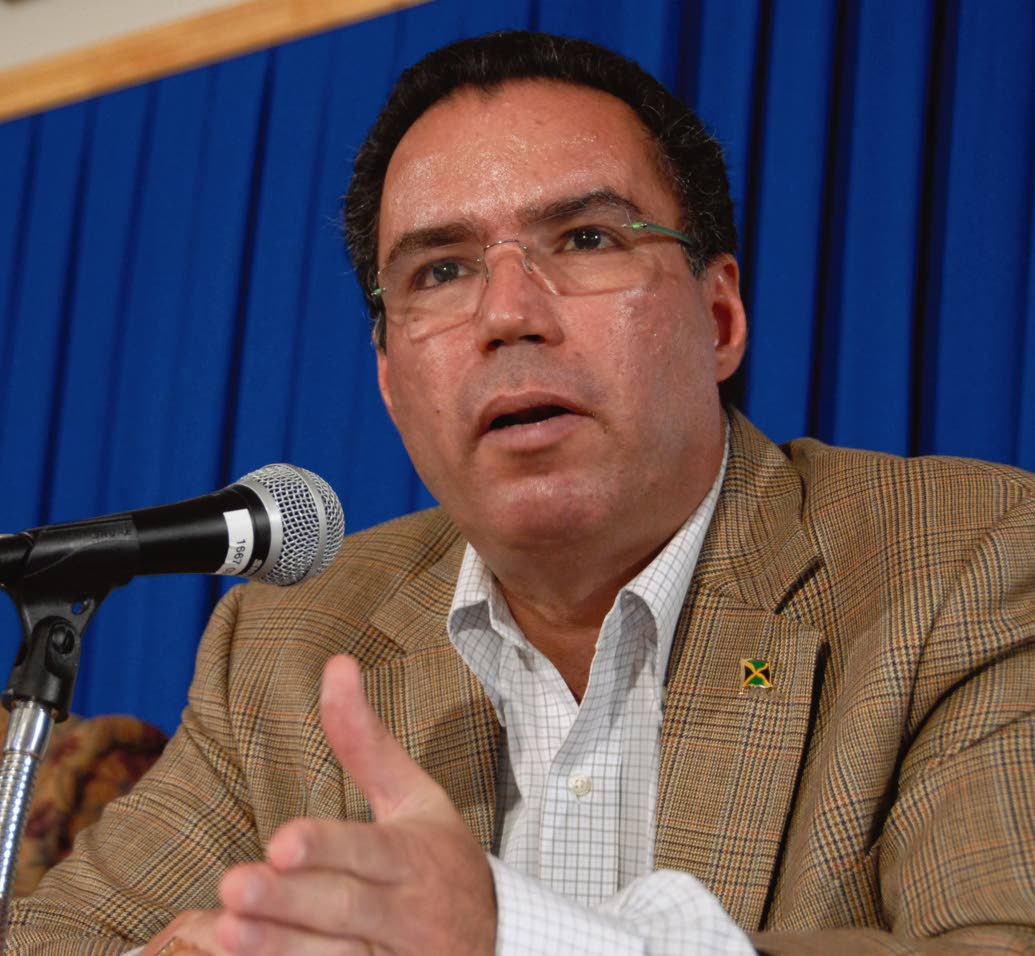
Daryl Vaz, minister of science, energy, telecommunications, and transport .
Regarding the availability of fit-for-purpose technology, the security forces are better equipped today than at any other time. The JCF today, if we are to be fair, is not the force that cemented the nomenclature “Babylon” (oppressor) in the 1960s and 1970s. We now have a much more caring, responsive, better-resourced, and better-trained police service. There have been massive investments in, and improvements to, the working conditions of policemen and women, over the last 10 years. Public information indicates that 163 JCF facilities have been renovated since 2016. Six new police stations have been constructed over the same period. Dr Chang is the best minister of national security since political independence, I believe.
2) Daryl Vaz: Whether you like his direct style or not, the minister of science, energy, telecommunications, and transport is a top performer by any objective measure. Vaz is producing substantial results that are positively impacting the pockets and dinner tables of those who have little, in particular.
Hurricane Melissa impacted Jamaica on October 28, 2025. In the aftermath, Vaz demonstrated very admirable dynamism and responsiveness to the worries of the public. It was reassuring. Many Jamaicans were without electricity for several weeks. Vaz did not stop at sympathy or empathy, as some elected representatives often do. He cracked the whip responsibly. Understanding was matched with real actions that practically helped to ease the pain of hundreds of Jamaicans. Vaz demonstrated that he was not afraid to publicly challenge the Jamaica Public Service Company (JPS), the big elephant in the room insofar as local public utilities (monopolies) are concerned. Many Jamaicans were comforted by his ministry’s frequent and reliable updates regarding the return of electricity.
The massive success of the rural school bus service cannot be successfully contested. Consider this: “One year after its full roll-out, the National Rural School Bus Programme is getting high marks from educators who say it has largely delivered on its promise to make transportation safer, more affordable, and more reliable for thousands of students. The programme serves more than 13,000 students daily across 352 schools on 86 routes, using a fleet of 110 buses.” (Jamaica Observer, July 14, 2026)
The Jamaica Urban Transit Company (JUTC) is a much cleaner and more reliable service today. Recently, Vaz said negotiations with the Ministry of Finance to secure 100 additional school buses and the final tranche of 100 standard transit units were taking place. Vaz stated that the Administration aims to deploy these 200 units for the 2027/2028 academic year. These are massive positives that are benefiting and will benefit thousands of Jamaicans
On June 29, 2025, I said, among other things, here: “Persistent low and no economic growth can only be alleviated via radical change, not small improvements, as I see it. Decades of economic lethargy and decline cannot be remedied with the application of familiar palliatives and customary tinkering. More is needed, and it is needed fast.
“For starters, I believe Jamaica needs a new and radical energy policy. This must include a totally reconstituted arrangement with the Jamaica Public Service (JPS). Cheaper and more reliable energy must be the focus going forward. Energy poverty is a reality in Jamaica. Energy prices in Jamaica are several times higher than our competition, near and far. This is a recipe for de-industrialisation as it will affect the manufacturing that we still have. Long term, this will make Jamaicans poorer.”
Minister Vaz said at a press conference on Tuesday, July 1, 2025 that the Administration “will not be renewing the JPS’s all-island licence to supply electricity without re-negotiation of the current terms, and is open to exploring other contracts with interested parties”. (Jamaica Observer, July 1, 2025)
In the mentioned article, “Vaz also indicated that the Government’s position was that the licence itself, which was signed for a 20-year period and gives JPS the power to operate, was ‘flawed’, resulting in ‘flawed service’… ‘In the meantime, the Government of Jamaica is going to start looking at our options, [those] options include any and everybody. Whoever it is that we end up going to the table with for a final negotiation for a new licence with new terms, as of May 2027, will be terms that are favourable to the Jamaican people.”
The people of Jamaica are holding Daryl Vaz and the Andrew Holness-led Administration to their commitments regarding JPS. Vaz is the right man on the bridge to protect the interests of the 700,000 or so customers of the JPS. When it comes to judging performance, I watch the movement of the ‘deliver-o-metre’ needle. Jamaicans are not impressed by mere fine-sounding speeches. We want concrete results. Churn out practical results or go! That is it!
Garfield Higgins is an educator and journalist. Send comments to the Jamaica Observer or higgins160@yahoo.com.


