



BOJ could hold rates if inflation expectations settle
BANK of Jamaica Governor Brian Langrin says the central bank would be content to leave interest rates where they are if inflation pressures do not worsen and businesses stop expecting prices to rise faster.
His comments at Tuesday’s monetary policy briefing gave media representatives a clearer sense of what could follow the BOJ’s decision to raise its policy rate by half a percentage point to 6.0 per cent. The increase, which took effect Tuesday, was the bank’s first since November 2022.
“At this point, if conditions remain as they are and we see no further pickup in expectations, we’d certainly be happy not to act,” Langrin said when asked whether rates could rise again at the next decision in November.
He was careful not to promise a pause. Langrin reasoned that if oil prices move beyond the bank’s severe scenario, weather conditions prove worse than expected, or inflation expectations rise further, the BOJ could act again.
The governor also defended the size of this week’s increase. Asked why the Monetary Policy Committee chose 50 basis points rather than 25, he said it wanted to act strongly enough to prevent expectations of high inflation from taking hold.
“We want to constrain further increases in inflation expectations effectively and not half-heartedly, so that we won’t have to increase interest rates more than if we had acted earlier,” he said.
Langrin described the half-point move as a “carefully calibrated decision”, informed by economic data, the views of businesses and the public, and developments abroad. He did not identify a numerical level of inflation expectations that would trigger another increase.
Currently, those expectations are moving in the wrong direction. Businesses surveyed by the BOJ in July expected inflation of 7.3 per cent over the following 12 months, up from 6.7 per cent in June. The bank said businesses were also anticipating wage pressures. It noted that if companies raise prices and workers seek higher pay in preparation for continued inflation, the effects of the original food and fuel increases could last longer.
Annual inflation reached 7.9 per cent in August, up from 7.5 per cent in July and above the BOJ’s 4.0 to 6.0 per cent target range for a third-consecutive month. Higher vegetable prices following drought-related crop losses and the effect of international commodity prices on petrol were the main drivers of the latest increase. The BOJ now expects inflation to rise further in the near term and return to target by mid-2027.
The BOJ had kept the rate at 5.5 per cent in August, even though inflation was already above its target. At Tuesday’s briefing Langrin explained why the bank decided it could no longer wait.
In his prepared statement Tuesday, Langrin said that decision reflected the bank’s assessment that the price increases were mainly the result of temporary factors.
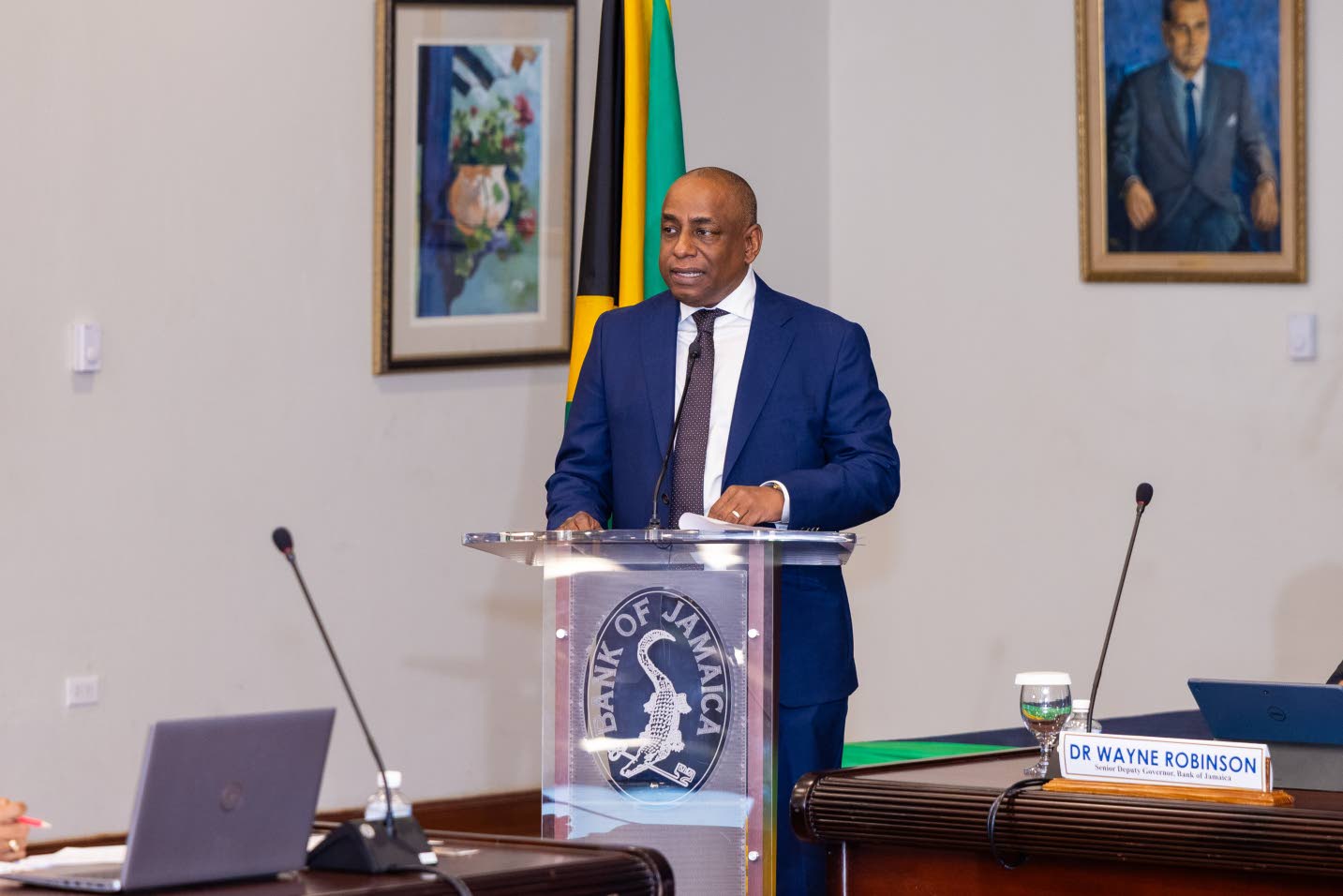
LANGRIN…at this point, if conditions remain as they are and we see no further pickup in expectations, we’d certainly be happy not to act
Since then, persistently high energy and transport costs, continued agricultural inflation, and import demand linked to rebuilding after Hurricane Melissa had made the pressure look more lasting, he said. Tensions in the Middle East and the Russia-Ukraine conflict had also added to uncertainty over commodity prices.
“While monetary policy cannot eliminate supply shocks, it must respond when they threaten to generate persistent inflation or destabilise expectations,” Langrin said in his statement.
Questioned about how a rate increase could deal with crop losses or high oil prices, the governor agreed that interest rates could not fix either problem. The purpose, he said, was to keep repeated increases in essential costs from influencing prices more broadly.
“It’s a supply shock, and we know it’s not that demand is overheating,” he said. “But once you have frequent supply shocks that we’ve experienced and they are long-lasting, then you risk inflation expectations becoming embedded and entrenched.”
The BOJ has already seen limited evidence of the pressure spreading. Core inflation, which excludes agricultural food and fuel, was 5.2 per cent in August, unchanged from July but above the 4.2 per cent recorded a year earlier. It cited increases in processed food and some services linked to higher farm, energy and transport costs.
Langrin also pushed back against the suggestion that Jamaica was simply matching the US Federal Reserve, which raised its target interest-rate range by a quarter point earlier this month.
“If the Fed increases interest rates by a quarter of a per cent, that doesn’t translate into us increasing rates by a quarter of a per cent,” he said. Jamaica had faced its own series of supply shocks, he added, and the MPC considered local conditions alongside developments in the United States and elsewhere.
The decision comes while parts of Jamaica’s economy are still recovering from Melissa. Asked by the
Jamaica Observer how the BOJ weighed higher borrowing costs and the recovery against persistent inflation, Langrin said the bank was particularly conscious of households directly affected by the hurricane. Further price increases, he argued, would put additional pressure on their limited budgets.
The policy rate is what the BOJ pays deposit-taking institutions on balances held at the central bank. It does not automatically change the rate on an individual mortgage or business loan, although it can influence the rates lenders offer over time.
The MPC’s next scheduled decision is November 18. Langrin said it would continue watching incoming inflation data and expectations, along with developments in commodity markets and Jamaica’s agricultural sector.


