



JOCKEYS WERE RIGHT
Abandonment of final two races was entirely predictable
In response to the abandonment of races nine and 10 last Saturday, frankly, I was taken by surprise that so many punters did not side with the jockeys’ position that the rain-soaked, sloppy condition of the racing surface could have constituted a danger to the horses and, more importantly, to themselves. Even the most inexperienced rider can determine whether a racing surface is safe or otherwise.
I was assured by a reliable informant that the rainfall in the Gregory Park, St Catherine location of Caymanas Park was beyond torrential overnight in the 24-hour period before post time. Whilst it did not rain in the morning, there was always a possibility that if the forecast of more rain became a reality then the track maintenance team would face an unusual challenge to maintain an even racing surface.
As long as the inevitable prospect of more rain was delayed, the riders had no problems with the underfoot conditions for the first seven races. In fact, the track was described officially as “fast” at the off-time of race seven at 3:32 pm. Shortly thereafter there was a cloudburst, and before the 4:07 pm off-time of race seven, the track was officially deemed to be “sloppy”.
What is noticeable is that in negotiating the final part of the bend with just over two furlongs of the 5½-furlong eighth race remaining, all seven riders kept their mounts away from the far rails and more towards the centre of the track.
That was a telltale signal that the jockeys had misgivings concerning the evenness or otherwise of the surface on the inside. To this writer, their conclusion that it might have been too risky to fulfil their engagements for races nine and 10 was entirely predictable.
Truth be told, the expense of proper maintenance of the Caymanas racing surface has been a challenge for the promoting companies from the 1959 switch from grass to sand. I can remember back in 1988 when the cushion was so inadequate that mediocre horses clocked world-class times at regular intervals.
In fact, 12 years earlier, the visiting English jockey great Joe Mercer had cause to suggest that the track was so fast, to quote him, “this causes a lot of wear and tear on the horses”. It was a much hardier horse population with strong United Kingdom bloodlines then, but the heavy American influence is far more delicate.
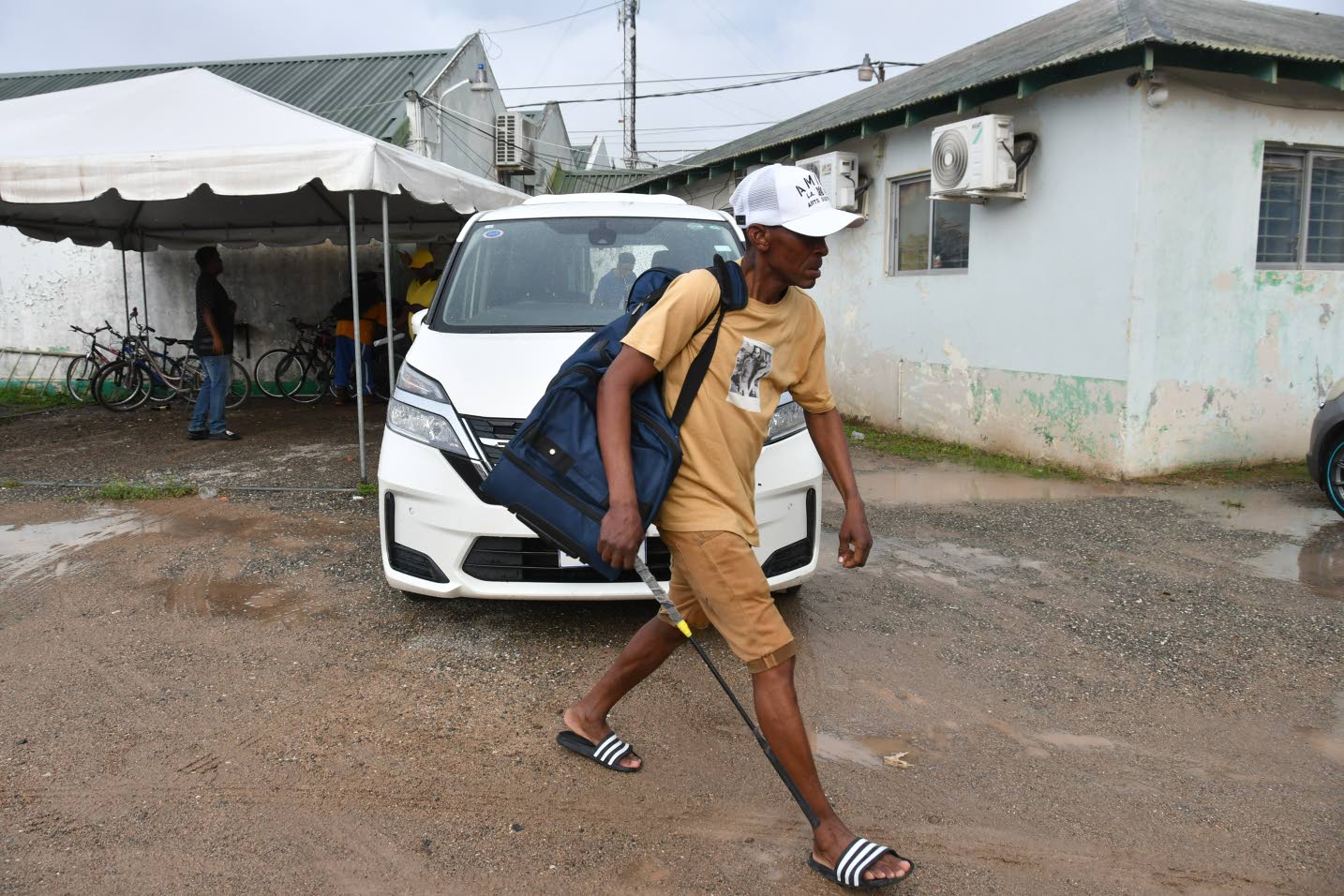
HEADING HOME! Veteran jockey Clive Lynch leaves the jockeys’ room with his gear after racing was abandoned on Saturday, October 24, 2026, when riders deemed the sloppy, waterlogged track unsafe for further competition. (Photo: Garfield Robinson)
Fortunately, funding for rebuilding from the base of the track was made possible by the Government and, significantly, a digital tote came on stream in 1989 and the industry thrived for the succeeding three years until scuppered by the introduction of the claiming system in January 1993, established on the false premise that trading racehorses was a viable economic activity.
Before the climate change phenomenon really took hold there was a very strong southerly coming off the sea, on most days. In answer to a question posed, I was informed that because there was an absence of the requisite equipment to ensure moisture, a significant amount of sand was blown away daily, thus compounding the problem.
There is no question the Caymanas circuit is the best sand track that has been designed and laid this side of the Atlantic. There is a huge advantage of a full, circular, nine furlongs and a couple of two-furlong chutes for races over five furlongs straight and the nine-furlong distance with a straight gallop of over four and a half furlongs.
I have had the pleasure of interviewing many top-class visiting riders who are also very impressed by those design features as well as the width of the track and the homestretch of just over two furlongs. Incidentally, from the half mile to the final bend is downgraded and the stretch run is a very gentle gradient. It is not unusual for thoroughbred race meetings, whether on grass or sand, to be abandoned under a threat of inclement weather, so the Caymanas facility is not peculiar in this regard.
Against the background of a predictably struggling industry operating with a complicated racing product, and which is unable to expand the customer base for adequate profitability, to suggest there is underperformance by operatives of the promoting company is hardly fair, given the operating expenses required.
There is no doubt that, from a technical standpoint, there is work to be done, but the promoting company is stuck with performing a daily financial balancing act to remain operational and can present no timetable for the capital expenditure required for this and other things in a divestment agreement in place since February 2017.


