



Red Cross rolls out cash grants for farmers, fishers and micro-business operators
The Jamaica Red Cross, with support from the International Federation of Red Cross and Red Crescent Societies (IFRC), has launched a $192-million cash assistance initiative to help people restore the livelihoods they lost in Hurricane Melissa one year ago.
The Livelihoods Recovery Initiative will support 1,600 households, including farmers, fishers and micro-business operators.
Each selected household will receive a cash grant of $120,000 and can decide how to use it, whether for seeds, fertiliser and tools, replacement fishing equipment, or stock for their shops.
“You cannot tell a farmer to get back on his feet if he has nothing left to plant with,” said Allasandra Chung, president of the Jamaica Red Cross, speaking at the launch at Kingmons Restaurant in Lacovia on Wednesday, the anniversary of the destructive Category 5 storm.
“The goal is not just to recover what was lost, but to reduce the risk of losing it all again,” added Chung.
Still in its early days, the programme has already registered 170 farmers, activating the cumulative delivery of $20.4 million in cash grants.
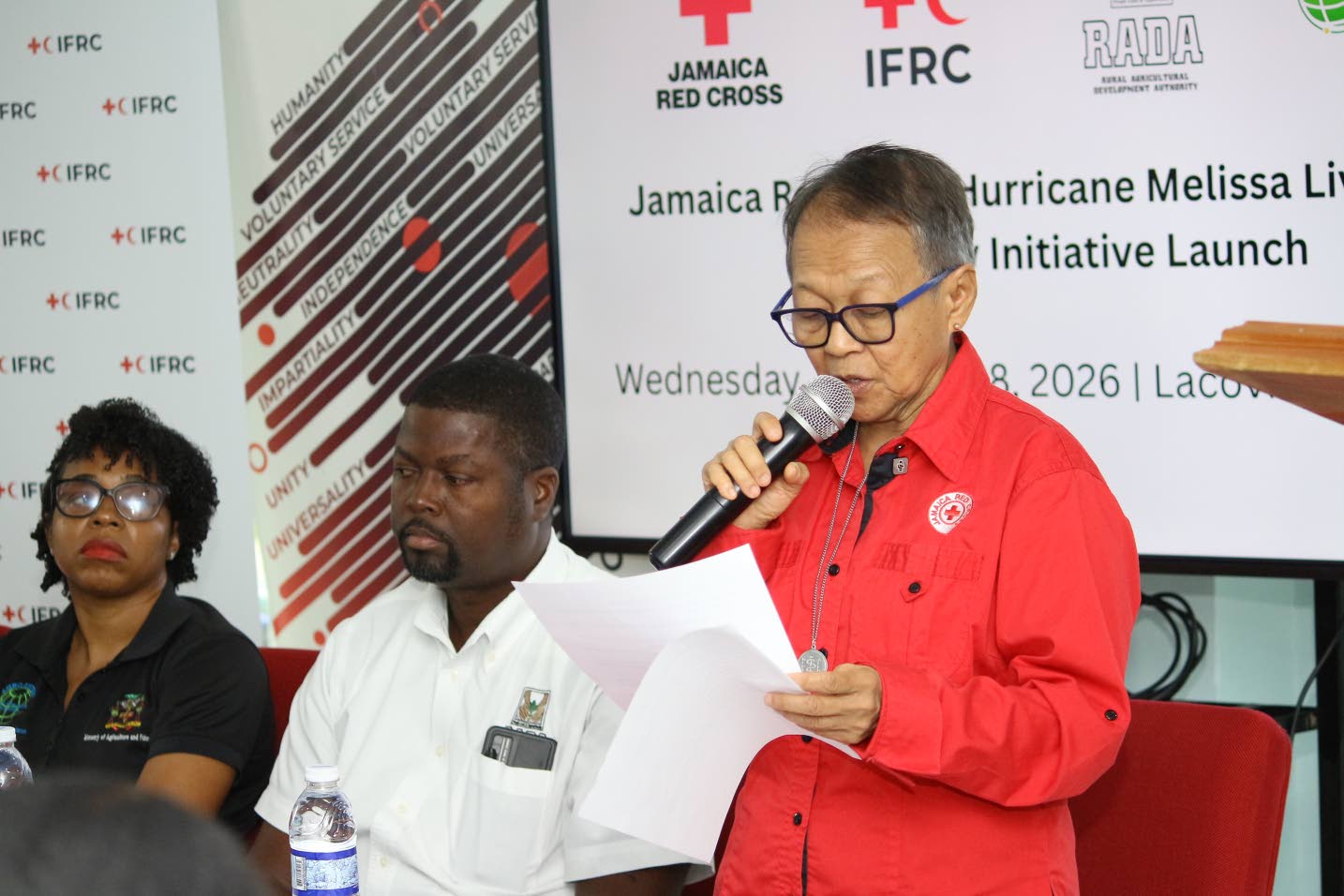
President of the Jamaica Red Cross Allasandra Chung addressing the audience at the official roll-out of the JRC Livelihoods Recovery Programme in Lacovia, St Elizabeth, on Wednesday. Looking on are (from left) Jodian Tate-Clark, manager, business facilitation at Agro-Invest; and Jermaine Wilson, deputy parish manager, with the Rural Agricultural Authority (RADA).
The initiative also includes training in climate-smart agriculture, facilitated by the Rural Agricultural Development Authority (RADA), to help farmers conserve water, protect their soil and prepare for changing weather conditions.
The Jamaica Red Cross is working with RADA and the Agro-Investment Corporation to identify and validate affected farmers, and with the National Fisheries Authority to reach fishers.
Recipients register for the programme through
AccessRC, the Jamaica Red Cross’ digital platform, rather than relying on others to collect their information.
Chung stressed that the grant goes directly to the farmer and their household, not to an organisation on their behalf.
“You are not simply beneficiaries of a project. You are partners in Jamaica’s recovery,” Chung said.
Shamora Lennon, a farmer from Accompong, St Elizabeth, lost her livestock and chicken coop in the storm.
She plans to use the support to expand her farm. “Do not give up hope,” she said. “You can bounce back with help.”
Hurricane Melissa affected approximately 1.6 million people in Jamaica and Jamie LeSueur, IFRC head of country, argued that while, “It was a once-in-a-century event. With the increasing prevalence of climatological hazards, we will find ourselves with more and more frequent emergencies. That requires strength at the most local level.”
With support from the IFRC and its international partners, the Jamaica Red Cross has reached more than 91,000 people since the hurricane. Its volunteers delivered over 10,600 food packages, and more than 13,500 households received supplies to store water safely.
The organisations also provided $486.1 million in multipurpose cash assistance to 7,161 households, benefiting 21,483 people, which LeSueur described as the largest cash programme in the Americas.
According to Chung, the response also addressed needs that are harder to see.
“Not all the wounds left by Melissa were visible,” Chung said. Mental health and psychosocial support activities have reached more than 10,000 people, and families continue to face lost income and disrupted schooling.
“Our message is simple: We stood with you through the storm. We are standing with you through recovery,” Chung said.


