



Good governance or…?
It was the talk of the town; it seemed almost surreal — the misbehaviour in Parliament last Tuesday, November 3. The proceedings had hit a new low as members accused each other of pushing and shoving, using offensive language to describe each other’s mothers, and ultimately, the hurling of a string of expletives.
How had it come to this? It had been brewing for some time, and without a permanent resolution accepted by all, it festered and has now broken out into a sore.
Do we know what we are doing? Do our parliamentary leaders recognise that they have brought us to a slippery slope? The Parliament is one of the pivotal institutions of our democracy. If we erode the Parliament and make it dysfunctional, then we place our nation and system of government on the cusp of an abyss.
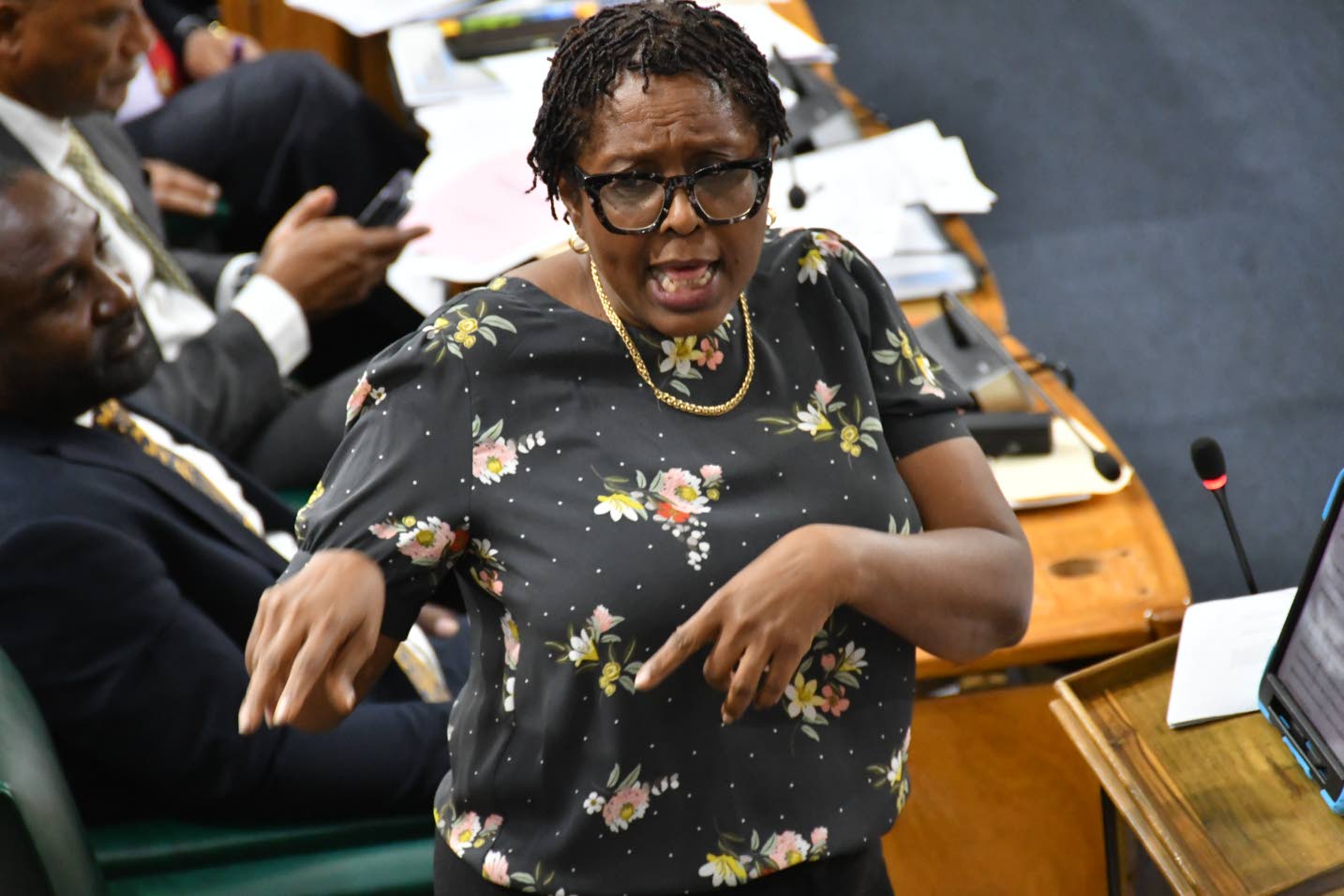
Dr Angela Brown-Burke (Photo: Garfield Robinson)
The Parliament is the essence of a multi-party political system. It is where the representatives are to give voice to the people. It is the place where differences will prevail, but are resolved in a civil, if not amicable, fashion. It should be robust enough to tolerate the thrust and parry of even the most heated debate without descending into indecency. When this tolerance goes institutionally awry, the entire system begins to crumble and ultimately implodes.
What is disheartening is the extent to which the events of the past week are viewed through partisan prisms. If you are a People’s National Party (PNP) supporter, Angela Brown-Burke and Mikael Phillips are correct. If you are a Jamaica Labour Party (JLP) supporter, Desmond McKenzie is right and the Speaker Juliet Holness is correct. There seems to be no universally accepted norm in terms of good behaviour.
As Jamaicans say: Can anything go so?
The problem with behaviour that undermines the sanctity of Parliament is that it goes to the very heart of our governance. It is easy to undermine and ultimately destroy institutions, but it takes a lifetime to rebuild them, and in the interim, all national political institutions are under threat as they function in synergy with each other. The Cabinet depends on a functional legislature to pass laws and regulations, and the policy-making process can only be rooted if it is underpinned by legislation. The people will have no voice as their representatives would be moribund.
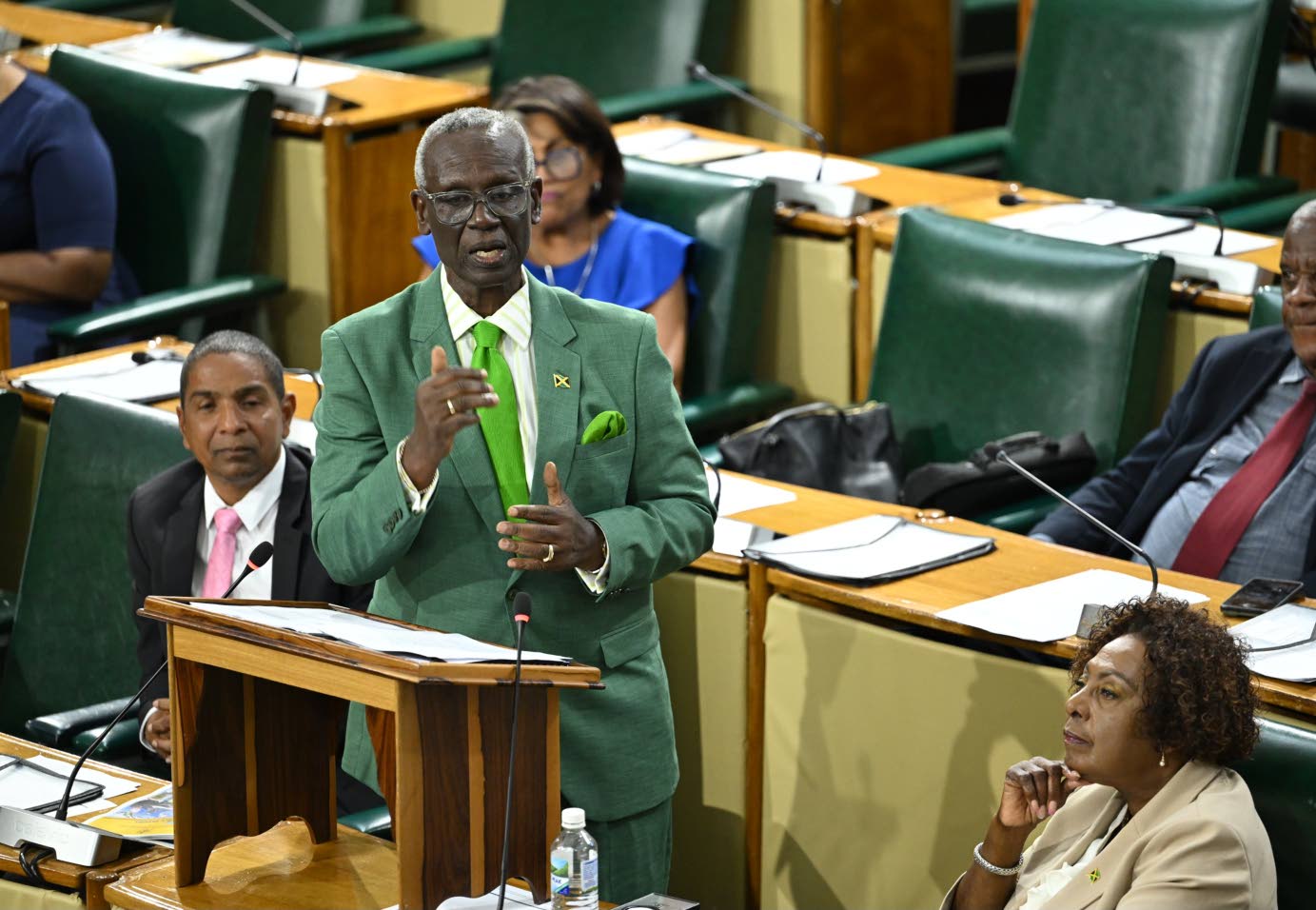
Desmond McKenzie (Photo: JIS)
Some of us are old enough to remember the danger we faced when the institution of our electoral system was undermined consistently for over two decades. In 1980, we were about to fall into the abyss. It took a sincere commitment (not just talk) by all the political leaders that “not again”. It was not the voting, but the practices that preceded even the announcement of an election — the deep political polarisation of the process and the political clientelism that made it necessary to physically fight to ensure that your party won so that you could access scarce benefits. This deteriorated into the civil war of 1980 in which over 800 people were killed in the name of partisan politics.
The political leaders recognised that the country was very near to irreversible institutional collapse and decided to work together to rebuild the electoral system. But to do this required a mutual agreement around the sanctity of our political institutions and the imperative of the protectors of the system saying a few mea culpas. There was not always mutual agreement, but at each juncture, even when the discussions were most fragile, there was a return to the table.
Institutional rebuilding and strengthening require all those who are involved to take responsibility for and ownership of what has negatively affected the system. They have to agree on the remedy, and that takes time, effort, and sincerity.
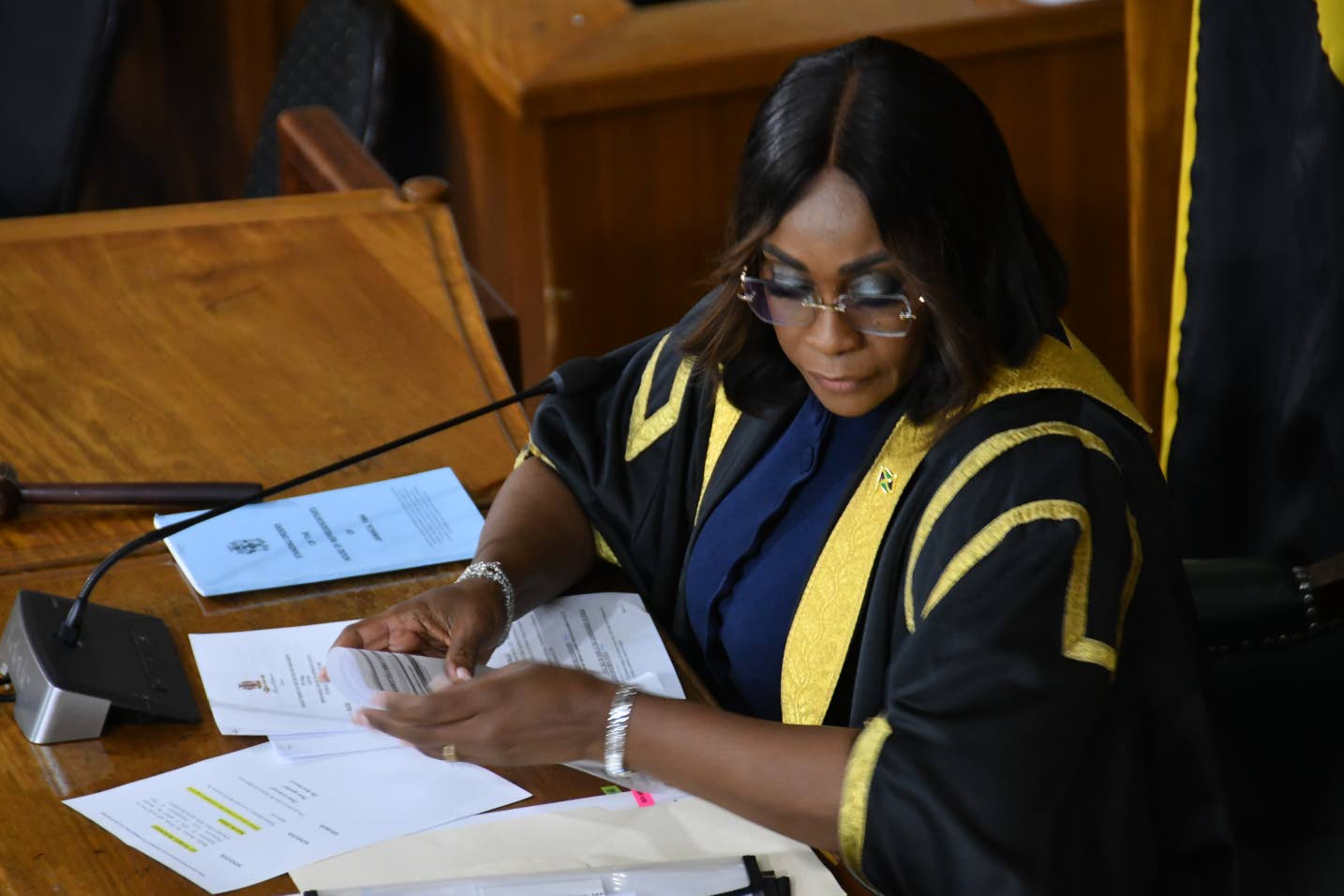
Speaker of the House Juliet Holness (Photo: Garfield Robinson)
The road from the parliamentary chaos with which we are confronted requires a meeting of the minds. The formula used for the walk back from the electoral abyss is one we need to interrogate and perhaps adapt to the current crisis — for a crisis it is, whether we wish to admit it or not.
Both the Government and the Opposition must take responsibility and be willing to take ownership of the problem to successfully arrive at the solution. The Speaker of the House is itself an institution and how it functions can either make or break the parliamentary system. Parliament is autonomous — it makes its own rules — but those who lead at that level must consistently reflect on how they function. They must be fair and unbiased.
If Opposition members keep complaining of unfair interventions and rulings by the Speaker, is there no way to determine if they have a case or if they are just being flippant and obstructionist? Dialogue, negotiation, and bargaining without acquiescing to what is wrong is a part of the Parliamentary culture. Mutual adjustment is a method for problem solving in a democratic society.
The invitation by the Speaker to the majority and the minority House leaders to meet with her is a good first step. However, if this is only a formality and each participant ‘sticks to his story’, then it will perhaps only deepen the dysfunctions and animosities.
Members of Parliament, you have to determine the legacy you wish to leave — a dysfunctional Parliament that erodes a critical aspect of our democratic functioning or one in which the people’s real business takes primacy.
The choice is in your hands.
Maxine Henry-Wilson is a former general secretary of the People’s National Party.
Maxine Henry-Wilson


