DCS pushes community work for non-violent offenders
Will free up cells for most dangerous
The Department of Correctional Services (DCS) wants more non-violent offenders to serve their sentences through community work rather than prison, arguing that scarce cell space should be reserved for the most dangerous criminals.
Commissioner of Corrections Brigadier (Ret’d) Radgh Mason said the department planned to make community work more visible, including having offenders paint schools and improve public spaces.
He said the initiative would allow people who had committed non-violent offences to contribute to their communities while being rehabilitated, rather than occupying space in correctional institutions.
Mason made the disclosure during Wednesday’s meeting of Parliament’s Internal and External Affairs Committee, where Member of Parliament for St Catherine East Central Alando Terrelonge questioned whether non-violent offenders were being exposed to more dangerous inmates and potentially leaving prison worse off.
Terrelonge argued that Jamaica needed to look seriously at changing its laws to reduce the use of imprisonment for offences that could be dealt with through other means.
He called for greater use of probation, community service and electronic monitoring, and suggested that some offenders could be supervised in their communities rather than sent to correctional institutions.
In response, Mason agreed that prison space should be reserved for the most dangerous offenders and said non-violent cases could be dealt with through community work.
“The matter of non-violent offenders is a very good point. And yes, even though the judges, they have a mandate… it is true that the spaces we have would be best reserved for the most dangerous persons who we want to remove from the streets of society; and as such, the non-violent cases can do some good community work,” he said.
“This is something that my rehab and probation team will be mobilising much more visibly in the near future. So that we see persons doing community work, painting schools and fixing up public spaces. So that it is accepted and understood that this is a form of give back to the public, and rehabilitation for persons who are not violent offenders,” Mason added.
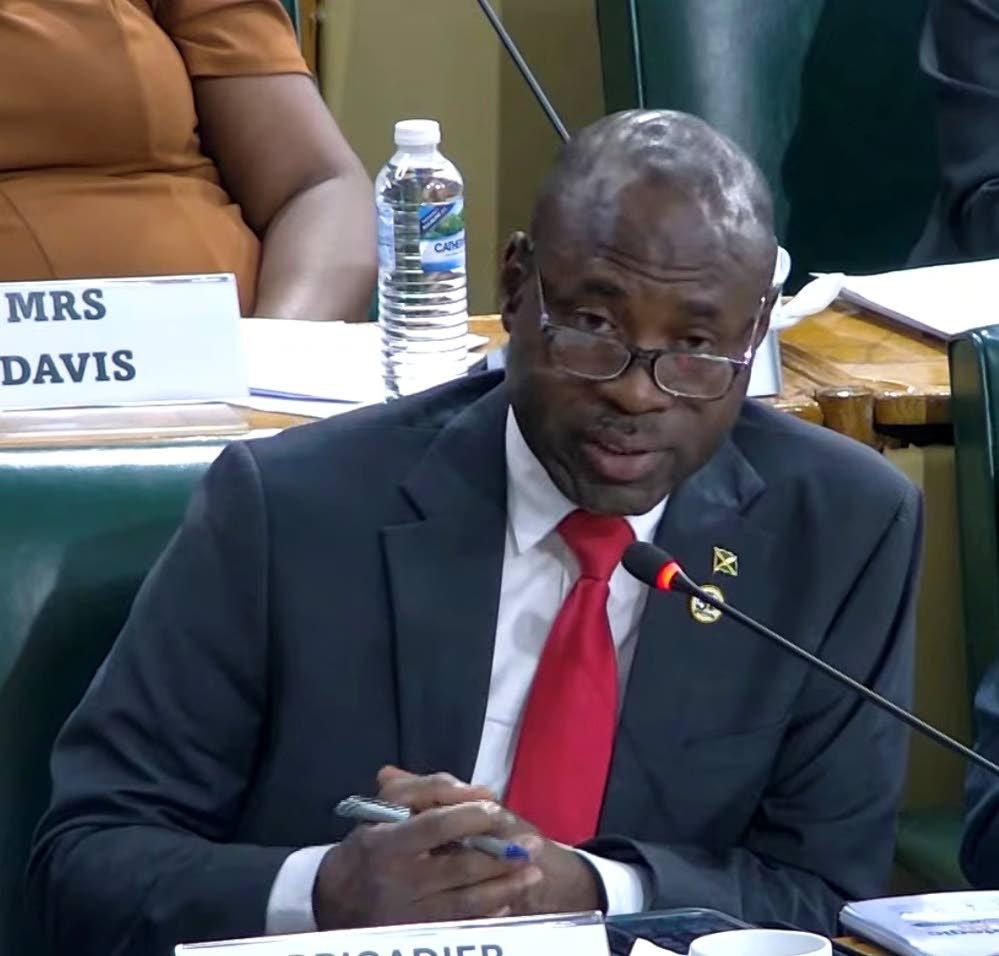
Commissioner of Corrections Brigadier (Ret’d) Radgh Mason addressing Parliament’s Internal and External Affairs Committee during Wednesday’s meeting.
However, he made clear that the department already has procedures to separate inmates according to their legal status and individual circumstances.
He said young offenders, people aged 21 and under, those convicted of criminal offences and those involved in civil matters are separated. Male and female inmates, as well as children and adults, are also kept apart.
Mason added that violent and non-violent offenders were separated, with additional measures for people considered extremely violent or linked to gangs.
The proposed expansion of community work comes against the background of pressure on the island’s correctional system. The DCS has 10 correctional institutions, with approximately 3,643 adults and 171 children in custody at the time of the commissioner’s presentation.
According to Mason, the Tower Street Adult Correctional Centre is the only institution operating above capacity, holding 1,569 inmates despite having space for 850.
He said the department is also working to improve rehabilitation programmes within its facilities. Mason reported that 284 psychosocial interventions had reached 823 participants during the reporting period, while 164 risk and needs assessments had been conducted.
He also pointed to academic achievements among inmates, including 65 people recognised across academic programmes, 10 of whom achieved Grade One passes in Caribbean Secondary Education Certificate subjects.
But the commissioner acknowledged that rehabilitation must extend beyond the prison gates, with former inmates needing help to find employment, secure accommodation and reconnect with family members.
He said the department was working with Government agencies and other organisations to improve support for people returning to society, while structured monitoring after release remained under development.