Night work not the answer
Morgan says that would add 50% to budget of infrastructure projects
MONTEGO BAY, St James — As members of the business community clamour for more work to be done after hours to help alleviate daytime traffic snarls linked to two major projects under way in western Jamaica, the Government has indicated that night work would be too costly for the economy to sustain.
“The challenge with night work is that we don’t have a night-work economy. In order for you to do night work, the asphalt plant has to open at night, the quarry has to open at night, you have to provide additional security, and you have to provide food at night for the people who are working. That’s a 50 per cent increase in your budget,” minister without portfolio with responsibility for works Robert Nesta Morgan told journalists following a water and road projects stakeholder engagement meeting held at Pier 1 in Montego Bay, St James, on Tuesday afternoon.
Commuters have complained bitterly about delays being caused by the US$425-million Western Water Resilience Project which involves the replacement and upgrading of critical water transmission infrastructure across sections of St James, Hanover and Westmoreland.
They have been equally vocal about the traffic snarls which have resulted from the $4-billion Shared Prosperity through Accelerated Improvement to Road Network (SPARK) Programme. In Hanover, Westmoreland, and St James work is being done to rehabilitate key transport corridors, sea walls, and bypasses.
Morgan noted that the projects were not originally planned around night operations.
“We have to manage the projects effectively to be within budget. While we would love to have done some night work here in Hanover, we are not able to do more because we don’t have the budget and the entire economy is not geared towards night work,” he argued.
Tourism stakeholders have been among those who have repeatedly voiced concerns over severe traffic delays in areas undergoing road rehabilitation. The most recent complaints came over the weekend from a business group in Negril, including hotelier Lee Issa. Before that, managing director at Round Hill Hotel in Hanover Josef Forstmayr spoke of the possibility of ferrying guests by boat to Montego Bay in an effort to slash the time they spend on traffic-clogged roads.
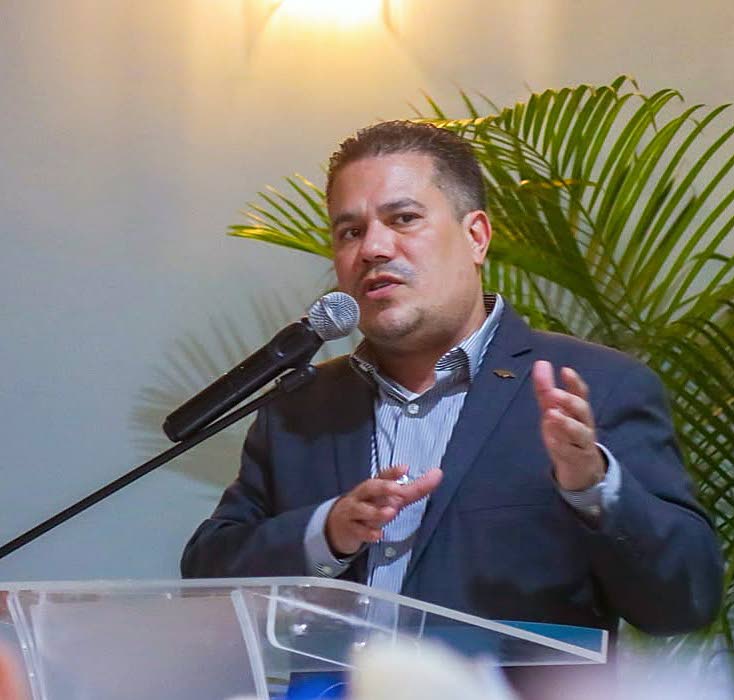
Minister with responsibility for water Matthew Samuda addressing a stakeholder engagement in Montego Bay, St James, on Tuesday.
Last month, in indicating that it recognises the importance of the Seaview Drive leg of the SPARK project to stakeholders in Hanover and beyond, the National Works Agency (NWA) last month said, addition to ensuring detours are maintained in reasonable condition, work would be done at night. The expectation was that approach could be applied to other projects.
While financial constraints makes that impractical, it is being applied to pipe-laying work in Negril.
“There is some night work built into the contract as it is, to deal with some of the problems like the Negril Bridge that will indeed come. [This] won’t be done until next year towards the beginning of summer, which is near the end of the school term, so that you have that period of lowest traffic to work with. But in that case, there isn’t an alternative to the Negril Bridge in that space,” explained minister with responsibility for water Matthew Samuda.
The issue of traffic congestion was a major focal point during Tuesday’s meeting, with several stakeholders citing the negative impact on cruise ship excursions and calling for alternative routes to be repaired. Some suggested diverting traffic between Montego Bay and Negril through Long Hill via Savanna-la-Mar.
However, Morgan explained that this option would not be practical for everyone.
“The Long Hill is pretty much a road that connects the north to the south. Persons who are going to, let’s say, Sandals South Coast will use the Long Hill road going down to Mackfield and Montpelier. But persons who are going to Negril, and going to Lucea, and going to the eastern section of the island, they would not necessarily use that,” explained the minister.
According to minister with responsibility for works Robert Morgan Jamaica does not have a night-work economy.Adobe Stock Photo
“We have to look at it from both sides. We have to do some work on Long Hill and Mackfield and those roads, but we also have to do work from Reading going to Lucea, going to Green Island, and going to Negril. We have to do it on both ends, and we have to manage that because it’s not like we have an insurmountable amount of cash. We have to manage how we spend, so we give the rehabilitation as much as we can,” added Morgan.
He also provided an update on the status the Lucea leg of the project.
“We have compacted the road on the seawall, 300 metres of road. We are now doing U-drains on the side of the road. We are fixing the adjacent alternate routes, which cannot take buses. When we are going to be doing the main work — the asphalting, that’s where the traffic management is going to come in, because at times they are going to be single-lane. We are probably going to have to do a lot of work on days when we don’t have increased traffic, when we don’t have tours, to ensure that what happened a few days ago doesn’t happen again,” stated Morgan.
Minister of state in the Ministry of Industry, Investment and Commerce Delano Seiveright welcomed efforts to improve coordination and execution of the projects.
He noted that concerns raised by Negril hoteliers and other stakeholders about prolonged travel times along the Montego Bay–Negril corridor reinforce the importance of practical solutions.
“These major infrastructure works are absolutely necessary and will bring significant long-term benefits to western Jamaica. However, we must recognise the real inconvenience being experienced and move urgently to minimise the disruption. These challenges have a ripple effect on businesses, productivity, tourism, workers and everyday life,” stated Seiveright.
Meanwhile, Morgan confirmed that the Long Hill bypass currently under construction is expected to open next year — possibly by April — while the Montego Bay perimeter road from West Gate to Ironshore is scheduled to open in the second week of December.