



No House, no Senate, no shortage of issues
THE House of Representatives and the Senate did not meet last week, but that did not mean there was no business in Parliament. Across the legislature’s committee rooms, lawmakers examined proposals that could change how Jamaicans vote, questioned the treatment of people deemed mentally unfit to stand trial, and scrutinised legislation that could reshape the responsibilities and financial obligations of homeowners living in shared communities.
HUMAN RESOURCES AND SOCIAL DEVELOPMENT COMMITTEE
No public submissions on proposed changes to voting rules
Despite inviting Jamaicans to weigh in on five proposed changes to the Representation of the People Act, the Human Resources and Social Development Committee received no public submissions up to when it met last week Tuesday.
The proposals, tabled by St Catherine South Western Member of Parliament Everald Warmington and referred to the committee in January, seek to amend several aspects of the electoral process. They include extending polling hours from 7:00 am to 6:00 pm, allowing voters to use any suitable implement and make a mark other than an X on their ballots, and permitting candidates’ outdoor agents to operate closer to polling stations.
The other proposals seek to clarify the treatment of ballot counterfoils and have the Government fund a comprehensive reverification of the voters’ list.
Committee Chairman Duane Smith said advertisements had been placed in the
Jamaica Observer and
Sunday Gleaner, as well as on Parliament’s social media platforms, inviting public feedback.
However, no submissions had been received by the time of the meeting, apart from correspondence from the Electoral Office of Jamaica (EOJ).
The EOJ’s Director of Elections Glasspole Brown had responded to an invitation to appear before the committee by requesting that a scheduled April 2 meeting be deferred until he received further instructions from the Electoral Commission of Jamaica.
Members agreed that the committee should renew its invitation to the EOJ and seek input from other stakeholders before making recommendations. Member of Parliament for Manchester Central Rhoda Moy Crawford argued that the proposed changes could have significant consequences for the public, given that electoral arrangements determine who forms the Government at the national and local levels.
“I do believe that notwithstanding the powers that we hold as a committee, I think that before we make certain decisions we should yet again invite other critical stakeholders to hear what their views are and most certainly to agree on a mutually appropriate or a mutually convenient time to get some feedback from the EOJ, even as we deliberate the way forward,” she said.

SMITH…the committee will re-advertise for submissions and invite other interested groups, including constituents, outdoor agents, and election supervisors to share their experiences
Smith said the committee would re-advertise for submissions and invite other interested groups, including constituents, outdoor agents, and election supervisors to share their experiences. The committee set the end of February 2027 as its target to complete the review and report to the House.
The proposed reverification of the voters’ list prompted debate about the accuracy of Jamaica’s low voter turnout figures, with Smith arguing that the list includes people who have died or migrated, making the statistics unreliable.
INTERNAL AND EXTERNAL AFFAIRS COMMITTEE
Concern over people held for years without trial
The treatment of people considered mentally unfit to stand trial was among the issues examined by the Internal and External Affairs Committee during its review of the Department of Correctional Services (DCS) last Wednesday.
These are people who have been charged with offences but are considered unable to understand court proceedings or properly participate in their defence because of their mental condition. Being found unfit to stand trial does not mean that a person has been convicted.
Opposition spokesman on national security Fitz Jackson questioned how long these individuals remain in custody and whether the correctional authorities work with the courts and other agencies to prevent their cases from being forgotten.
He referred to a case involving a man who had spent about 50 years in detention, saying Parliament had previously condemned the circumstances and promised that such a situation would not happen again.
Commissioner of Corrections Brigadier (Ret’d) Radgh Mason acknowledged that, under best practice, people who are unfit to plead should not be held in correctional facilities. He said, however, that they are separated from the general prison population and receive specialist psychiatric care.
“These inmates are not mixed with the regular population so they are classified and kept separate. They have all the specialist care that would obtain at Bellevue or any mental institution in terms of the psychiatric support, and we have the infirmary where they are well cared for,” Mason said.
He also told the committee that the department was upgrading accommodation and planned to move 120 people into improved facilities at Tamarind Farm.
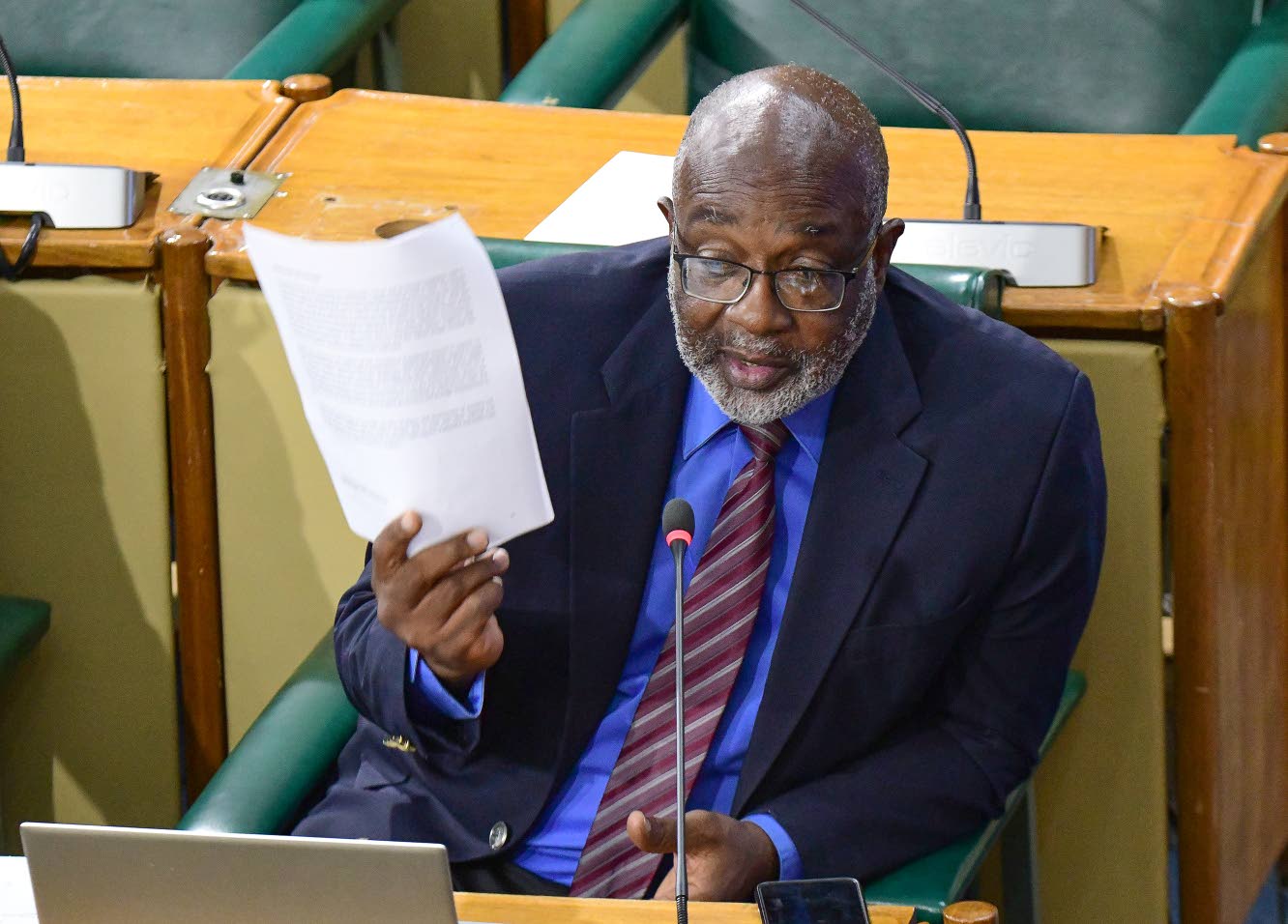
JACKSON… questioned how long individuals found unfit to stand trial remain in custody and whether the correctional authorities work with the courts and other agencies to prevent their cases from being forgotten
Forensic psychiatrist Dr Myo Kyaw Oo said the department had 256 people who were unfit to plead, including more than 40 held at the court’s pleasure.
He explained that judges have several options when dealing with people found unfit to stand trial. These include detention for treatment, admission to a psychiatric hospital, treatment in the community, or a guardianship order.
Dr Oo said some people may never become fit to stand trial again because of the severity of their mental illness. He also highlighted difficulties in finding relatives willing or able to care for people released from custody and ensuring they continue to receive medical treatment.
The assessment process itself can take time, and Dr Oo said the department had only five psychiatrists, with fitness assessments generally taking four to six weeks and more detailed forensic reports taking between six and 12 weeks.
JOINT SELECT COMMITTEE REVIEWING THE SHARED COMMUNITY BILL
Proposed law would introduce new responsibilities for shared communities
The proposed Registration (Shared Community) Bill, 2026 could change how some residential communities manage shared facilities and collect money from homeowners.
A shared community is one in which property owners share ownership, control, or responsibility for maintaining common areas and facilities. These could include roads, recreational spaces, swimming pools, and other amenities.
Such a community does not have to be gated. The proposed law is intended to cover developments that do not fall under the existing Registration (Strata Titles) Act.
At the centre of the Bill is the creation of a community corporation, made up of the owners of the individual properties in a registered shared community, with an executive committee managing the corporation’s affairs.
The corporation would be responsible for maintaining common areas, arranging insurance, preparing long-term maintenance plans, collecting contributions from homeowners, and keeping financial records. The Real Estate Board would regulate the corporations, maintain a register, and help resolve disputes between residents and their corporations.
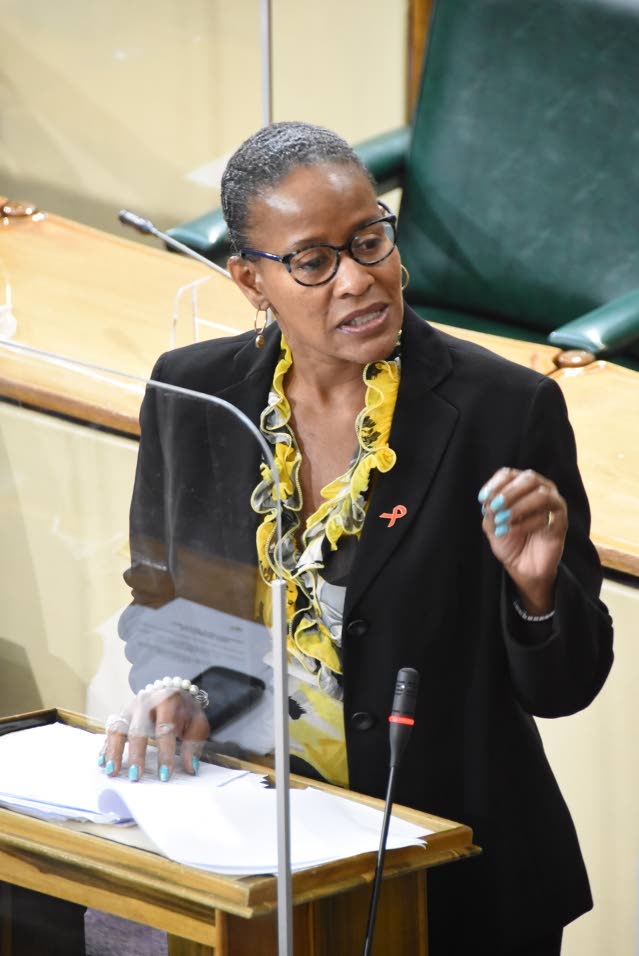
GOLDING CAMPBELL… questioned whether the requirement could become difficult for residents who struggle to meet rising costs
In practical terms, the Bill seeks to provide a legal structure for communities where residents share facilities and expenses but may have difficulty enforcing maintenance arrangements or collecting payments.
The financial obligations were among the main issues raised during Thursday’s committee meeting. The proposed law would allow corporations to collect contributions from homeowners to cover maintenance, insurance, and other expenses. The amount payable would be based on each property’s assigned utility interest.
The Bill also provides a process for recovering unpaid contributions, including interest and, in certain circumstances, the power to sell a property to recover outstanding sums. Such a sale would not be automatic. The corporation would have to follow the procedures set out in the legislation, including obtaining the necessary authorisation and valuations.
Insurance requirements also prompted debate. Clause 15 of the Bill would require common property and building elements to be insured against risks, including fire, earthquakes, and hurricanes, unless the owners unanimously decide otherwise.
Government Senator Sherene Golding Campbell questioned whether the requirement could become difficult for residents who struggle to meet rising costs. She also raised concerns about the wording of the provision, arguing that ordinary homeowners should be able to understand the rules they are expected to follow.
Solicitor General Marlene Aldred also questioned the clarity of the wording and urged the committee to decide what it wanted the provision to achieve before it was redrafted.
Another concern was what protection homeowners would have if their corporation failed to maintain shared facilities, causing properties to lose value.
Golding Campbell proposed that the committee consider whether owners should be able to claim compensation for financial losses caused by a corporation’s failure to carry out its duties.
Senior legal officer for the Real Estate Board Oshane Vaccianna said an existing legal avenue for damages was available, but the committee would have to consider whether the Bill should spell out such liability.
The issue was not settled.
Lawmakers also questioned which existing communities might fall under the proposed definition. Chairman Robert Montague raised examples, including Pembroke Hall, Havendale, and Meadowbrook. However, the committee heard that a community would have to meet the specific requirements of the Bill’s definition, and further work was needed to clarify how some existing arrangements would be treated.


