



Sav mayor renews call for municipal courts
Cites 20-year delay in getting approval to demolish an illegally built structure
SAVANNA-LA-MAR, Westmoreland — Pointing to a 20-year delay in having an illegally constructed building demolished as the matter snaked its way through the court, Mayor of Savanna-la-Mar Danree Delancy has renewed calls for municipal courts across Jamaica.
He argued that protracted delays in the parish court system are draining public resources and hindering local governance.
Delancy’s latest appeal was prompted by a presentation from Westmoreland’s Chief Public Health Inspector Steve Morris during the most recent meeting of the Westmoreland Municipal Corporation (WMC).
Morris reported that improper disposal of animal carcasses is negatively impacting the health of residents across the parish, prompting the Health Department to urge the WMC to prosecute delinquent animal owners.
Under Section 21 (1) and (3) of the Public Health Act, if an owner refuses to properly dispose of a carcass or is off-island while the situation creates a public nuisance, the local health authority is empowered to dispose of the remains and bill the owner. Should the owner fail to pay, the authority can legally move to sell the owner’s property to recover the costs.
However, Delancy pointed out that while strong legislation exists on paper, enforcing it through the traditional justice system is slow and inefficient.
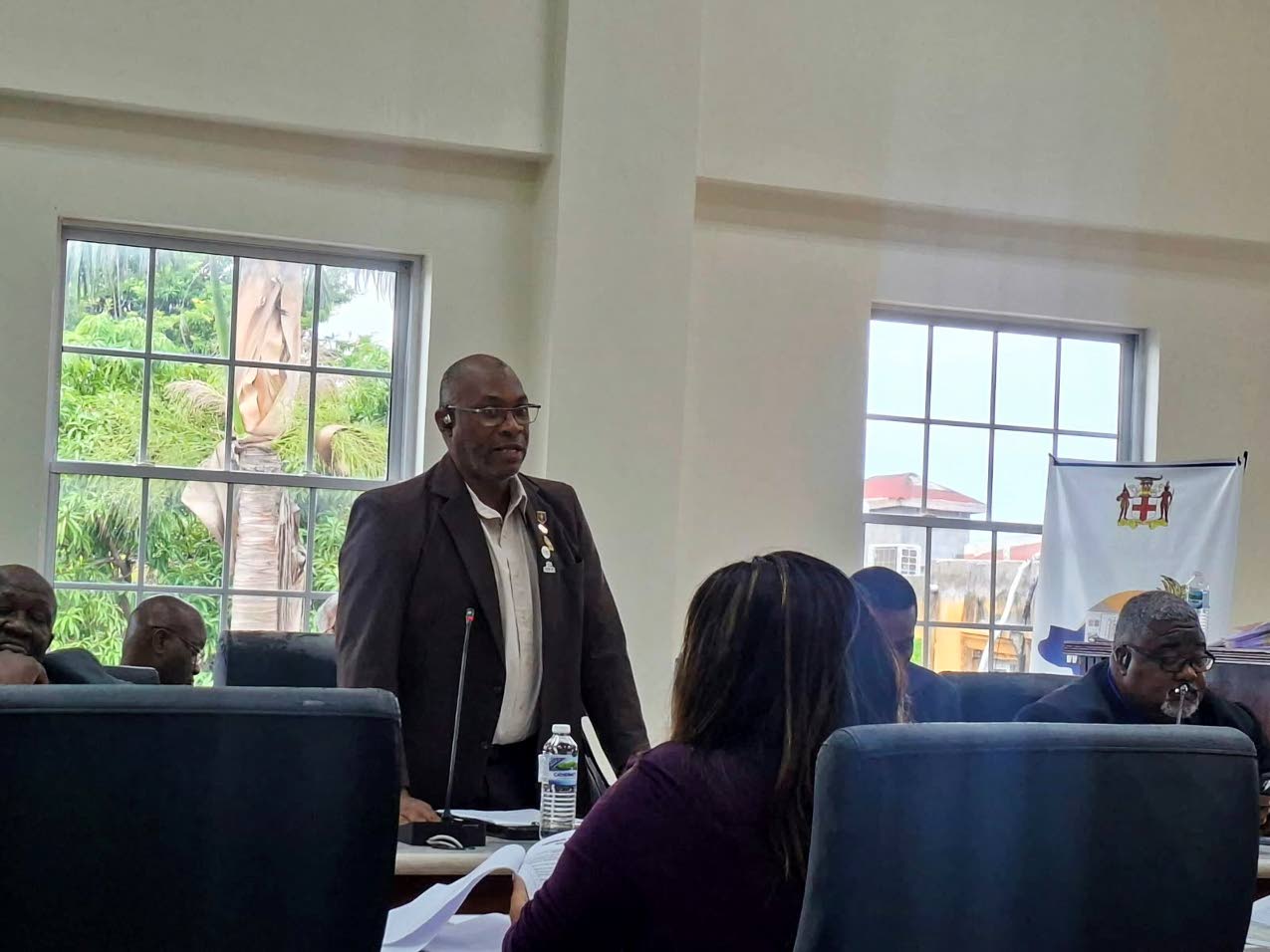
Westmoreland’s Chief Public Health Inspector Steve Morris, speaking during the November meeting of the Westmoreland Municipal Corporation. (Photo: Rosalee Wood Condell)
“I know it is on the books, but how easy is it to get things done? Based on my experience, it keeps going to court and no resolution is forthcoming,” he stated.
“All these matters make me more convinced that it is high time that Jamaica has a municipal court [system]. To take these matters to parish court will cost and take a long time. Some may say it is not worth it [but] I am prepared to go that route. In the same breath, we need a specialised court for matters like these.”
To illustrate the severity of the bottleneck, Delancy cited a past case involving the WMC’s previous administration where it took 20 years of navigating the court system to secure a resolution allowing an illegal building in breach of regulations to be demolished.
“You tie up a lot of public resources and money that could have been used for the furtherance and development of the parish,” the mayor added, noting that municipal officers spend excessive hours waiting in court instead of carrying out productive fieldwork.
Delancy proposed that, ideally, a municipal court should be established in each parish with sittings held at least once per week. However, if immediate parish-by-parish implementation is not feasible, he suggested starting on a regional basis, noting that similar models operate effectively in other jurisdictions.
“The idea is not novel to me. Under local government reform, I have attended forums before where it has been mentioned, but we have not actually moved to have it instituted,” he said.
Delancy’s push echoes similar appeals from other local government representatives in recent years.
In 2024, Councillor Sydney Rose, chairman of the Public Health and Sanitation Committee of the St Catherine Municipal Corporation, also called for a national municipal court system to handle parochial matters.
Promoting the courts as a way to swiftly dispose of building breaches, noise abatement violations, and spirit licence issues, Rose announced during a committee meeting that he would write to Local Government Minister Desmond McKenzie and Chief Justice Bryan Sykes to urge their establishment.
Formal efforts to introduce dedicated municipal adjudication date back even further. In 2012, then Minister of Local Government and Community Development, the late Noel Arscott, announced plans under a wider Justice Reform Programme to establish specialised municipal courts.
At the time, Arscott said the ministry was in dialogue with the chief justice regarding a proposal for Resident Magistrates’ Courts, now Parish Courts, to set aside at least one day each month exclusively for municipal matters.
Designed to prevent local government infractions from bogging down the standard judicial system, proposed municipal courts are intended to swiftly process building and zoning breaches, noise abatement infractions, spirit (liquor) licensing issues, and regulatory compliance, in addition to general enforcement of municipal by-laws governed by local authorities under the Ministry of Local Government and Community Development.


