Beyond memory loss
Expert underscores that dementia can kill
A United Kingdom-registered digital health company dedicated to providing care for dementia patients has been staging a summit in countries in this region with the aim of raising awareness about the condition and cautioning that it can kill
According to certified brain health navigator Dr Lauren-Page Reid, Amagi Health Limited team lead in Jamaica, many people do not understand how someone can die from dementia.
“You can die from it the same way as a heart attack, where the cells in your heart die. With dementia, you have brain cells that are dying that control the body. These brain cells are now actually breaking down and not allowing the body to function in the same way,” she told the Jamaica Observer last Thursday.
“Dementia can affect the eyes. It causes you to have vision loss. It affects your mood in terms of your emotions and your behaviour, which is why persons come up with aggression in the later stages. It also affects your joints and your muscles. It can affect your speech. It can also affect just your general well-being to the point where you are not able to think for yourself, you are not able to remember a person around you. The one that we most commonly see is memory loss and that usually comes up in the earlier stages,” said Reid.
Dementia is a general term for loss of memory, language, problem-solving and other thinking abilities that are severe enough to interfere with daily life. Alzheimer’s is the most common cause of dementia.
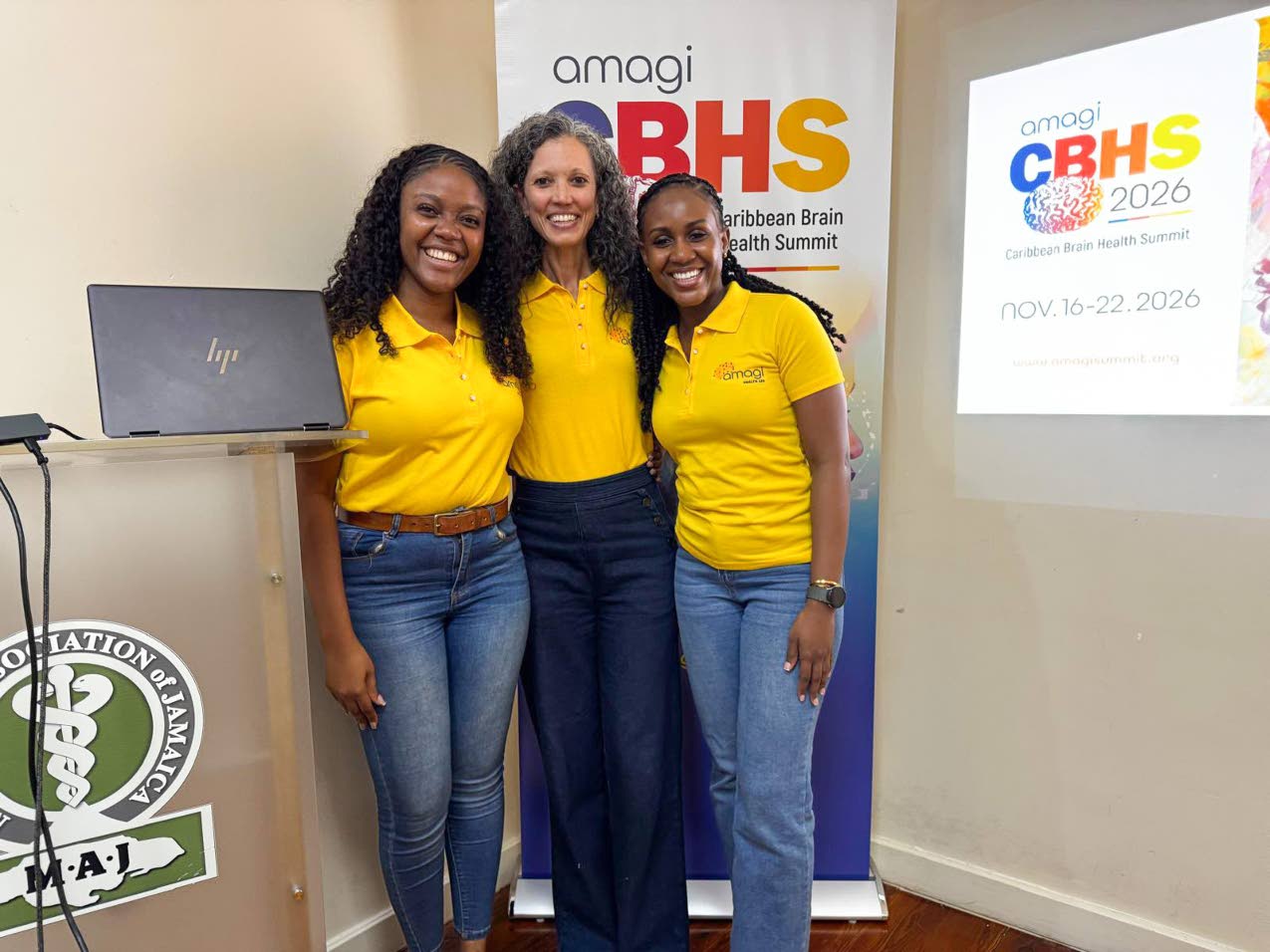
From left: Dr Lauren-Paige Reid, Amagi Jamaica programme lead; certified brain health navigator Dr Ishtar Govia, CEO and founder Amagi Health; and Abigail Evans, research officer and administrator of Amagi Health Caribbean programmes
“It affects your mood because, again, the brain controls everything. So dementia in and of itself is an umbrella term like when you say car, but you have different types. We have over 100 causes of dementia, and they have different types, and each one has a different type of presentation, or it might present very similar, depending on what the cause is,” Page-Reid said.
Since last Monday Amagi Health, which was founded Dr Ishtar Govia to bridge the gaps in dementia care, has been hosting the Caribbean Brain Health Summit in six countries, including Jamaica.
In Jamaica, the sessions have been held in different locations and will culminate on Sunday, November 22.
A participant in one of the Amagi Health sessions facing the dementia experience through a simulator.
“We’re trying to assist persons from every stage of the dementia process, from the patients to the family… as well as just assist everyone in the experience while they’re going through every stage of the changes that happen with dementia,” Reid explained.
“We are trying to raise not only awareness, but a level of empathy by actually allowing persons to see and know the road map to how to navigate these situations. We want to essentially create a network that allows them to know exactly where to go when they start to feel these emotions. So even if you’re in the earlier stages or the later stages, or caring for someone with dementia, we’re trying to assist you in having the resources,” Reid told the Sunday Observer.
“This company was actually founded because Dr Govia had a mother-in-law who was diagnosed with dementia. She saw the pitfalls in caring for her loved one in that stage and wasn’t able to really connect all of the resources together. It was very confusing for her, so she created a company that would bridge that gap between the care that she wanted to see,” Reid explained.
The other participating countries are Barbados, Trinidad and Tobago, Cayman Islands, and Suriname.
Reid said that last Monday a round table talk on where Jamaica should be going in terms of dementia care, economy and leadership was held at The University of the West Indies, Mona campus.
“We had one session called the Dementia Moment on Tuesday, which was essentially allowing persons to see what it feels like to have moderate to severe dementia. It’s almost like a simulation, and it evokes this level of compassion and understanding for the person with dementia in the caregiver, almost like walking in the shoes of their experience. We did it by distorting their senses in a similar way that dementia does. That was a very impactful session,” Reid shared.
Wednesday saw the staging of a cognitive screening training session “that was done with Dr Govia and I. We essentially helped to train physicians, nurses, and anyone who was really interested on how to do screening”, said Reid.